
Every Shopify or WooCommerce store collects mountains of raw data, yet the real challenge is turning this information into profit-driving choices. For E-commerce managers, relying on intuition alone leaves too many opportunities untapped. Embracing data-driven decision-making (DDDM) is the business process of using data to make informed decisions, minimizing risks and improving outcomes. This guide shows you how structured analysis, combined with AI insights, can help you track what matters, assign value to every action, and build strategies that fuel lasting growth.
Table of Contents
- Defining Data-Driven Decision Making in Ecommerce
- Key Types of Ecommerce Analytics Solutions
- How AI-Powered Tools Transform Store Performance
- Using Product Associations and Customer Segmentation
- Common Challenges and Mistakes to Avoid
- Maximizing Growth: Best Practices and Future Trends
Key Takeaways
| Point | Details |
|---|---|
| Data-Driven Decision Making | Leverage customer and sales data to guide business strategies, minimizing risks and maximizing outcomes. |
| Core Analytics Approaches | Utilize descriptive, diagnostic, predictive, and prescriptive analytics to gain insights and drive informed decisions. |
| AI-Powered Tools | Implement AI analytics tools to automate data processing, enabling personalized recommendations and dynamic pricing. |
| Avoid Common Pitfalls | Be aware of challenges like confusing correlation with causation and dependency on generic benchmarks to prevent misguided strategies. |
Defining Data-Driven Decision Making in Ecommerce
Data-driven decision making in ecommerce means using actual customer, sales, and operational data to guide your business choices instead of relying on intuition or guesswork. At its core, data-driven decision-making (DDDM) is the business process of using data to make informed decisions, minimizing risks and improving outcomes. For online retailers like you, this translates into leveraging everything from purchase history and browsing behavior to inventory levels and customer demographics to shape your strategies around what actually works.
The challenge most ecommerce managers face isn’t the lack of data—it’s the flood of it. Your Shopify or WooCommerce store generates thousands of data points daily. Transaction records, customer segments, product views, cart abandonment patterns, return rates, and seasonal trends all sit in your systems waiting to be analyzed. Without structure, this raw information stays invisible. That’s where the real work begins. Converting that raw data into actionable insights requires three things working together: first, access to quality data that accurately reflects your business operations, second, skilled analysis to identify patterns and relationships, and third, the ability to turn those patterns into specific actions that drive results.
Think of data-driven decision-making as the bridge between what’s happening in your store right now and what you should do about it. When you implement data-driven ecommerce strategies, you’re essentially building a feedback loop. You collect data on customer behavior, analyze that data to uncover hidden opportunities (like which products customers tend to buy together), and then use those insights to optimize everything from product recommendations to email campaigns to bundle offerings. For instance, if your data reveals that 34% of customers who buy running shoes also purchase moisture-wicking socks within 30 days, that’s not just an observation—it’s a concrete opportunity to increase average order value through smart recommendations or targeted bundling.
What makes this approach different from traditional retail decision-making is the speed and precision. Instead of waiting for quarterly reports or relying on one manager’s experience, data-driven decisions happen continuously, informed by real customer behavior happening across your entire customer base. You reduce guesswork. You optimize what actually resonates with your audience rather than what you think should work. This directly impacts your bottom line through improved sales performance and stronger customer retention.
Pro tip: Start by auditing what data you already have available—transaction history, customer purchase frequency, product associations—rather than waiting for perfect data systems. Most small to mid-sized retailers already possess the raw materials needed to make better decisions today.
Key Types of Ecommerce Analytics Solutions
Understanding the different types of analytics available to you is like learning to read your store’s pulse from multiple angles. Each type reveals something different about your business, and together they create a complete picture that drives better decisions. Ecommerce businesses typically work with four core analytics approaches: descriptive analytics that show what happened in the past, diagnostic analytics that explain why it happened, predictive analytics that forecast what will happen next, and prescriptive analytics that recommend specific actions you should take. This layered approach means you’re not just reacting to yesterday’s sales numbers—you’re understanding them, predicting trends, and getting guidance on exactly what to do.
Descriptive analytics forms your foundation. This is the data you see in your dashboard daily: how many visitors you had, what your conversion rate was, how much revenue you generated. But most store owners stay here and miss the real opportunity. Diagnostic analytics digs deeper by asking why your conversion rate dropped 3% last week or which product categories are driving your highest average order value. Then comes predictive analytics, which uses historical patterns to forecast what might happen—like predicting that your winter inventory will sell out 2 weeks earlier than last year based on current buying velocity. Finally, prescriptive analytics recommend actions you should take to optimize results. Instead of just seeing that cart abandonment is high, prescriptive analytics tells you to implement targeted email reminders for abandoned carts with specific products that have the highest recovery rates.

Here’s a concise comparison of ecommerce analytics types and the value each brings to store management:
| Analytics Type | Main Purpose | Key Business Value |
|---|---|---|
| Descriptive Analytics | Shows what happened | Understands performance trends |
| Diagnostic Analytics | Explains why it happened | Pinpoints causes of changes |
| Predictive Analytics | Forecasts what may happen | Anticipates demand and challenges |
| Prescriptive Analytics | Suggests actions to take | Guides optimization strategies |
Beyond these four types, you need to track specific metrics that directly impact your bottom line. Start with the essentials: conversion rates (the percentage of visitors who buy), average order value (how much customers spend per transaction), customer lifetime value (total profit from one customer over their lifetime), and cart abandonment rates (how many shoppers leave without checking out). Add to this your customer acquisition cost (what you spend to gain each new customer), repeat purchase rate (how often customers come back), and refund rates (product returns as a percentage of sales). These metrics connect directly to your profitability. You should also monitor revenue by traffic source and product performance to understand which marketing channels actually work and which products deserve more attention. Discount effectiveness and checkout funnel drop-offs reveal where you’re leaving money on the table. When you track these together through a unified analytics approach, patterns emerge that individual metrics never would show.
The real power comes when you stop viewing these analytics types in isolation. Your store’s checkout funnel drop-off data (descriptive) combined with customer behavior patterns during checkout (diagnostic) plus predictions about seasonal checkout abandonment (predictive) leads to clear recommendations about where to test improvements (prescriptive). Most small to mid-sized retailers use platforms that pull data from Shopify, WooCommerce, and Google Analytics, then layer AI analysis on top to surface these insights automatically. That’s where the efficiency gain happens—the analytics work for you instead of requiring a dedicated data team.
Pro tip: Start by connecting your existing data sources (Shopify, Google Analytics) and focus on tracking the five to seven metrics that matter most to your profitability before expanding into advanced predictive analytics. Quality insights from focused metrics beat incomplete insights from tracking everything.
How AI-Powered Tools Transform Store Performance
AI-powered analytics tools represent a fundamental shift in how online retailers operate. Instead of manually sifting through thousands of data points, AI systems automatically identify patterns, surface opportunities, and generate actionable recommendations. For small to mid-sized ecommerce businesses, this automation is transformative because it levels the playing field with larger competitors. You no longer need a team of data scientists to extract value from your customer and transaction data. AI-powered tools are engineered to reduce friction in your store, improve customer experiences, and boost sales by processing data at speeds and scales no human team could match. When these tools integrate with your existing Shopify or WooCommerce system, they work continuously in the background, learning from each transaction and refining their recommendations in real time.
The practical impact shows up immediately across three main areas. First, personalization and recommendations: AI analyzes browsing history, purchase patterns, and customer segments to recommend products each shopper is most likely to buy. Instead of showing the same featured products to everyone, AI delivers tailored suggestions that increase conversion rates and average order value. Second, dynamic pricing and inventory optimization: AI tools monitor competitor pricing, demand forecasts, and inventory levels to recommend optimal price points and stock allocations. This prevents stockouts on popular items while minimizing overstock on slow-moving products. Third, customer engagement automation: Chatbots and virtual assistants powered by AI handle customer questions instantly, reducing support burden while improving satisfaction scores. These systems learn from interactions, getting better at resolving issues over time.
What makes AI truly transformative is its ability to surface hidden opportunities in your data. Consider market basket analysis, where AI identifies which products customers buy together. A clothing retailer might discover that 67% of customers purchasing winter coats also buy thermal layers within two weeks. That insight alone could drive a bundling strategy that increases average order value by 23%. Or predictive analytics might reveal that customers who receive a specific email sequence have 41% higher repeat purchase rates than those who don’t, informing your email strategy going forward. These aren’t guesses—they’re patterns extracted from your actual customer behavior. Field experiments have demonstrated that when ecommerce businesses implement generative AI tools integrated into their workflows, conversion rates improve measurably while store productivity jumps significantly.
The transition to AI-powered decision-making doesn’t require replacing your entire tech stack. Modern AI analytics platforms integrate seamlessly with Google Analytics, Shopify, WooCommerce, and other standard retail tools. They pull your historical data, apply machine learning algorithms to identify patterns, and feed recommendations back into your systems automatically. For store managers already overwhelmed with data, this feels like suddenly gaining hours each week because the analysis happens without manual effort. You move from reactive management (responding to what already happened) to proactive optimization (preventing problems and capturing opportunities before they become obvious).
Pro tip: Start with AI tools that focus on one high-impact area (like product recommendations or customer segmentation) rather than trying to automate every decision at once. Prove the ROI on one use case, then expand to other areas as your team becomes comfortable with AI-driven insights.
Using Product Associations and Customer Segmentation
Product associations and customer segmentation are two sides of the same coin: one reveals what customers buy, the other reveals who they are. Together, they transform generic marketing into precision targeting. Product associations (also called market basket analysis) show which items customers purchase together, revealing natural product bundles and cross-selling opportunities. A bakery supply retailer might discover that 58% of customers buying cake decorating tips also purchase fondant within the same shopping session. That insight becomes a product bundle. Customer segmentation divides your entire customer base into meaningful groups based on shared characteristics or behaviors, allowing you to tailor messaging, offers, and experiences to each group’s specific needs. Instead of sending the same email to all 10,000 customers, you send different messages to high-value repeat buyers versus one-time purchasers versus window shoppers who abandoned their carts.
The power of segmentation lies in precision. Advanced clustering techniques and AI-driven algorithms analyze your customer data across multiple dimensions to identify distinct groups automatically. A typical segmentation might reveal five to eight customer personas: your high-value loyalists who spend frequently and have strong lifetime value, your seasonal buyers who purchase only during holidays or specific seasons, your price-sensitive bargain hunters who primarily respond to discounts, your impulse buyers who make unplanned purchases, and your dormant customers who haven’t purchased in months. Each group requires different strategies. Your loyalists need VIP treatment and exclusive early access to new products. Seasonal buyers need timely reminders when their buying seasons approach. Price-sensitive customers need strategic discount campaigns. Once you understand who you’re talking to, your marketing efficiency skyrockets because nothing feels irrelevant to the recipient.
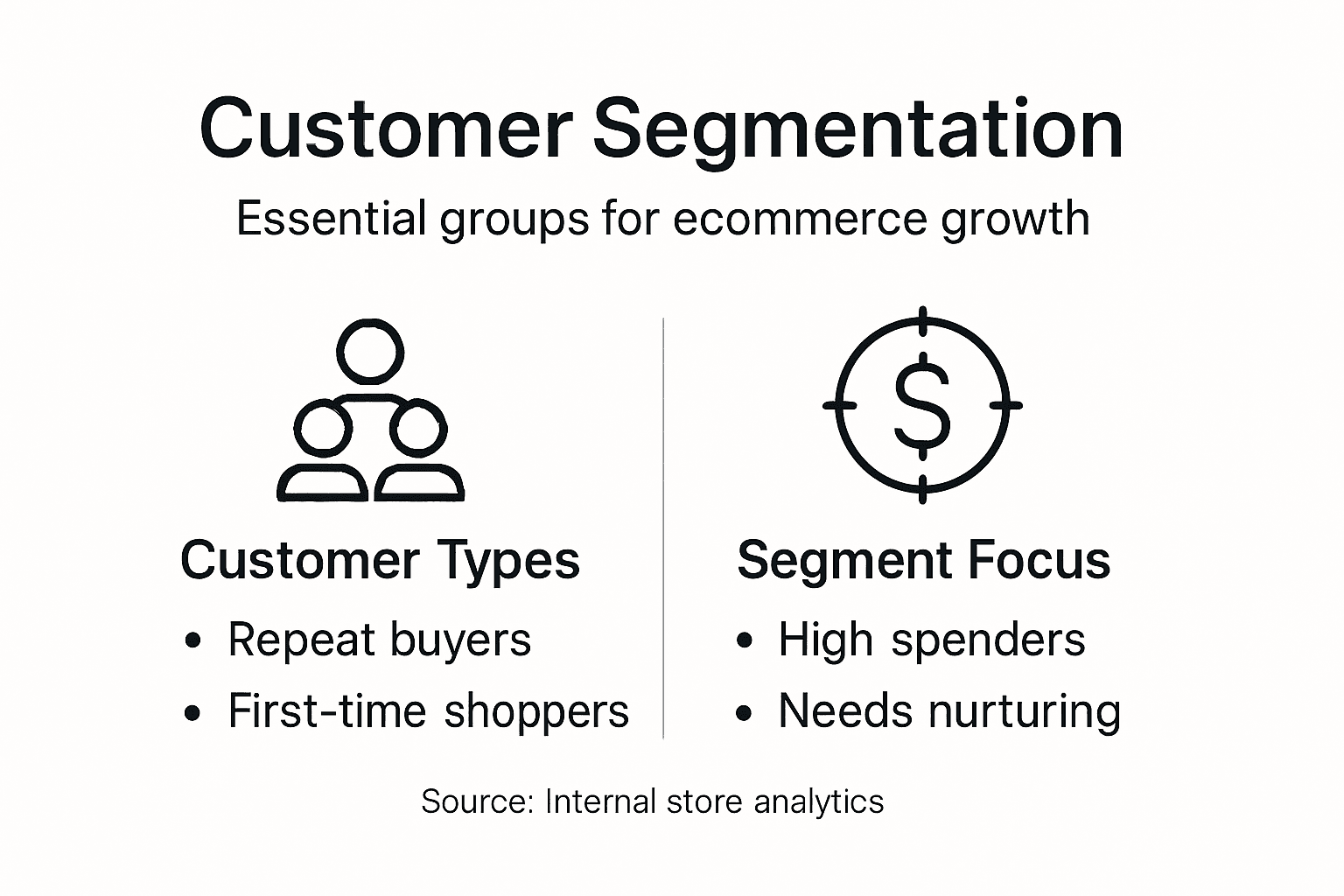
Product associations and customer segmentation combine to create knockout marketing opportunities. Imagine you’ve identified a segment of customers who buy premium athletic wear. Your product association analysis shows these customers frequently buy moisture-wicking socks and performance insoles alongside their main apparel purchases. Now you can create a targeted campaign specifically for this segment, featuring those complementary products with messaging about performance and durability. This beats broadcasting a generic “shop our bestsellers” email to everyone. The personalization matters because it shows customers you understand their specific interests and needs. Behavioral segmentation—grouping customers by purchase frequency, average order value, or product categories they favor—works particularly well here because it’s based on observable actions rather than assumptions. A customer who consistently buys high-ticket items deserves different communication than someone who makes frequent small purchases.
Implementing these strategies doesn’t require building custom algorithms from scratch. Modern ecommerce analytics platforms automatically analyze your transaction data to surface product associations and recommend optimal customer segments. The system identifies patterns across thousands of transactions, spots correlations humans would miss, and presents actionable recommendations. You simply review the insights and decide which segments to target with which campaigns. For small to mid-sized retailers, this automation is the difference between having sophisticated targeting capabilities and competing blindly. Your data already contains all this intelligence—you just need tools designed to extract it.
Pro tip: Start by segmenting your customers into just three groups: your highest-value repeat customers, your one-time buyers, and your window shoppers who haven’t converted. Run completely different campaigns for each group for 30 days and measure results. You’ll quickly see which segmentation approach drives the best ROI before expanding to more complex segments.
Common Challenges and Mistakes to Avoid
Data-driven decision-making sounds straightforward until you actually start doing it. That’s when reality hits. Most ecommerce managers encounter predictable pitfalls that undermine their analytics efforts and lead to poor decisions despite having plenty of data. The first major trap is confusing correlation with causation. Your data might show that customers who view your blog posts have higher lifetime values than those who don’t. But that doesn’t mean the blog posts caused the higher value. Those customers were probably already more engaged or interested in your products. Implementing a massive content strategy based on that false assumption wastes resources. Similarly, you might notice that sales spike after you run Facebook ads, but seasonal demand might be the real driver. Leaders often mistake correlation patterns for causal relationships, leading to misaligned strategies and wasted marketing budgets. The solution is healthy skepticism: always ask whether your data shows a real cause-and-effect relationship or just two things that happened to move together.
Another common mistake is relying too heavily on third-party data or industry benchmarks without considering your unique context. You read that the average ecommerce conversion rate is 2.5%, so you assume that’s your target. But your store sells premium luxury goods with longer consideration cycles. Your 1.2% conversion rate might actually indicate strong performance for your specific market. Or you’re selling budget items with quick decisions, and your 4.8% rate reflects that reality. Generic benchmarks sound authoritative but often mislead because they ignore critical differences in product type, audience, price point, and market. The other side of this mistake is neglecting sample size limitations. You test a new checkout flow for three days and see a 5% increase in conversions. Statistically, that’s noise. You need weeks of data to confirm real patterns. Small sample sizes create false signals that look like insights but disappear when tested further. You launch a store-wide change based on weak evidence, then wonder why results don’t match your test.
Data quality and integration challenges plague many retailers. Your Shopify store, Google Analytics, email marketing platform, and accounting software all collect data differently and rarely talk to each other. You spend hours stitching information together manually, creating opportunities for errors. Data integration from multiple sources, ensuring data quality, and aligning analytics with business goals represent fundamental challenges that many ecommerce teams struggle with. Garbage data produces garbage decisions. If your customer records don’t connect properly across systems, you might count the same person as three different customers. If your product categories are labeled inconsistently, your analytics on product performance become unreliable. Before building sophisticated analyses, audit your data quality. Standardize how information is recorded. Remove duplicates. Fill missing values. This foundational work feels tedious but prevents disasters later.
Groupthink represents a subtle but serious threat. Your team becomes convinced that a particular strategy is correct based on initial data, then selectively notices information that confirms that belief while ignoring contradictions. When new data contradicts your original assumption, you dismiss it rather than adjust your thinking. The antidote is building a culture where questioning data interpretations is encouraged, not discouraged. Assign someone to actively argue against the dominant interpretation. Run experiments that could prove your strategy wrong. Create safe space for people to say “I think we’re misreading this.” Your goal is accurate insights, not agreement.
To help you avoid common pitfalls, here is a quick overview of major challenges in data-driven ecommerce and how to address them:
| Challenge | Impact on Decisions | Solution Approach |
|---|---|---|
| Mistaking correlation for cause | Wasted resources, misaligned plans | Use experimentation, question links |
| Over-reliance on benchmarks | Misleading targets, lost context | Adapt metrics to your store |
| Poor data integration | Inaccurate insights, extra labor | Standardize and clean data sources |
| Groupthink | Missed opportunities, bias | Encourage debate, test assumptions |
Pro tip: Before acting on any data-driven insight, write down the causal mechanism you believe explains it. If you can’t articulate a clear “because this, then that” explanation, pause. That’s your signal to gather more evidence or test the assumption with a small, controlled experiment before committing resources.
Maximizing Growth: Best Practices and Future Trends
Maximizing growth through data-driven decision-making requires moving beyond isolated analytics projects and building a sustainable system that continuously improves. The best practices that matter most involve three foundational shifts. First, shift from reactive to proactive management. Stop waiting for monthly reports to discover what happened last month. Build real-time dashboards that alert you immediately when key metrics move unexpectedly. This lets you respond to opportunities or problems while they’re still unfolding. Second, invest in data literacy across your team. Your marketing manager doesn’t need to become a data scientist, but they should understand the basics of how to interpret results, recognize when sample sizes matter, and ask smart questions about causation. Third, treat data-driven decisions as experiments, not certainties. Test your hypotheses. Measure results. Adjust based on evidence. This removes the pressure to be perfect and embraces the reality that you’re learning as you go. When your entire organization views data as a tool for continuous improvement rather than proof you were right, behavior shifts toward genuine optimization.
Comprehensive business intelligence solutions that combine predictive analytics with real-time processing represent the frontier of what’s possible. These systems don’t just report what happened yesterday. They anticipate what’s likely to happen next week based on patterns in your data. They recommend specific pricing adjustments before a competitor steals your market share. They flag inventory items about to run out before you face stockouts. They identify which customer segments are about to churn so you can intervene with targeted retention offers. The companies winning in ecommerce right now are those building these adaptive strategies into their operations. They’re not making gut decisions. They’re making decisions informed by what their data actually predicts will happen.
Looking forward, three major trends will reshape data-driven ecommerce. First, ethical data use and privacy compliance will become competitive advantages, not just legal requirements. Customers increasingly care about how their data is used. Companies that handle personal information transparently and ethically will build stronger customer relationships and trust. Second, AI integration will become table stakes. Within two years, basic AI-powered recommendation engines and segmentation will be expected features, not premium offerings. This means starting now. Platforms that haven’t integrated AI will struggle to compete. Third, the focus will shift from collecting more data to deriving more value from existing data. You probably already have enough data sitting in your systems to drive significant growth. The competitive advantage will go to businesses that master extracting actionable insights from what they already possess rather than those chasing new data sources.
The practical path forward is clear: start now with the data you have, measure what matters most to your profitability, and build momentum through small wins. You don’t need perfect data. You don’t need a team of PhDs. You need the discipline to collect quality data, the humility to question your assumptions, and the courage to act on what the data reveals. Companies that start this journey today will be miles ahead of competitors still relying on intuition in 18 months. The barrier to entry isn’t technical expertise. It’s commitment to letting data guide your decisions instead of confirming what you already believe.
Pro tip: Identify your three highest-impact metrics (revenue, customer retention, average order value, or whatever drives your profit most), instrument them properly so data flows automatically, and check them daily for the next 90 days. You’ll develop intuition for what your data actually signals versus what you assumed it would show.
Unlock Powerful Data-Driven Growth with Affinsy
Many ecommerce businesses face the challenge of transforming overwhelming raw data into clear, actionable strategies that boost sales and enhance customer retention. The article “Data-Driven Decision Making in Ecommerce: Maximizing Sales and Retention” highlights key pain points like detecting hidden product associations and effectively segmenting customers to tailor marketing efforts. These goals align perfectly with what online retailers need to overcome guesswork, optimize pricing, and improve average order values using advanced analytics and AI.
Affinsy is designed specifically to tackle these challenges by turning your Shopify, WooCommerce, and Google Analytics data into intelligent insights. With automated market basket analysis and RFM customer segmentation, Affinsy reveals cross-selling opportunities and customer patterns that might otherwise stay invisible. This means you can confidently create personalized bundles and targeted campaigns that resonate with real customer behavior. If you want to shift from guessing to knowing and maximize your ecommerce performance, explore how Affinsy’s AI-powered analytics helps you make data-driven decisions every day.
Ready to transform your ecommerce data into growth and loyalty? Visit Affinsy’s platform now and discover how simple it is to unlock higher sales and stronger customer retention through actionable analytics. Don’t wait — harness your data’s full potential today and stay ahead of the competition with Affinsy’s intelligent ecommerce insights.
Frequently Asked Questions
What is data-driven decision making in ecommerce?
Data-driven decision making in ecommerce involves using actual data like customer behavior, sales records, and inventory levels to make informed business decisions instead of relying on intuition. This process helps minimize risks and improve outcomes by optimizing strategies based on real insights.
How can I leverage analytics to improve my ecommerce store’s performance?
You can use different types of analytics, such as descriptive, diagnostic, predictive, and prescriptive analytics, to understand past performance, identify causes of changes, forecast future trends, and recommend actions that optimize results, thereby improving overall performance.
What are some common metrics I should track to maximize ecommerce growth?
Key metrics include conversion rates, average order value, customer lifetime value, cart abandonment rates, and repeat purchase rates. Tracking these metrics helps you understand profitability and make data-driven adjustments to your strategies.
How do AI-powered tools enhance data analysis for ecommerce?
AI-powered tools automate the identification of patterns and opportunities within your data, providing actionable insights without manual effort. They can improve personalization, optimize pricing and inventory, and enhance customer engagement through chatbots, ultimately boosting sales and customer satisfaction.
Recommended
- 7 Effective Ways to Maximize Revenue in E-commerce - Affinsy Blog | Affinsy
- Data-Driven Ecommerce Strategies for Smarter Growth - Affinsy Blog | Affinsy
- Understanding Data-Driven Campaign Optimization for E-Commerce - Affinsy Blog | Affinsy
- Data Driven Ecommerce: Unlocking Revenue Potential - Affinsy Blog | Affinsy
- Why Monitor Amazon Analytics: Data-Driven Growth - Searchoneers
- Boost Your Success with Customer Engagement in Retail | BonusQR