
More than 80 percent of American e-commerce businesses now use advanced analytics to shape their strategies and stand out from the competition. For marketing managers aiming to win customer loyalty and increase sales, relying on instinct is no longer enough. This article breaks down practical, data-driven ecommerce techniques that transform raw numbers into powerful retention and sales results, giving mid-sized retailers a way to keep pace with rapidly changing consumer expectations.
Table of Contents
Key Takeaways
| Point | Details |
| Data-Driven Strategies | E-commerce success relies on utilizing advanced analytics to make informed decisions and enhance customer experiences. |
| Market Basket and RFM | Employing Market Basket Analysis and RFM Segmentation allows retailers to understand shopping behaviors and personalize marketing efforts. |
| Predictive Insights for Retention | Proactively identifying churn signals through predictive analytics enables tailored customer retention strategies. |
| Data Privacy Compliance | Implement robust data privacy practices to secure customer information and maintain trust while using analytics for business decisions. |
Defining Data-Driven Ecommerce Strategies
Data-driven e-commerce strategies represent a systematic approach where online retailers leverage advanced analytics and customer data to make informed business decisions. These strategies transform raw transactional information into actionable insights that drive revenue, optimize marketing efforts, and enhance overall customer experiences. By utilizing sophisticated data analysis techniques, businesses can move beyond traditional guesswork and create precise, targeted approaches to digital commerce.
At its core, a data-driven strategy involves collecting, analyzing, and interpreting customer interaction data to understand behavioral patterns and preferences. Advanced data collection methodologies enable businesses to track critical metrics such as purchase history, browsing behavior, demographic information, and engagement levels. This comprehensive approach allows e-commerce platforms to develop personalized marketing campaigns, recommend products more accurately, and create tailored user experiences that significantly improve conversion rates.
Successful implementation of data-driven strategies requires a multi-dimensional approach. Key components include robust data infrastructure, advanced analytics tools, machine learning algorithms, and a culture of continuous learning and adaptation. Online retailers must invest in technologies that can aggregate data from multiple sources - including website interactions, social media engagement, customer support records, and transaction logs - to create a holistic view of customer behavior. By integrating these diverse data streams, businesses can uncover nuanced insights that drive strategic decision-making and competitive advantage.
Pro tip: Start small by identifying 2-3 key performance indicators (KPIs) and gradually build your data analysis capabilities to avoid overwhelming your team with complex analytics.
Key Analytics: Market Basket and RFM Segmentation
Market Basket Analysis and RFM Segmentation represent two powerful analytical techniques that enable e-commerce businesses to transform raw customer data into strategic insights. These advanced methods help retailers understand purchasing behaviors, predict consumer preferences, and develop highly targeted marketing approaches that drive sales and customer loyalty.

Market Basket Analysis explores the relationships between products frequently purchased together, revealing hidden patterns in consumer shopping behavior. Integrated recommendation systems leverage these insights to create personalized product recommendations that significantly enhance cross-selling opportunities. By analyzing transaction data, businesses can identify statistically significant product associations, enabling them to design more effective product bundles, optimize store layouts, and create intelligent recommendation engines that increase average order values.
RFM (Recency, Frequency, Monetary) Segmentation offers a sophisticated approach to customer classification by evaluating three critical dimensions of customer value. This analytical technique segments customers based on their most recent purchase (Recency), how often they make purchases (Frequency), and total spending amount (Monetary value). Advanced clustering techniques like hierarchical and K-Means clustering enable businesses to create nuanced customer segments, allowing for highly personalized marketing strategies. Retailers can identify their most valuable customer groups, develop targeted retention programs, and allocate marketing resources more efficiently.
Here’s a comparison of Market Basket Analysis and RFM Segmentation to highlight their unique strengths:
| Technique | Focus Area | Key Benefit | Typical Use Case |
| Market Basket Analysis | Product relationships | Boosts cross-selling opportunities | Product recommendations |
| RFM Segmentation | Customer value dimensions | Improves customer retention efforts | Personalized marketing strategies |
Pro tip: Begin implementing Market Basket and RFM analytics by selecting a small, representative dataset to test your initial analysis and gradually expand your approach as you gain confidence in the insights.
Advanced Product Bundling and Cross-Selling Tactics
Advanced product bundling and cross-selling represent sophisticated strategies that enable e-commerce businesses to maximize revenue potential by intelligently connecting customer purchasing behaviors. These techniques go beyond traditional sales approaches, leveraging data-driven insights to create personalized product recommendations that simultaneously enhance customer experience and increase average order values.
Cross-selling and upselling strategies rely on sophisticated analytics to identify complementary product relationships and customer preferences. By analyzing transaction histories, browsing patterns, and demographic data, retailers can design intelligent product bundles that feel tailored to individual customer needs. Successful implementations involve creating seamless recommendation experiences that appear helpful rather than pushy, using machine learning algorithms to predict optimal product pairings and suggest upgrades that genuinely provide additional value to customers.
Predictive product bundling takes cross-selling to an advanced level by combining complementary items through intelligent segmentation. Advanced e-commerce platforms use sophisticated techniques like collaborative filtering, machine learning models, and customer segmentation to develop bundles that maximize perceived value. These strategies not only simplify purchasing decisions for customers but also create opportunities to introduce higher-margin products and increase overall transaction values. Retailers can implement dynamic bundling approaches that adjust recommendations in real-time based on individual customer interactions and evolving purchase patterns.
Pro tip: Start by analyzing your existing transaction data to identify natural product associations and create initial bundles, then continuously refine your approach using customer feedback and performance metrics.
Optimizing Customer Retention with Predictive Insights
Customer retention in the digital commerce landscape demands a sophisticated, data-driven approach that goes beyond traditional marketing strategies. Modern e-commerce businesses must leverage advanced analytics and machine learning techniques to understand, predict, and proactively address customer behaviors that signal potential churn or disengagement.
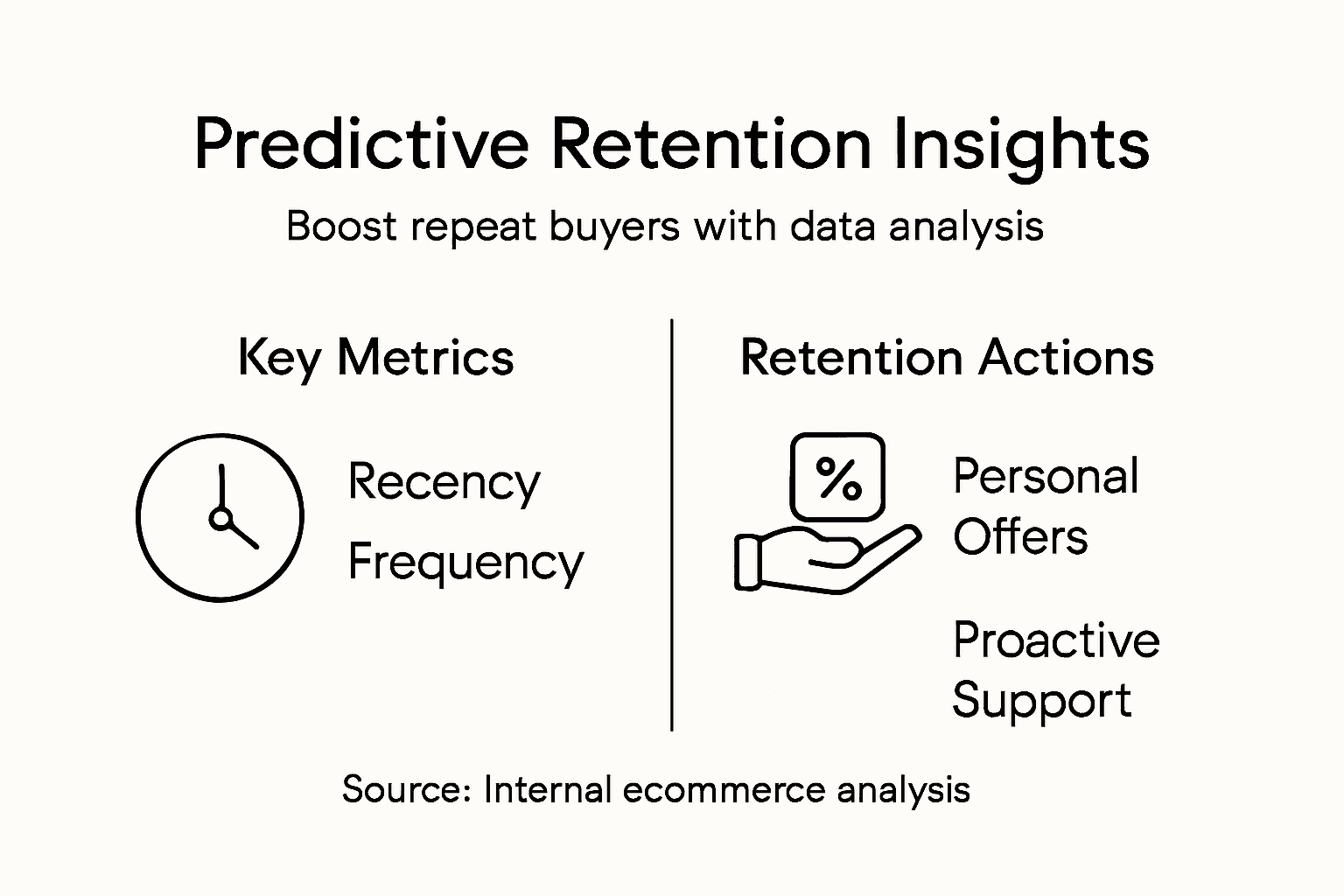
Churn prediction frameworks integrate multiple data points to create comprehensive customer profiles that enable targeted retention strategies. These advanced systems analyze a wide range of behavioral indicators, including purchase frequency, engagement patterns, customer support interactions, and historical transaction data. By developing predictive models that can identify at-risk customers before they disengage, businesses can design personalized interventions that address specific customer needs and preferences.
Advanced predictive insights transform customer retention from a reactive to a proactive strategy. Machine learning algorithms continuously analyze customer data to detect subtle patterns and potential churn signals, allowing businesses to create dynamic, personalized engagement approaches. These strategies might include customized communication, tailored product recommendations, loyalty program adjustments, or targeted incentives designed to re-engage customers at precisely the right moment. The key is developing a nuanced understanding of individual customer journeys and creating adaptive retention strategies that feel genuinely responsive to each customer’s unique needs and preferences.
Pro tip: Develop a baseline retention model using your existing customer data, then incrementally refine your predictive approach by tracking intervention outcomes and continuously updating your machine learning algorithms.
Common Pitfalls and Data Privacy Concerns
Data privacy represents a critical challenge for e-commerce businesses navigating the complex landscape of digital customer interactions. As companies increasingly rely on sophisticated data analytics to drive strategic decisions, they must simultaneously protect customer information and maintain transparent, ethical data collection practices that build and preserve consumer trust.
Data privacy challenges in e-commerce encompass multiple dimensions of risk, including unauthorized data collection, potential security breaches, and insufficient protection mechanisms. Online retailers must implement robust security protocols that not only comply with global regulatory standards but also proactively address emerging threats. This requires a comprehensive approach that integrates advanced encryption technologies, secure data storage practices, and transparent communication about how customer information is collected, used, and protected.
Navigating the regulatory landscape demands a nuanced understanding of evolving legal frameworks across different jurisdictions. E-commerce platforms must develop flexible data governance strategies that can adapt to changing regulations while maintaining a consistent commitment to customer privacy. This includes implementing consent management systems, providing clear opt-out mechanisms, and ensuring that data collection practices are both legally compliant and ethically responsible. Businesses must balance the need for rich customer insights with the fundamental right to personal data protection, creating systems that are both analytically powerful and fundamentally respectful of individual privacy.
Below is a summary of essential data privacy practices for e-commerce businesses:
| Practice | Purpose | Example Implementation |
| Encryption | Protect sensitive data from breaches | AES-256 data storage |
| Consent management systems | Ensure legal compliance and user control | Opt-in/opt-out modules |
| Regular security audits | Identify and fix vulnerabilities | Annual cybersecurity review |
| Transparent data policies | Build customer trust | Easily accessible privacy policies |
Pro tip: Conduct a comprehensive annual audit of your data collection and storage practices, involving legal experts and cybersecurity professionals to identify and address potential vulnerabilities.
Unlock Smarter Ecommerce Growth with AI-Powered Insights
If you are struggling to transform complex transaction data into actionable strategies like Market Basket Analysis or RFM Segmentation the challenge is clear: how do you gain deep product association and customer behavior insights without exhaustive data science skills Affinsy offers the perfect solution. It automates advanced analytics using AI to help online retailers optimize product bundling and cross-selling while improving customer retention. By turning your existing sales data into clear, tailored recommendations you can boost average order values and enhance customer loyalty.
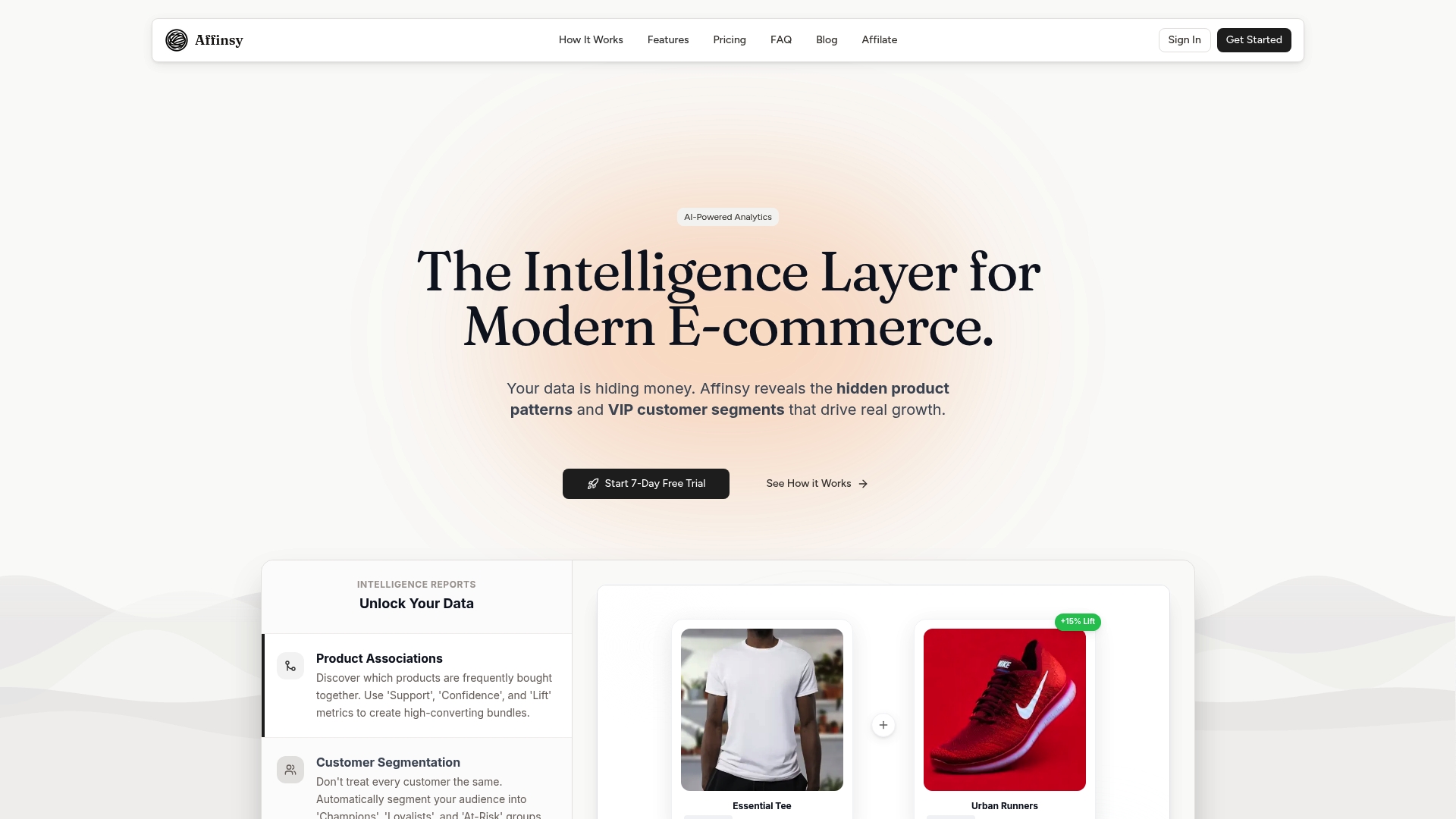
Experience the power of data-driven ecommerce strategies firsthand with Affinsy. Visit Affinsy to explore how easily you can integrate with Shopify, WooCommerce, or Google Analytics and start generating custom reports and advanced dashboards that deliver real results. Don’t miss the opportunity to grow smarter—get started now and turn insights into sales with Affinsy.
Frequently Asked Questions
What are data-driven e-commerce strategies?
Data-driven e-commerce strategies involve leveraging advanced analytics and customer data to make informed business decisions. This systematic approach converts raw data into actionable insights, driving revenue and enhancing customer experiences.
How can Market Basket Analysis improve my e-commerce business?
Market Basket Analysis helps identify which products are frequently purchased together, enabling retailers to create targeted recommendations and optimize product bundling, which can lead to increased cross-selling opportunities and higher average order values.
What is RFM Segmentation and how can it benefit my marketing efforts?
RFM Segmentation classifies customers based on their recent purchases, frequency of buying, and total spending. This allows businesses to identify high-value customers and tailor marketing strategies specifically to increase retention and customer engagement.
How do I ensure data privacy while implementing data-driven strategies?
To ensure data privacy, e-commerce businesses should implement strong security measures, such as encryption, consent management systems, and regular security audits, while maintaining transparency about data collection practices to build trust with customers.
Recommended
-
Understanding Ecommerce Growth Strategies Guide - Affinsy Blog | Affinsy
-
Data Driven Ecommerce: Unlocking Revenue Potential - Affinsy Blog | Affinsy
-
Ecommerce Growth Strategies Explained: Unlocking Revenue - Affinsy Blog | Affinsy
-
Data-Driven Marketing Explained: Unlocking E-Commerce Growth - Affinsy Blog | Affinsy