
Messy sales data can leave you guessing instead of making smart decisions for your e-commerce business. When your records are scattered, inconsistent, or filled with errors, even the most promising analytics lose their power. Sorting through unreliable numbers wastes time and puts growth out of reach.
The good news is you can transform raw sales data into actionable insights that truly drive your business forward. By using proven techniques like data cleaning, tidy organization, and advanced analysis, you unlock accurate trends and discover exactly what your customers want. These practical methods will help you spot hidden opportunities, fine-tune your marketing, and increase your bottom line.
Ready to find out how the right approach can make your sales data work harder for you? The following steps reveal actionable tips and expert strategies you can put to use immediately.
Table of Contents
- 1. Start With Clean, Organized Sales Data
- 2. Use Market Basket Analysis to Uncover Product Combos
- 3. Segment Customers Using RFM for Targeted Offers
- 4. Track and Analyze Sales Trends by Time Periods
- 5. Identify Top and Underperforming Products Quickly
- 6. Monitor Effectiveness of Bundles and Cross-sells
- 7. Automate Reports for Ongoing Insights
Quick Summary
| Takeaway | Explanation |
|---|---|
| 1. Clean data is essential for analysis | Rigorous data cleaning ensures accurate insights that guide strategic business decisions. Invest time in keeping data organized and validated. |
| 2. Leverage Market Basket Analysis for sales | Identify product combinations that customers frequently purchase together to develop targeted cross-selling strategies and increase average order value. |
| 3. Use RFM for effective customer segmentation | Apply the RFM model to categorize customers based on their purchasing behavior, allowing personalized marketing efforts that enhance revenue. |
| 4. Monitor sales trends over time | Regularly analyze sales data across various time periods to identify patterns and optimize inventory and marketing strategies accordingly. |
| 5. Automate reporting for insights | Implement automated reporting systems to generate real-time sales insights efficiently, enabling quicker decision-making and reducing human error. |
1. Start With Clean, Organized Sales Data
Data quality is the foundation of meaningful sales analysis for any e-commerce business. Without clean and well-structured data, your insights will be as unreliable as a compass with a broken needle.
Successful sales data analysis begins with rigorous data validation and organization. By implementing systematic data cleaning processes, you transform raw information into a strategic asset that drives business growth.
Key steps to ensuring clean sales data include:
- Remove duplicate entries that can skew analysis results
- Standardize data formats across all sales records
- Validate data input fields to prevent errors
- Normalize inconsistent data points like product names or customer information
- Create consistent naming conventions for categories and metrics
Clean data is not just about accuracy. It’s about creating a reliable foundation for strategic decision making.
Organizing your sales data follows tidy data principles which means structuring datasets consistently. This approach simplifies analysis and makes it easier to uncover meaningful patterns in customer behavior and sales performance.
Pro Tip: Invest 30 minutes weekly in data hygiene to save hours of troubleshooting and ensure your sales analysis remains razor sharp.
2. Use Market Basket Analysis to Uncover Product Combos
Market Basket Analysis is a powerful data mining technique that helps e-commerce businesses discover hidden product relationships and unlock revenue potential. By understanding which products customers frequently purchase together, you can create smarter marketing strategies and boost sales.
Market Basket Analysis reveals purchasing patterns that might otherwise go unnoticed. Association rule mining techniques allow you to uncover connections between seemingly unrelated products.
Key steps for implementing Market Basket Analysis include:
- Collect comprehensive transaction data
- Identify frequent product combinations
- Calculate metrics like support, confidence, and lift
- Develop targeted cross-selling strategies
- Create personalized product recommendations
Not all product combinations are created equal. The right analysis can transform random purchases into strategic opportunities.
By understanding cross-selling strategies using association rules, you can design bundle offers that feel natural and appealing to customers. Imagine discovering that customers who buy running shoes often purchase fitness trackers or protein supplements.
The goal is not just to suggest random products but to create meaningful connections that enhance the customer shopping experience and increase average order value.
Pro Tip: Start small by analyzing your top 20% of transactions to quickly identify the most promising product combinations without getting overwhelmed by data.
3. Segment Customers Using RFM for Targeted Offers
Customer segmentation is the secret weapon of successful e-commerce businesses. By understanding your customers beyond basic demographics, you can create laser-focused marketing strategies that drive revenue and customer loyalty.
The RFM (Recency, Frequency, Monetary) model provides a powerful framework for customer segmentation through advanced clustering. This approach breaks down customer value into three critical dimensions that reveal far more than traditional analysis methods.
Here’s how RFM segmentation works:
- Recency: How recently did the customer make a purchase?
- Frequency: How often do they buy from your store?
- Monetary: What is the total value of their purchases?
Not all customers are created equal. RFM analysis helps you distinguish between your most valuable customers and those who need more engagement.
By applying K-means clustering techniques, you can divide your customer base into meaningful segments. For example:
- High-value loyal customers who buy frequently and spend more
- Potential champions who make regular but smaller purchases
- At-risk customers showing declining purchase patterns
- One-time buyers who need targeted re-engagement strategies
Customer segmentation enables personalized marketing approaches. Instead of generic campaigns, you can craft specific offers that resonate with each customer group’s unique behavior and preferences.
Pro Tip: Start by segmenting your top 20% of customers to quickly identify the most actionable insights and create targeted marketing strategies with the highest potential return.
4. Track and Analyze Sales Trends by Time Periods
Sales trend analysis is the compass that guides intelligent e-commerce decision making. By understanding how your sales evolve across different time periods, you can anticipate market shifts and optimize your business strategy.
Temporal sales analysis involves examining your business performance through strategic time lenses. Quarterly sales reports from authoritative sources provide crucial insights into seasonal patterns and growth trajectories.
Key time periods to track include:
- Daily sales performance
- Weekly sales comparisons
- Monthly revenue trends
- Quarterly growth analysis
- Year-over-year comparisons
Sales trends are not just numbers. They are the narrative of your business’s performance and potential.
By analyzing digital economy measurements, you can:
- Identify seasonal purchasing patterns
- Recognize emerging market trends
- Predict potential revenue fluctuations
- Adjust inventory and marketing strategies
- Benchmark performance against industry standards
Successful trend tracking requires consistent data collection and a willingness to dive deep into your sales metrics. Look beyond surface-level numbers to understand the story behind the data.
Pro Tip: Create a standardized monthly dashboard that automatically compares current performance against previous periods, saving time and providing instant visibility into your sales trends.
5. Identify Top and Underperforming Products Quickly
In the world of e-commerce, knowing which products drive your revenue and which are dragging you down is mission critical. Understanding your product performance isn’t just about numbers. It’s about making strategic decisions that impact your bottom line.
Product performance analysis requires a multifaceted approach. Competitor analysis frameworks provide critical insights into how your products stack up against market alternatives.
Key metrics to evaluate product performance include:
- Total revenue generated
- Profit margin per product
- Sales volume
- Customer return rates
- Inventory turnover
Not every product that sells is profitable. Dig deeper than surface-level sales numbers.
By examining sales mix and break-even point analysis, you can:
- Identify your most profitable product lines
- Recognize products with high costs and low returns
- Develop targeted marketing strategies
- Optimize inventory management
- Eliminate or redesign underperforming products
Successful product performance tracking requires consistent monitoring and a willingness to make data-driven decisions. Your sales data tells a story. Learn to read it fluently.
Pro Tip: Create a monthly dashboard highlighting your top 5 performing and bottom 5 performing products to maintain a pulse on your product portfolio’s health.
6. Monitor Effectiveness of Bundles and Cross-sells
E-commerce success hinges on understanding how product combinations drive revenue. Bundle and cross-sell strategies are not just about throwing random products together but creating meaningful value for customers.
Effective bundle monitoring requires sophisticated data analysis. Market Basket Analysis helps evaluate how different product combinations perform in real-world scenarios.
Key metrics to track bundle effectiveness include:
- Conversion rates for bundle offers
- Average order value
- Profit margin per bundle
- Customer purchase frequency
- Product combination popularity
Not all bundles are created equal. Strategic cross-selling is an art and a science.
By analyzing cross-selling techniques, you can:
- Identify complementary product relationships
- Design more attractive bundle offers
- Increase overall customer purchase value
- Reduce inventory of slow-moving products
- Enhance customer shopping experience
Successful cross-selling requires continuous monitoring and willingness to adapt your strategy based on real customer behavior.
Pro Tip: Rotate and experiment with bundle combinations monthly, tracking performance metrics to continuously refine your cross-selling approach.
7. Automate Reports for Ongoing Insights
In the fast-paced world of e-commerce, waiting for manual reports is like navigating with an outdated map. Automated reporting transforms raw data into strategic intelligence, giving you real-time insights without constant manual intervention.
Automation tools streamline data pipeline processes by transforming complex sales information into actionable reports quickly and efficiently.
Key elements of effective automated reporting include:
- Scheduled report generation
- Real-time data integration
- Customizable dashboards
- Automated data cleaning
- Performance trend tracking
Automation is not about replacing human insight. It’s about amplifying your ability to make informed decisions faster.
By leveraging AI-powered business analysis, you can:
- Eliminate repetitive data collection tasks
- Focus on strategic interpretation
- Respond faster to market changes
- Reduce human error in reporting
- Scale your analytics capabilities
Successful automation requires selecting the right tools and designing workflows that align with your specific business needs.
Pro Tip: Start by automating one critical report and gradually expand your automated reporting ecosystem as you become more comfortable with the tools.
This table summarizes the key concepts and actionable strategies described in the article regarding effective data analysis for e-commerce sales improvement.
| Topic | Description | Key Takeaways |
|---|---|---|
| Clean Data | Importance of validating and organizing sales data for accurate analysis. | Regular data hygiene enhances strategic decision-making. |
| Market Basket Analysis | Using association rules to identify product combinations and revenue potential. | Tailored cross-sell strategies boost sales and customer satisfaction. |
| Customer Segmentation | Applying RFM scoring for clustering customers into meaningful groups. | Focused marketing improves customer loyalty and revenue. |
| Sales Trends | Assessing sales data over time to identify performance patterns. | Strategic tracking aids inventory management and forecasting. |
| Product Analysis | Examination of top and underperforming products using critical metrics. | Data-informed decisions optimize product portfolio and profits. |
| Bundle Effectiveness | Monitoring and refining product combinations to maximize their appeal and profitability. | Increased average order value and enhanced customer experience. |
| Automated Reports | Streamlining data processes and gaining real-time insights through automation. | Improved efficiency allows focus on decision-making. |
Unlock the Full Potential of Your E-commerce Sales Data Today
Struggling to make sense of complex sales patterns like Market Basket Analysis or RFM customer segmentation? You’re not alone. Many e-commerce businesses face challenges turning their raw sales data into actionable insights that drive growth, increase average order values, and improve customer loyalty. Affinsy tackles these pain points head-on by offering an AI-powered SaaS platform designed to analyze your historical transaction data and reveal hidden product associations and customer segments without requiring deep data science skills.
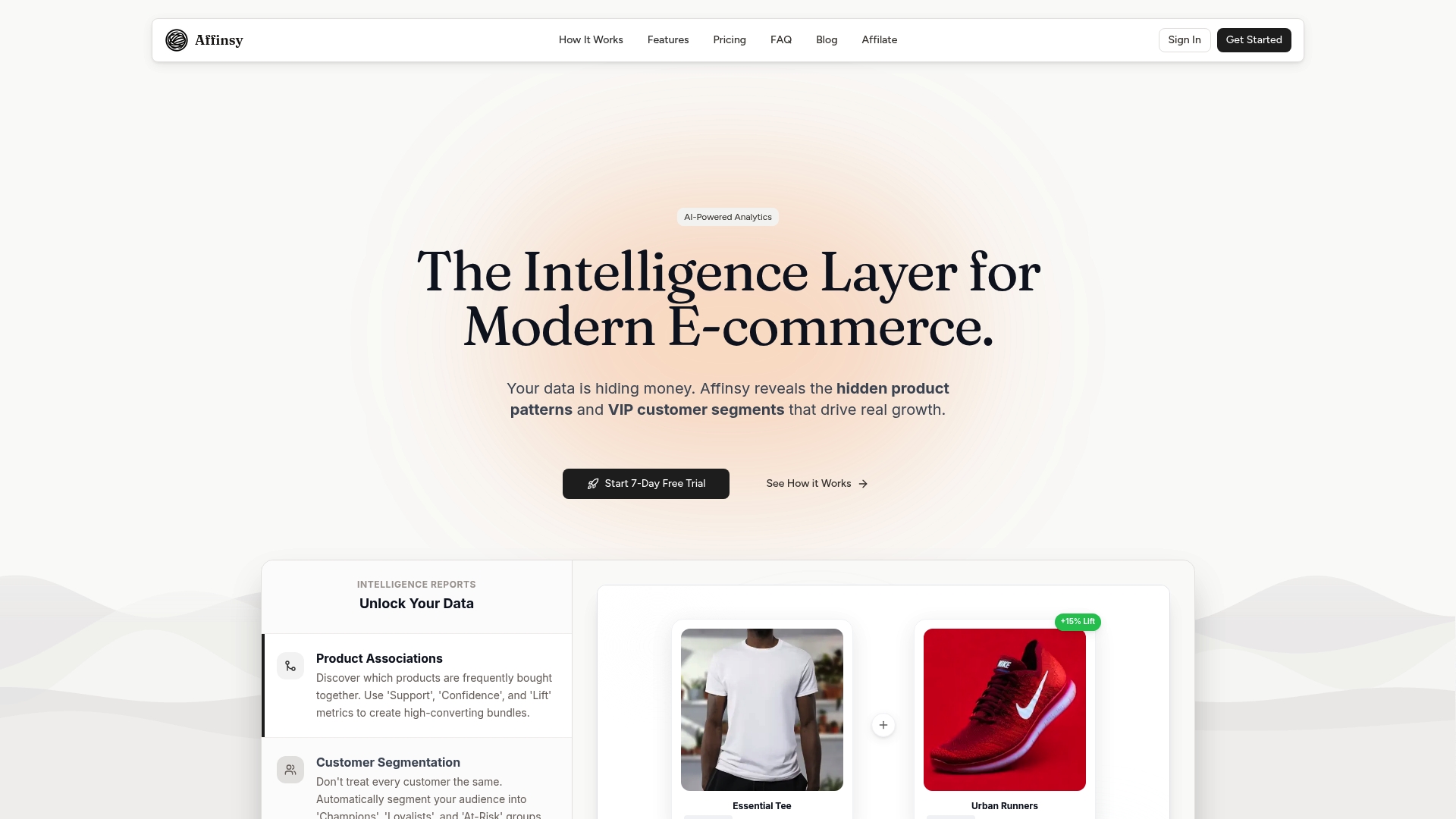
Discover how easy it is to enhance your product bundling, cross-selling, and retention strategies with automated insights and customizable reports. Integrate seamlessly with Shopify, WooCommerce, or Google Analytics and enjoy advanced dashboards that keep your finger on the pulse of your sales trends. Don’t wait to transform your e-commerce performance. Visit Affinsy now and start leveraging smart analytics that convert complex sales data into real revenue growth.
Learn more about how Affinsy’s insights complement sales data analysis tips in the article on market basket analysis and customer segmentation strategies to take your online store to the next level.
Frequently Asked Questions
How can I ensure my sales data is clean and organized?
To ensure your sales data is clean and organized, start by removing duplicate entries, standardizing data formats, and validating input fields. Implement systematic data cleaning processes once a week to improve data quality significantly and enhance your sales analysis.
What is Market Basket Analysis and how can I use it to increase sales?
Market Basket Analysis is a technique that reveals purchasing patterns by identifying which products customers often buy together. Collect transaction data, analyze frequent product combinations, and develop targeted cross-selling strategies to boost overall sales results.
How do I segment my customers using the RFM model?
To segment your customers using the RFM model, evaluate them based on Recency, Frequency, and Monetary value. Begin by analyzing your top 20% of customers to quickly identify actionable insights and tailor marketing offers accordingly.
What metrics should I track to analyze sales trends effectively?
Focus on tracking metrics such as daily sales performance, monthly revenue trends, and quarterly growth analysis to effectively monitor sales trends. Create a standardized monthly dashboard to visualize these metrics, helping you identify patterns and make timely adjustments.
How can I identify both top and underperforming products?
Identify your top and underperforming products by analyzing total revenue, profit margins, and sales volume for each item. Develop a monthly product performance dashboard to focus on the top 5 and bottom 5 products, helping you optimize your inventory and marketing strategies.
What are the benefits of automating sales reports?
Automating sales reports provides real-time insights and reduces manual effort invested in data collection and analysis. Start by automating one key report to save time and improve accuracy, aiming for a complete system within a few months.
Recommended
- 7 Essential Sales Data Analysis Tips for Online Store Owners - Affinsy Blog | Affinsy
- Sales Data Analysis: Unlocking E-Commerce Growth - Affinsy Blog | Affinsy
- Complete Guide to Sales Trend Analysis in E-commerce - Affinsy Blog | Affinsy
- Sales Analysis Example Guide for Beginners (2025) - Affinsy Blog | Affinsy