Finding ecommerce analytics software that delivers instant, revenue-focused insights across multiple clients without long technical setup is still difficult. Many tools require manual data prep, store-side installs, or expensive onboarding for core automation features. This list covers four Commercengine.io alternatives so CRO, retention, and analytics agencies can match a software option to their workflow and client scale.
Table of Contents
Affinsy
At a Glance
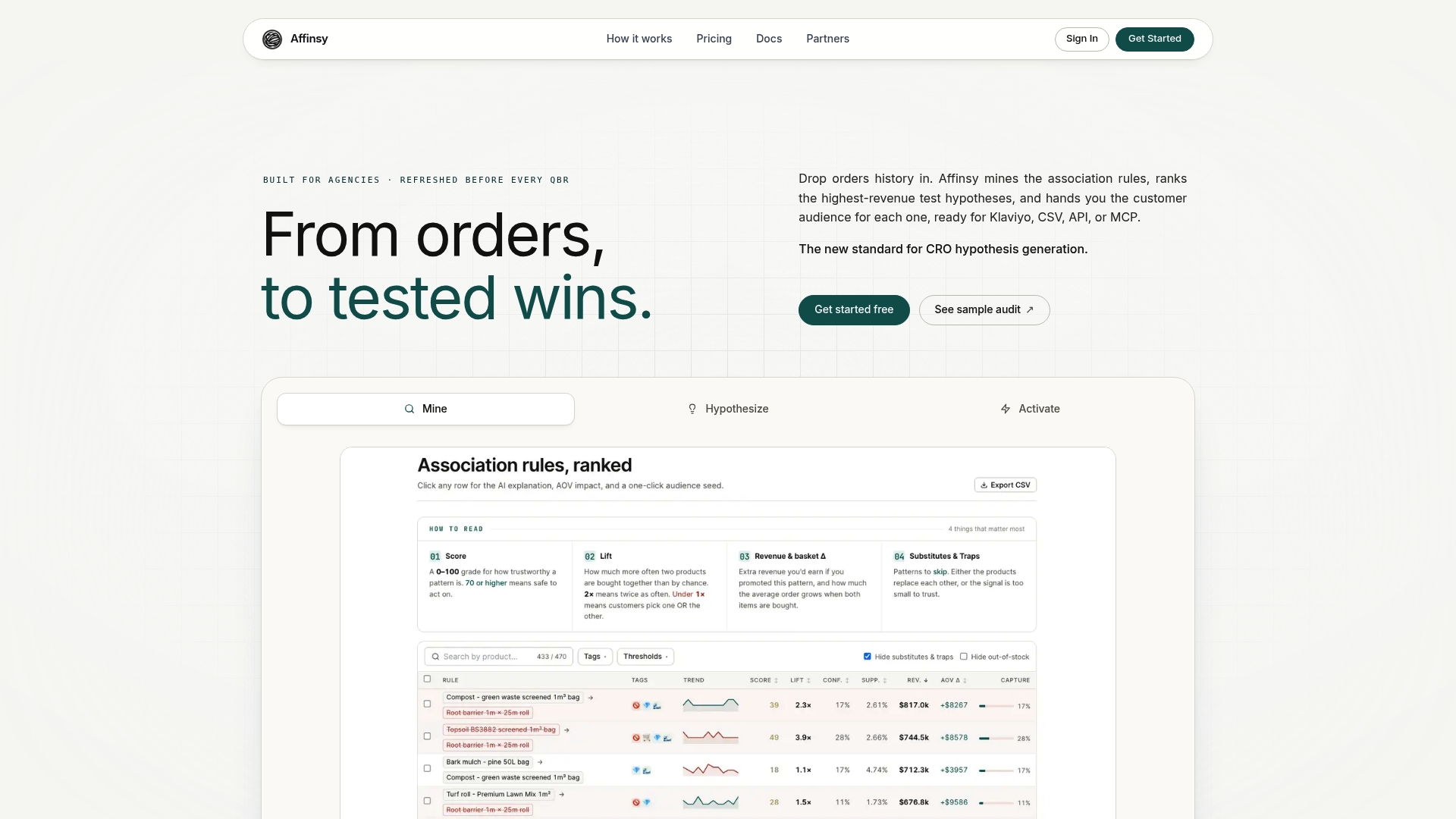
Generates ranked test hypotheses directly from raw order data and builds customer audiences for activation. The system produces revenue-ranked ideas and audience segments without an app install or heavy developer work. That approach shortens the preparation needed for quarterly business reviews.
Core Features
Affinsy mines association rules from transaction histories and ranks hypotheses by revenue impact and confidence, then exports audiences for testing. It accepts CSV uploads, API and webhook ingestion, and produces shareable, password protected reports for clients. The product includes AI powered insights and reporting to help CRO teams prioritize tests.
Key Differentiator
Affinsy automates hypothesis ranking and audience creation while prioritizing revenue impact metrics and avoiding any store-side installation. The system combines association rule mining with confidence scoring so you get ranked test ideas and ready audiences. That removes most manual data work for agencies managing multiple clients.
Pros
Streamlines hypothesis generation by turning order histories into statistically supported test ideas that a CRO or retention team can defend. It supports multi client datasets and multiple ingestion paths so you can run work across agencies without complex setup. Shareable reports and audience export let marketing teams activate recommendations in email or ad platforms.
Cons
- No direct store or warehouse integrations; you must export order data from Shopify, WooCommerce, BigCommerce, Stripe, or other systems and ingest via CSV or API.
Notable Integrations
- Klaviyo for audience activation and email workflows.
- CSV uploads for manual or batch order ingestion.
- API for data ingestion and audience activation to automate pipelines and webhooks.
Who It’s For
CRO, retention, and analytics agencies that manage multiple e-commerce clients will get the most value. Teams that run frequent A B tests or prepare recurring business reviews benefit from ranked hypotheses and reusable audience exports. Less technical store owners can use CSV uploads, while developer teams can integrate via API.
Unique Value Proposition
Shareable, password protected reports plus automated reruns let agencies hand off ranked hypotheses to clients with minimal explanation. That reduces analyst prep work and shortens client review meetings. For agencies juggling several accounts, this lowers the cost per hypothesis.
Real World Use Case
An agency pulls monthly order exports for five clients, uploads CSVs or pipes data via API, and runs Affinsy to generate ranked hypotheses. The team selects the top ideas, exports audiences, and wires them into Klaviyo for segmented campaigns. Those recommendations then feed the agency A B test plan for the next quarter.
Pricing
The vendor advertises a permanent free tier for up to 20,000 line items, plus paid plans. Paid tiers the vendor lists include Pro at $49 per month and Max at $199 per month, with enterprise pricing available on request. Agencies can request special rates for multi client accounts and API access.
Website: https://affinsy.com
Rfmcube
At a Glance
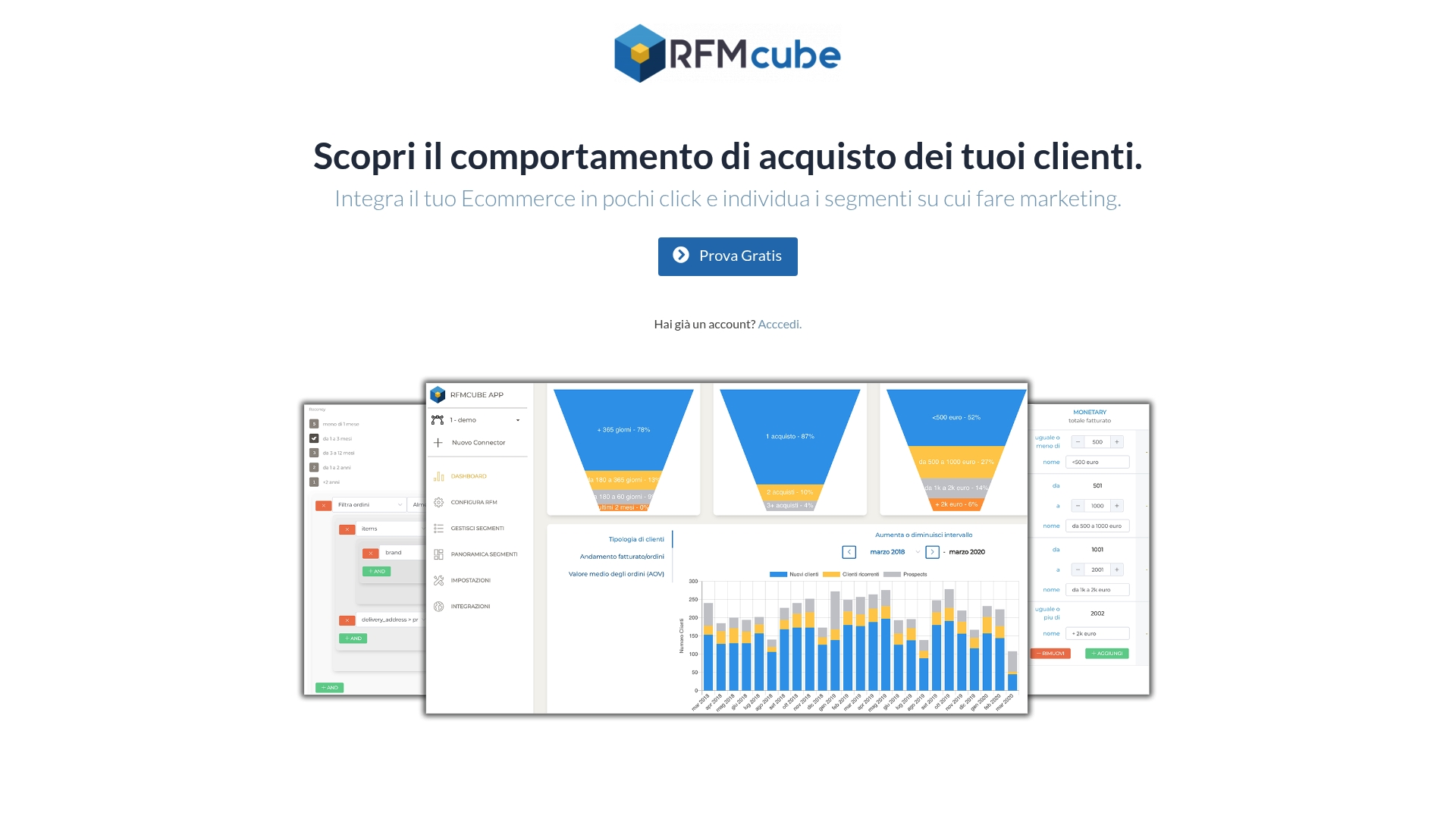
According to the company, a retailer that automated retention campaigns with Rfmcube saw a 20% increase in recurring monthly revenue. Rfmcube focuses on RFM analysis and customer trend charts to reveal who buys most often and who spends most. The product also supports real-time segmentation so teams can trigger campaigns based on current customer behavior.
Core Features
Rfmcube performs RFM scoring with visual trend charts and historical customer analysis. The platform offers API connections to major CMS and email tools, plus filters to enrich records with extra attributes. It also includes mail automation features so you can target segments directly from the system.
Key Differentiator
Rfmcube stands out for its straightforward integrations with popular store platforms and marketing tools. The combination of historical RFM reporting and live segmentation lets you act on a segment immediately after data sync. That integration-first approach reduces manual exports and shortens the time from insight to campaign.
Pros
Rfmcube makes API integration with Magento, WooCommerce, Shopify, and Prestashop simple, which speeds up data flow for stores. Its segmentation engine delivers granular groups based on recency, frequency, and monetary value, and the interface helps nontechnical marketers set basic automations. The platform also links directly to common email services so you can run retention and upsell campaigns without building custom connectors.
Cons
-
Requires technical setup for API integration which can add implementation time.
-
Some advanced features need a firm understanding of segmentation and marketing automation.
-
Costs can rise for very large databases or for requests for advanced capabilities.
When It May Not Fit
Rfmcube may not suit merchants without developer access to implement APIs. Teams that lack marketing automation experience will face a learning curve for advanced segmentation workflows. Agencies needing deep custom analytics beyond RFM scoring may find the feature set too narrowly focused.
Notable Integrations
Rfmcube lists direct connectors to major platforms and email providers. Integrations include:
- Magento 1 and 2
- WooCommerce
- Shopify
- Prestashop
- Mailchimp
- Sendinblue
- Klaviyo
- ActiveCampaign
Who It’s For
Rfmcube targets online retailers and e-commerce teams that want to improve retention through behavior analysis. It fits stores that can export or sync transactional data and that run email marketing or CRM campaigns. Growth teams that prefer data-driven segmentation but need prebuilt CMS links will find it useful.
Real World Use Case
A retailer synced orders to Rfmcube, created segments for lapsed high-value customers, and automated email flows. The company reported stronger recurring revenues after those flows. That result shows how historical RFM segments can convert dormant customers into repeat buyers.
Pricing
Rfmcube offers custom quotes and asks customers to contact sales for details. The vendor lists pricing starting at about €10/month, with tailored plans for larger databases and enterprise needs.
Website: https://rfmcube.com
Agenie
At a Glance
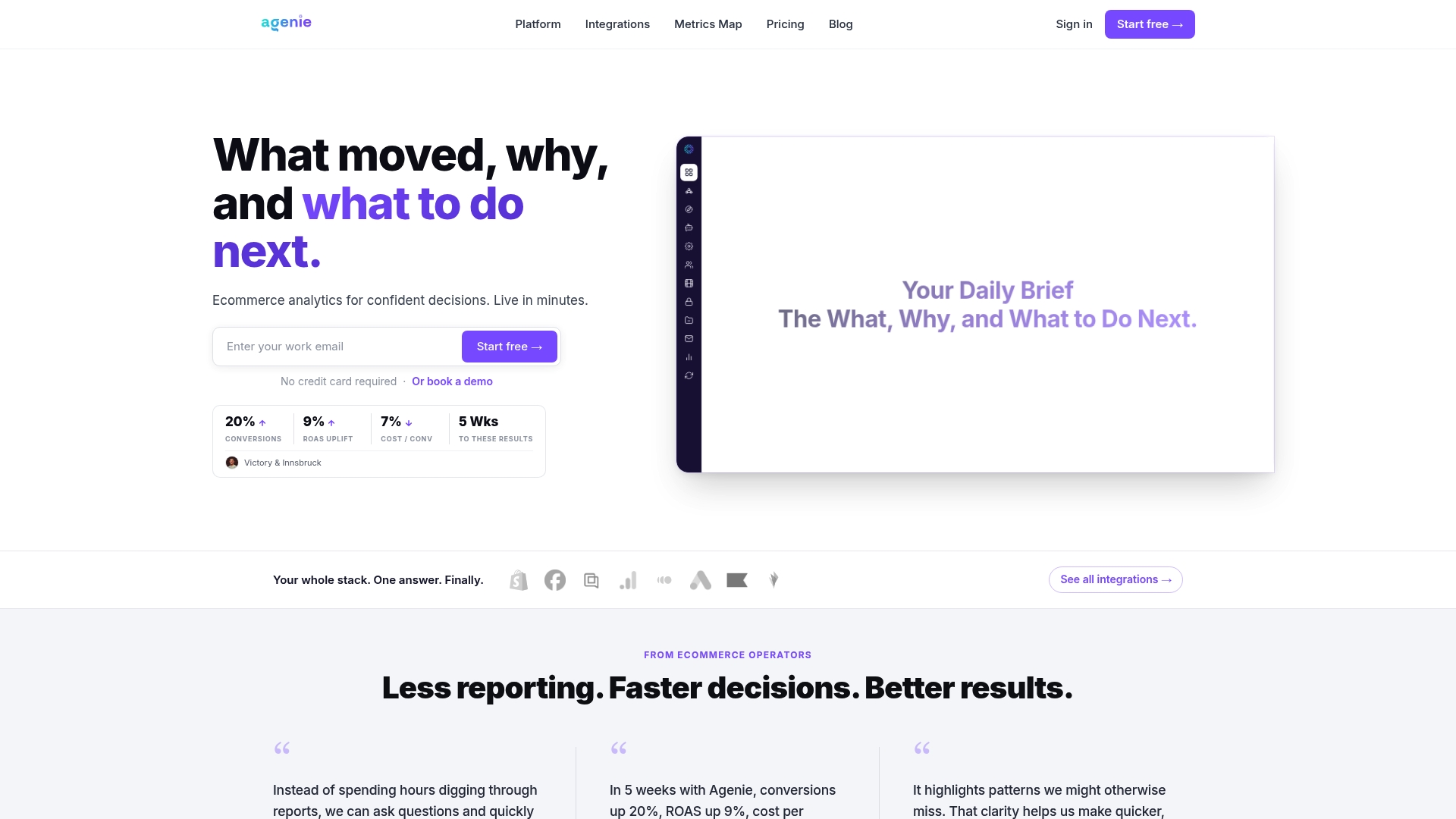
Starter plan begins at £349/month. Agenie reports setup usually in under 5 minutes, which makes initial adoption fast. The platform blends sales, ad, and analytics data into real-time metrics for quick diagnosis.
Core Features
Agenie connects storefronts, ad platforms, email, and analytics and then reconciles those sources into blended KPIs. The product runs AI diagnostics and automated data modeling to surface root causes and metric anomalies. Teams can build role-based dashboards and metric cards to track marketing, finance, and operations signals.
Key Differentiator
The standout element is AI-powered root cause analysis that pulls across multiple sources to answer complex questions quickly. Compared with Affinsy, Agenie leans toward rapid diagnostics tied to ad and storefront data. That focus makes it better for teams that want quick, cross-source explanations rather than deep custom modeling.
Pros
Fast setup is a major time saver, and the vendor claims it completes in under 5 minutes. Deep integrations with ad networks and storefronts let you compare channel ROAS with sales and returns in one view. Automated modeling and role-specific dashboards reduce manual reconciliation and save analysts many hours each week.
Cons
- Limited information on advanced customization. The product page does not detail how far users can extend data models.
- Buyer reviews are not provided, so day-to-day UX tradeoffs are unclear. That gap makes risk assessment harder.
- Pricing may be a barrier for small startups or very large enterprises depending on customization needs. Costs could rise with bespoke work.
When It May Not Fit
Enterprises that require documented security certifications or custom security controls will need to confirm capabilities. Brands that require offline hardware or POS integration should look elsewhere, since no offline integration is listed. Small stores on tight budgets may find the starter price limiting without negotiated terms.
Notable Integrations
Agenie connects to common ecommerce and marketing stacks. Key connectors include:
- Shopify
- Google Analytics 4
- Meta Ads and Google Ads
- Klaviyo and Gorgias
- Awin and Recharge
These integrations cover storefronts, ad channels, email, and subscription platforms.
Who It’s For
Ecommerce operators who want a fast, AI-driven view without building a data pipeline. Marketing and finance managers who need cross-source ROAS, margin, and cost visibility. Operations teams that track returns, fulfillment trends, and inventory signals alongside marketing performance.
Real World Use Case
A mid-sized retailer connected Shopify, ad platforms, and analytics to Agenie. Within minutes they saw sales performance, return trends, and channel ROAS on a single dashboard. The platform delivered AI recommendations to adjust the marketing mix and reduce return rates, speeding decision cycles and improving margins.
Pricing
Pricing starts at £349/month for the Starter plan. Growth and custom plans are available, with discounts for annual billing and higher volume usage.
Website: https://agenie.io
Tresl Segments
At a Glance
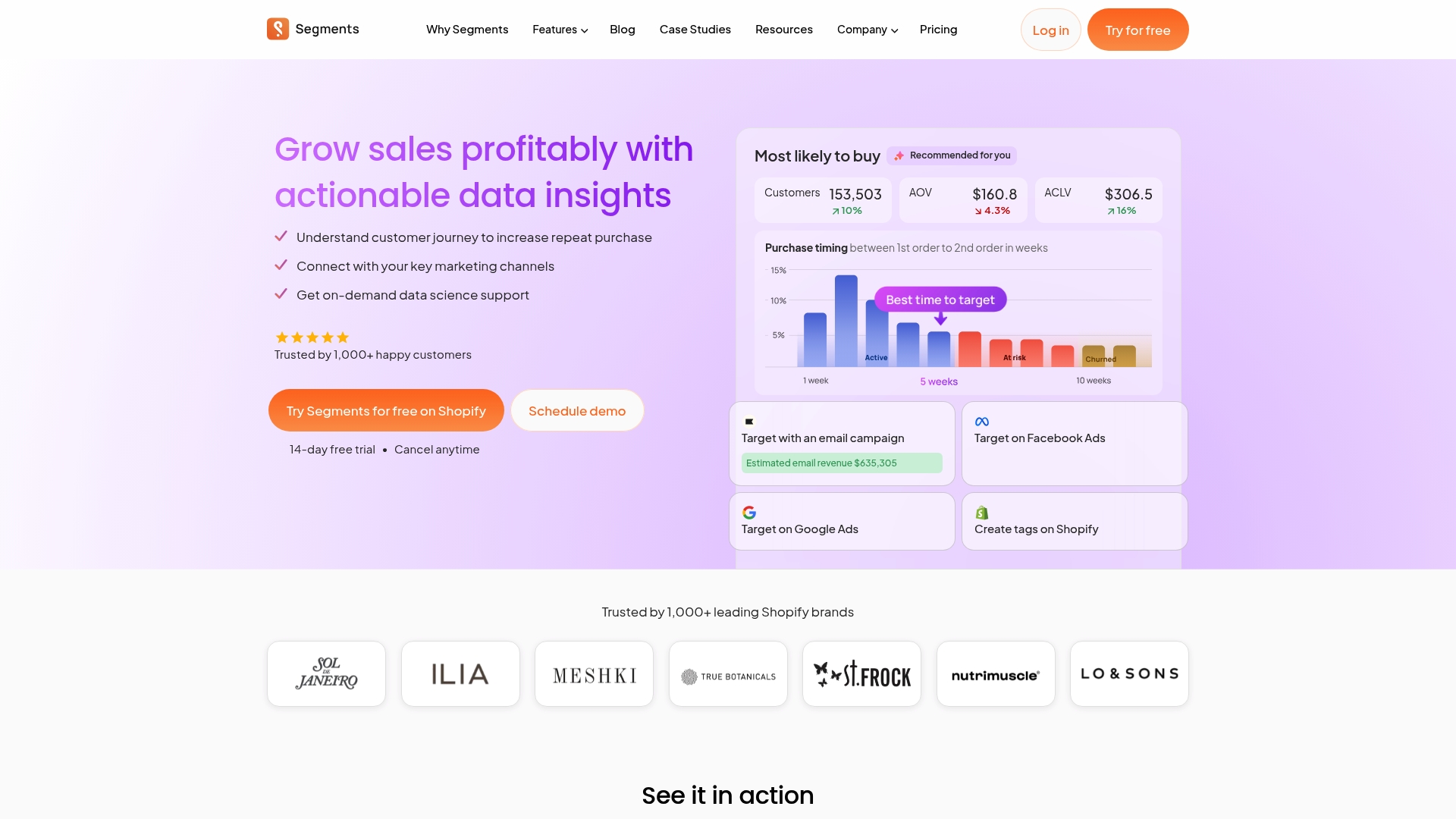
Core plan starts at $166 per month when billed annually. Tresl reports a 5 out of 5 star rating on the Shopify App Store. That combination of clear entry pricing and a high vendor reported rating makes it easy to evaluate costs versus expected value.
Core Features
Tresl delivers AI powered customer segmentation and audience sync along with interactive shopper insights and product journey analysis. The platform includes cohort analysis and campaign performance reporting and a natural language segmentation tool called SegmentsGPT for quick audience queries. Customer lifecycle segmentation tools focus on retention and lifetime value growth.
Key Differentiator
The product emphasizes data science expertise packaged for non technical teams. Built by data scientists, it pairs no code AI segmentation with real time analytics that target Shopify merchants and ecommerce marketers. This focus shifts work from manual list building to model driven audience creation.
Pros
Onboarding is user friendly and requires little technical setup. The vendor positions its team of data scientists as the source of deeper insights, which helps teams that lack in house analytics staff. Integrations with major marketing channels make it straightforward to push audiences to email and ad platforms and to measure campaign results.
Cons
- Teams may need time to fully use the more advanced features. This requires staff training or outside support.
- Pricing can be high for very small startups or low volume stores. The Core and Pro plans assume a certain transaction volume.
- Complex customizations often require elevated plans or vendor support. That can raise total cost for enterprise style work.
When It May Not Fit
If your store has minimal monthly orders or a tiny marketing budget, the pricing structure could feel expensive. If you need deeply bespoke models without vendor involvement, the available customization paths may require higher level plans. If your team prefers raw SQL access and full in house modeling, this product may not match that workflow.
Notable Integrations
- Shopify for order and customer data sync
- Klaviyo for email audience pushes
- Google Ads, Facebook Ads, TikTok, ActiveCampaign, Omnisend and other marketing channels for cross channel targeting
Who It’s For
Shopify Plus ecommerce brands and marketing agencies that want AI powered segmentation without building models from scratch. Data driven online retailers and enterprise decision makers who need model backed audience exports will find the product relevant. Small single person shops with tiny volume may find cost and complexity a poor fit.
Real World Use Case
According to the vendor, a Shopify based beauty brand used Tresl Segments to identify high value customer segments and doubled revenue from targeted campaigns. That claim illustrates the platform used for timing emails, selecting product bundles, and syncing audiences to email and ad platforms. The example shows how segmentation plus channel sync can influence campaign returns.
Pricing
Pricing tiers are annual billed. The vendor lists a Core plan at $166 per month when billed annually and a Pro plan at $400 per month when billed annually. Enterprise pricing is custom. A 14 day free trial is available to test features before committing.
Website: https://tresl.co
Comparison of alternatives
Affinsy delivers a unique combination of revenue-focused analytics and audience generation from transaction data without requiring store-side installations. For agencies managing multiple e-commerce clients, Affinsy offers a streamlined approach. Competing solutions each cater to distinct operational needs, as outlined below.
Where simplicity meets segmentation
Tresl Segments offers rapid audience generation with its SegmentsGPT natural language tool. This simplifies the process for marketing teams without technical backgrounds. It provides AI-driven segmentation packages ready for synchronization with channel integrations. However, it may require a higher transactional volume as certain plan costs can pose challenges for smaller operations.
Automation versus integration-first processes
Rfmcube stands out by providing straightforward API connections to popular CRM systems and email platforms. Its capabilities, such as automating retention campaigns based on live segmentation data, help e-commerce teams reduce manual intervention. While Rfmcube requires careful implementation to optimize advanced use cases, it is ideal for merchants seeking integration-first solutions for dynamic campaign management.
Best fit
- Agencies managing data-intensive workloads, seeking no-code operation for generating testable hypotheses from order data, should consider Affinsy.
- Merchants looking to leverage RFM analysis for enhancing customer retention may find value in Rfmcube’s real-time segmentation features.
- Teams with a focus on non-technical workflows for campaign activation and audience synchronization can benefit from Tresl Segment’s SegmentsGPT feature.
Our pick
Affinsy is recommended for agencies prioritizing rapid, revenue-driven insights extracted from raw transaction data without needing store-side installations. By offering shareable, analytics-rich hypotheses and audiences, Affinsy reduces time spent on setup, providing a tangible advantage for many teams. However, merchants primarily seeking simplified segmentation workflows or heavily integrated platforms might opt for one of the competitors mentioned to better address specific preferences.
Consider these ecommerce analytics platforms to identify which best meets your data insights and customer analysis needs.
| Product | Core Feature | Key Differentiator | Best For | Pricing | Limitation |
|---|---|---|---|---|---|
| Affinsy | Automated hypothesis ranking and audience creation | Revenue impact metrics prioritization | CRO and analytics agencies | Free tier, paid plans $49+ | Requires exported order data |
| Rfmcube | Real-time segmentation and RFM analysis | Integration-focused workflow automation | E-commerce growth teams | Price not published | API setup requires technical effort |
| Agenie | Blended ecommerce and marketing data insights | AI-powered root cause analysis | Rapid diagnostics for mid-size operators | £349/month (Starter plan) | Limited advanced customization details |
| Tresl Segments | AI-powered customer segmentation and insights | No-code segmentation for Shopify merchants | Shopify Plus brands and marketers | $166/month (Core plan annually) | High pricing for small or low-volume stores |
Finding the Right commercengine.io Alternatives for E-commerce Growth
Many e-commerce teams struggle with turning raw order data into clear test hypotheses and actionable customer segments. Affinsy addresses this by using AI to mine transaction histories, ranking hypotheses by revenue impact while letting you export targeted audiences without complex developer work. This approach fits mid-to-large e-commerce brands and agencies that want to generate data-backed test ideas quickly and prepare reviews with less manual effort.
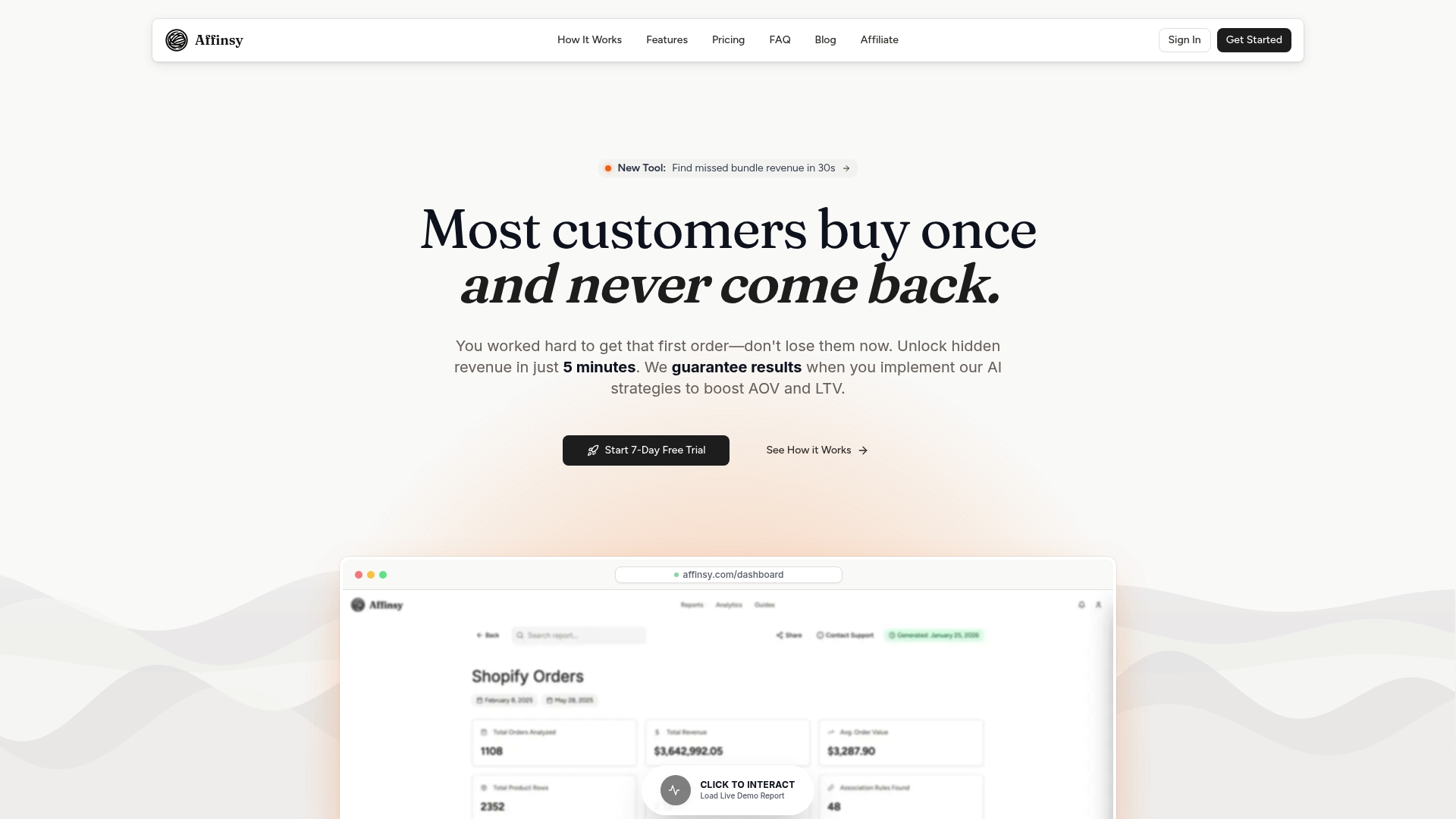
If you want to reduce manual data work and focus on revenue-ranked test ideas, see how Affinsy helps you leverage existing transaction data via CSV or API. Visit Affinsy to upload your data and get ranked hypotheses that connect directly to marketing platforms like Klaviyo.
FAQ
How does Affinsy generate ranked test hypotheses?
Affinsy generates ranked test hypotheses directly from raw order data. This capability allows it to produce revenue-ranked ideas and customer segments, minimizing the preparation needed for quarterly business reviews.
What is the difference between Affinsy and Rfmcube for retention campaigns?
Rfmcube excels in RFM analysis and real-time segmentation, allowing for immediate action based on customer behavior. Affinsy focuses on automating hypothesis ranking and audience creation, which is ideal for agencies managing multiple clients.
Can I use Affinsy if I have multiple e-commerce clients?
Affinsy is designed for agencies managing multiple e-commerce clients, as it supports multi-client datasets and various data ingestion methods. This feature simplifies the workflow across different brands without complex setups.
Does Affinsy provide integrations with other marketing platforms?
Affinsy offers integrations with platforms like Klaviyo for audience activation and email workflows. These integrations make it easier for marketing teams to activate recommendations in their campaigns.
What are the pricing tiers for Affinsy?
Affinsy has a permanent free tier for up to 20,000 line items, as well as paid tiers starting at $49 per month for the Pro plan. This pricing structure allows users to choose the option that fits their testing and analysis needs.