A pet owner bought a bag of food from your store, the pet eats every day, and the bag will run out. When it does, they will buy more pet food somewhere. Pet owners buy on a steady schedule, and many stay loyal to a brand once the pet is settled on it. Whether that second bag comes from your store depends mostly on one thing: whether your reminder arrives a few days before the bag is empty, or a week after they already bought it elsewhere.
Key takeaways
-
Pet food has one of the steadiest reorder rhythms in ecommerce, but the rhythm depends on bag size and the household, so one reminder date for the whole catalogue misses most customers.
-
Measure the median days from first to second order per product and bag size, from your own order export. Use the median, not the average.
-
Send the first reminder a few days before that median, and a second one shortly after it.
-
The first bag is where most customers drop off: trial sizes, gradual switches from an old food, and pets that do not take to the new one each need their own handling.
-
Treats, toppers and chews belong in the second or third order, once the main food has earned trust.
What is the best way to time pet food reorder reminders?
Send the first reminder a few days before the typical second-order date for that exact product and bag size, measured from your own orders. Not from the feeding guidelines, and not a flat 30 days for everything.
The feeding guidelines on the pack tell you how long a bag should last for an average animal. Your orders tell you how long it actually lasts for your customers, including multi-pet homes, owners who mix foods, and people who keep a spare bag. Only the second number predicts when they will reorder. A good reminder setup relies on actual consumption, and your order history is the record of it. Reminders that arrive on time lift reorders; reminders that arrive late teach customers to ignore you.
The mechanics of the reminder email itself, subject lines and sequence length, are covered in the replenishment email timing guide. This article is about getting the date right.
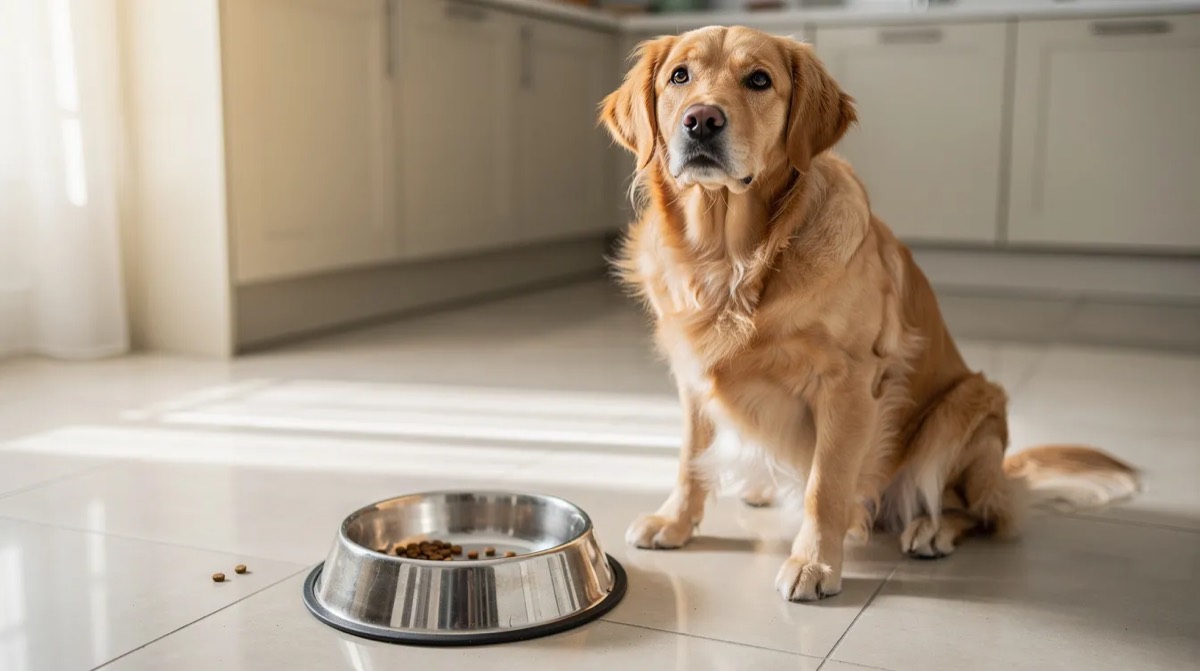
Why bag size decides the reorder window for dog food and cat food
A small bag and a large bag of the same recipe empty at very different speeds. A household with one small dog and a household with two large dogs buying the same bag empty it at very different speeds too. Reminder timing has to be set per product and bag size, not per brand or per species. That holds whether you sell one house brand or stock many pet food brands.
You cannot see the household in your data, but you can see its effect. Group reorders by the product and size bought, and the typical gap per group already reflects the mix of pets and feeding habits behind it.
Why the median beats the average
A few customers who come back very late, after a holiday, a spare bag, or a stretch of buying elsewhere, pull the average far to the right. The median is the middle gap when you sort them from shortest to longest, and it ignores those outliers.
If you time the reminder from an inflated average, it lands after most customers have already reordered or bought somewhere else. The purchase frequency guide goes into more detail on why the average misleads for reorder timing.
What is a good repeat purchase rate for pet food brands and stores?
The one that beats your own last quarter, measured product by product. An outside average mixes stores with different bag sizes, price points and customer bases, so it tells you little about yours.
Track the share of first-time buyers of each product who place a second order within a set window, for example twice that product's median gap. Then watch whether it moves after you change the reminder timing. The repeat purchase rate benchmark article explains why comparing against yourself is more useful than comparing against a published figure, and the reorder rate article covers the product-level version of the metric. Two methods help explain the number. Cohort retention analysis shows when first-time buyers from each month lapse, and RFM segmentation (recency, frequency and monetary value) shows which customers are regulars, which are drifting and which are gone.
Why loyalty in pet food depends on convenience
Pet supplies are among the categories with the most natural repeat buying, and for most pet owners convenience is one of the main factors in where they buy pet food. The pet has to eat whether or not the order arrived, so a store that makes reordering easy earns repeat pet food purchases, and one that makes it hard loses them to the nearest shop or a bigger online retailer.
Pet food shoppers also tend to be more loyal to a brand than consumers in many other categories, once the pet has settled on a food. That loyalty is easy to lose on service: a late parcel, a confusing checkout or an unanswered question. Customer satisfaction with the whole process, not just product quality, is what turns a first bag into a habit. Clear return and exchange rules help too, because owners take a new food more readily when they know what happens if the pet refuses it. Many owners see their pets as family members, and the stores that keep them make customers feel that reordering is the easy choice.
Why do pet owners switch or stop after one bag of pet food?
Usually for one of four reasons: the first bag was a trial size and ran out before any reminder, a gradual switch from the old food stretched the bag, the pet did not take to the food, or the customer ran out and bought from a local shop. Only the last one is purely a timing problem.
The first-bag problem for pet supply stores
Trial sizes run out fast. A small trial bag empties much sooner than a full bag. If your reminder schedule treats it like the full-size product, the reminder arrives long after the food is gone. Pet retailers live on repeat purchases, and for a pet owner, reliability and convenience decide much of whether they come back. Give trial SKUs their own, shorter window, and use the reminder to suggest the full-size bag.
Switching foods stretches the bag. Customers who mix the new food with their old one while switching use the first bag more slowly than its size suggests. Their first-to-second gap is longer than later gaps. A line in the first reminder such as "still mixing with your old food? Reply and we will move your reminder" handles this without guessing, gives the customer some control, and matches their expectations.
Some pets do not take to the food. A customer whose pet refused the food will not reorder it, whatever the timing. For buyers who pass the window without a second order, send a softer message asking how it went and pointing to a different recipe or format, not a "running low" prompt. Offer support and make your exchange or refund rules easy to find. For many owners the pet is part of the family, and a clear answer here keeps the relationship with your store even when this food did not work out.
Running out before delivery. If the reminder lands too close to the empty bowl, the pet owner buys wherever is nearest. Online, service is part of the product: pet owners value fast responses, younger shoppers in particular expect fast shipping and easy returns, and poor support after the purchase is a common reason subscribers leave. Leave room for your delivery time in the reminder date, with a bigger buffer around holidays when parcels run slow, and check the bag is in stock before the reminder goes out. Once an order has shipped, tracking in the customer account or on your site saves the owner from wondering whether food will arrive in time, and proactive tracking updates cut down on "where is my order" messages. A reminder for an out-of-stock product sends the customer elsewhere.
Which add-on pet products bring pet owners back?
Treats, toppers and chews tend to work best in the second or third order, suggested alongside the main food the customer already buys. In the first order they compete with a purchase the customer has not yet decided to trust.
The useful question is which add-on customers of a specific food actually buy next. That answer is in your order history: look at what appears in the second and third orders of customers who started with each main food. Market basket analysis finds these pairs across the whole catalogue, including the ones that show up in a later order rather than the same basket. Put one or two of them in the reorder reminder, not a full catalogue.
How do I calculate the reorder cadence from an order export?
Export orders with customer id, order date and product, find each customer's first and second purchase of the same product, and take the median gap per product and bag size. A spreadsheet is enough for a small catalogue.
-
Filter to the pet food products you want to time.
-
Group by customer and product, and sort each group by order date.
-
For each customer, compute the days between their first and second order of that product.
-
Drop gaps of zero or one day. These are usually corrections, exchanges or split shipments.
-
Per product and bag size, sort the gaps and take the middle value.
-
Skip products with only a handful of repeat customers. Small sample sizes make the median unreliable.
For a large catalogue, Affinsy computes the reorder cadence for every product from an uploaded order export, along with which first products lead to a second order.
Worked example: two bag sizes, two schedules
An illustration with round numbers, not a benchmark.
A store sells one chicken recipe in a 5 kg and a 12 kg bag. From its order export:
| Bag | Repeat customers | Median days to second order | First reminder | Follow-up |
|---|---|---|---|---|
| Chicken 5 kg | 150 | 25 | Day 22 | Day 29 |
| Chicken 12 kg | 90 | 35 | Day 32 | Day 39 |
The first reminder goes three days before the median, the follow-up four days after it. A customer who has not reordered by the follow-up moves to a win-back message.
To see why the median matters, take five of the 5 kg gaps: 24, 25, 25, 27 and 60 days. The median is 25. The average is 32.2, because one customer took 60 days. A reminder timed from the average, around day 29, would reach most 5 kg buyers after they had already reordered or bought elsewhere.
Now compare the flat alternative: one reminder to every buyer at day 30. The 5 kg buyer hears from you five days after the typical reorder date. The 12 kg buyer hears from you with part of the bag still left and learns to ignore your emails.

The reminder schedule and when to offer autoship
Three touches per product cover the window:
-
Before the median. The bag is running low, not empty. Helpful tone, a link that reorders the same bag in one click, one relevant add-on at most.
-
Just after the median. A direct prompt to reorder, with your delivery time stated plainly.
-
Past the window. A softer win-back: ask whether the food worked out, and offer a different recipe or size. The win-back email timing article covers what to send after that.
The moment the bag runs low is the critical one, so put the effort there rather than into more emails. The first email can also carry a few simple tips that help owners notice the bag running low: write the date on the bag when it is opened, mark a reorder line on the storage container, and keep a small reserve so a late parcel is not an emergency.
When to offer autoship. Not at checkout on the first order, and not in the first reminder to new customers. They have not yet confirmed the pet eats the food or how fast the bag goes. Offer it after the second or third on-time reorder, at the interval the customer has already shown you. Autoship matters to pet retailers because it turns a steady habit into steady revenue; at the largest online pet stores it carries a large share of sales. Pet owners respond to suggestions that match what they already buy, so base the offer on their own order history. The guide to converting one-time buyers to subscribers covers that step in detail.
Next steps
-
Pull your order export and list your top food products by volume, per bag size.
-
Compute the median days from first to second order for each, and skip the ones with too few repeat customers.
-
Set a first reminder a few days before each median and a follow-up after it, with a separate, shorter window for trial sizes.
-
Add a softer message for first-bag buyers who pass the window.
-
Check the second-order rate per product after a couple of months, against your own starting point.
If you would rather have the reorder windows, the add-ons customers buy next and the lists of customers who are late worked out for you, the 48-hour analysis delivers them from your own order export.
FAQ
How often should I recalculate the reminder timing?
A couple of times a year, and whenever you add a bag size, change a recipe or run a large promotion that brings in a different kind of customer. Rerun the same steps on a fresh export and compare the medians.
Should dog food and cat food share one schedule?
No. Calculate them separately, even when bag sizes look similar. The households, feeding habits and bag sizes behind them differ, and so do the gaps.
Should the reminder email include a discount?
Not by default. A reminder that arrives on time does more for the second order than discounts, and a regular discount teaches pet owners to wait for one. If you test one, give it only to customers who are already late, and keep a hold-out group without it so you can see whether it created orders.