Your dog food and cat food sell well on the first purchase. What you cannot see in the sales report is which pet food products bring customers back, and how many days later. If you run a DTC pet brand or manage pet accounts at an agency, that question decides whether the brand grows on customer retention or keeps paying for the same households twice.
Key takeaways
-
A good repeat purchase rate for pet food is measured per product, not as one blended store-wide number. For each dog food or cat food SKU, calculate the share of first time buyers who place a second order within a window set by that product's typical reorder gap.
-
Published cross-store averages blend bag sizes, recipes and trial packs, so judge your rate against your own history per product.
-
Bag size and feeding amount set the reorder rhythm. A 2 kg bag for a medium dog empties on a different schedule than a 10 kg bag for two large dogs, so each product and bag size needs its own reminder schedule.
-
Send the reminder a few days before the median gap for that bag, offer the larger size or a subscription after the second order, and treat treats as the add-on.
-
Everything here comes from a CSV export and a spreadsheet; the method is the same whether a tool runs it or you do.
Why does repeat purchase rate matter most for pet food brands?
Because companion animals eat on a fixed rhythm, so a pet food brand lives or dies on the second bag, not the first.
Unlike most ecommerce categories, pet parents do not impulse-buy another bag of dog food. They reorder on a schedule defined by pet type, pet size, and bag size. That makes purchase frequency and timing decisive for customer retention. Customer lifetime value in the pet industry is built almost entirely from reorders, and every extra bag spreads the cost of acquiring that household across one more order, so a high repeat purchase rate is the cheapest customer acquisition you will ever do. Repeat purchase rate measures how often customers return to make additional pet food purchases, and it links directly to lifetime value, average order value, and the health of the business model. Pet customers are especially valuable because food is a recurring need, and a small improvement in retention can boost profits by a much larger proportion than the improvement itself, which the same effort spent on acquisition rarely does.
What is a good repeat purchase rate for pet food ecommerce?
A good repeat purchase rate means that, for each main food product, a rising share of first time buyers place a second order within one to two expected reorder cycles for that bag size. Judge it against your own past performance per product, not a single global benchmark. Customer retention in pet food is a per-product problem, because the animal, the recipe and the bag size set the clock.
Cross-store benchmarks hide more than they reveal. Two pet stores with the same blended rate can have very different health if one sells mostly trial-size samples of a special recipe and the other sells full-size kibble bags. A high repeat purchase rate on a staple food is a sign of pet acceptance and digestibility: pet owners judge the second purchase on whether the animal ate the first bag happily and stayed well on it. Good pet food brands retain customers on visible health benefits and customer satisfaction, not on discounts.
Keep dog food, cat food, pet supplies like grooming tools, and related categories in different buckets. Durable pet products like toys and beds naturally have far lower purchase rates than food products, and mixing them into one number hides what the food is doing.
How do I calculate pet food repeat purchase rate from my orders?
For a given product, count the first time buyers who bought it again within a window, and divide by all first time buyers of that product. The window is set from the product's own median gap between first and second order.
The store-wide version, returning customers divided by all unique customers and multiplied by 100, is the number most dashboards show. It is fine for a trend line and useless for deciding when to send a reminder, because it blends a cat food bag that lasts three weeks with a dog food bag that lasts two months.
Minimum columns in the export: customer ID or email, order ID, order date, product ID or SKU, product name, variant name (bag size, flavour), quantity.
Steps in a spreadsheet:
-
Filter to dog food and cat food SKUs. Exclude collars, beds, and accessories.
-
Group rows by customer ID and product ID. Sort by order date.
-
Mark the earliest row in each group as the first purchase of that product for that customer.
-
For customers with at least two orders of the same product, subtract the first order date from the second to get days between orders. Ignore gaps of zero or one day, which usually mean corrections or split shipments.
-
Compute the median days between first and second order for each product and bag size. Skip products with too few repeat customers to be meaningful.
-
Choose a repeat window per SKU (twice the median gap works well). Count how many first time buyers have a second order inside that window. Divide by all first time buyers of that SKU. That is the product-level repeat purchase rate.
-
Keep only first time buyers whose first order is older than the window, or recent buyers who have not had time to come back drag the rate down.
A strong product shows a rising share of first time buyers returning within the window and a stable or shrinking gap. A weak product shows a falling share and longer gaps. The time to second purchase guide covers the median and the late edge of the window in more detail, and cohort retention, which follows the customers acquired in each month, shows whether the rate is moving in the right direction.
Why does the rate differ by product, pet type and bag size?
Because each recipe and size lasts a different number of days in a real household, and the second order can only arrive once the first bag is empty.
A 2 kg cat food bag for a single indoor cat is consumed on a completely different schedule than a 12 kg dog food bag for two large dogs. Cat owners and dog owners run on different rhythms, and so do the repeat patterns in your data. Recipes aimed at sensitive stomachs or weight control attract more trial behaviour from pet parents testing the right food, which drags down repeat for those SKUs even when the overall pet brand is healthy. Ingredient quality and transparency shape the decision to buy the same food again, so product quality shows up in the data as retention.
Treats, toppers, and chews sit in another pattern: pet parents often add them in the second or third order once they trust the main food. Their repeat dynamics differ from staples. Calculate repeat purchase rate separately for core dog food SKUs, core cat food SKUs, trial products, and treats. Products that open the relationship, products that lead to the next one, and products that keep customers for years play different roles, and the gateway products guide explains how to tell them apart from an export.
When should the reorder reminder go out?
A few days before the median gap between first and second order for that product and bag size, measured from your own customer data. Use the median, not the average: late and irregular buyers stretch the average and push the reminder too late.
Simple timing rule: send the first replenishment reminder roughly 3 to 5 days before the median gap for that bag size. If the customer has not ordered, send a second, firmer reminder shortly after the median. A reminder that arrives while the bag is nearly empty gets acted on; one that arrives after the household already bought elsewhere does not. An industry average for the pet food subscriber cycle blends bag sizes you do not sell, so your own medians per product are the only reminder schedule worth using.
Most pet food customers who come back at all place that second order within about three months of the first, and most repeat buyers of a staple food come back within two cycles of their bag size, so a win-back flow that waits a fixed quarter reaches many lapsed customers after they have switched. Keep schedules separate for dog food and cat food, and for each major bag size, rather than using a single 30-day or 60-day flow. Agencies and CRM managers should document these per-SKU timings in their email and loyalty program playbooks so that customer retention strategies stay aligned with actual consumption patterns. The pet food reorder reminder guide walks through the flow itself.
Worked example: small bag, large bag and treats
Illustration with round numbers, not a benchmark.
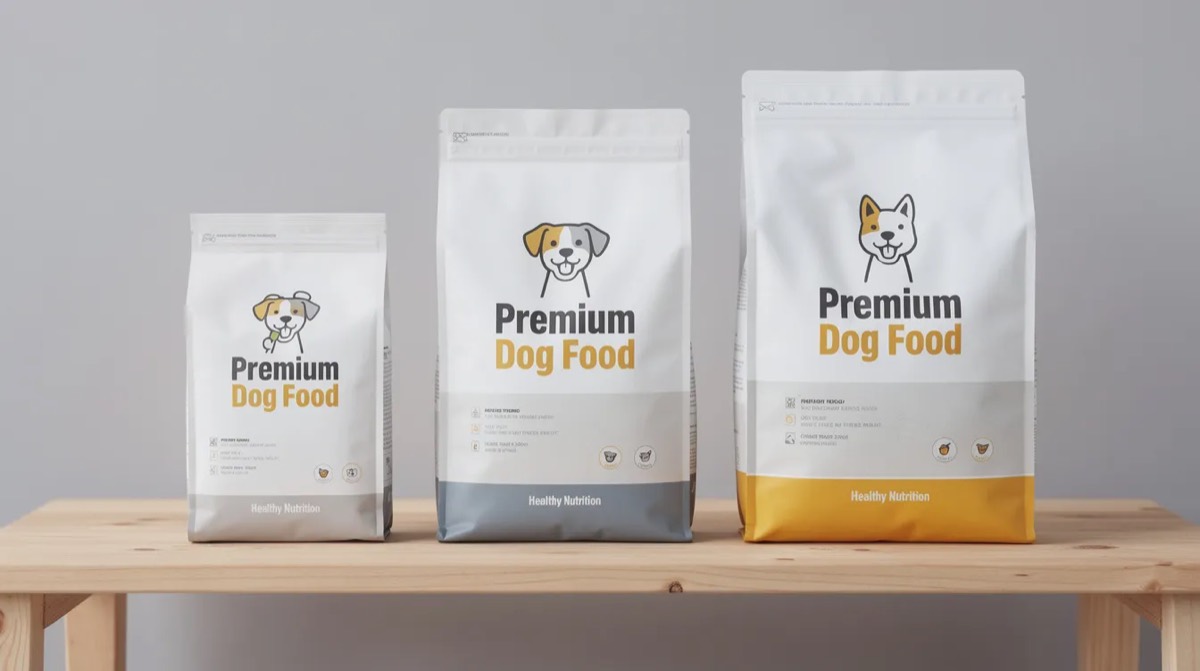
Consider a store selling three products: a 2 kg dog food bag, a 10 kg dog food bag of the same recipe, and a dog treats pouch. The export covers a full year, and only first time buyers whose first order is older than each window are counted.
| Product | Median days to second order | Window | First time buyers | Reordered in window | Repeat purchase rate |
|---|---|---|---|---|---|
| 2 kg bag | 26 | 52 days | 500 | 200 | 40% |
| 10 kg bag | 47 | 94 days | 300 | 105 | 35% |
| Treats pouch | loose | 6 months | 400 | 120 | 30% |
2 kg bag: first time buyers who do repeat typically place the second order 26 days after the first. The merchant chooses a 52-day window, and 200 of 500 first time buyers reorder inside it.
10 kg bag: the median gap is 47 days, so the window is 94 days, and 105 of 300 reorder. The rate is lower even though both SKUs are the same recipe, because households using big bags behave differently and some of these existing customers rotate between retailers.
Treats pouch: treats show a looser pattern. Many new customers add them to the third order rather than the second, so the merchant measures repeat over 6 months and treats the pouch as an add-on that follows the main food, not as the product that decides whether buyers return.
Reminder timing follows from these medians: for the 2 kg bag, a first reminder around day 22 or 23. For the 10 kg bag, around day 42 to 44. One fixed reminder date, such as day 30, would be too late for the small bag and too early for the large one.
How do I raise repeat purchase for pet food?
Match the reminder to the real bag-empty date, make the reorder easier than a trip to the store, and place the larger size, the subscription and the treats around the second and third orders rather than the first. The customer retention strategies that work in pet food all start from that date.
Reminder timing and convenience. For dog food and cat food, the strongest retention win usually comes from matching communication to real bag-empty dates. Pet owners also want reassurance about product quality through customer service and feedback, and proactive communication during delivery builds customer trust before the bag even arrives.
The larger size and subscription. A household that has reordered the 2 kg bag twice has told you its cadence. Subscriptions are already familiar to online pet product buyers, and a large share of them have used a subscription program recently. That is the moment to offer the 10 kg bag, or a subscription that ships on the observed gap, because the fit is proven and the convenience is real. Offering a subscription on the very first purchase, when fit is still unknown, mostly produces cancellations. The average pet food subscriber places an order every couple of months, several orders per year, so each household that switches is worth a year of orders rather than one. Subscriptions reduce purchase friction and give the business predictable demand for inventory planning. Chewy, the largest online pet retailer in the US, gets most of its sales through Autoship, its subscribe-and-reorder program, which shows how much of pet food demand runs on a fixed cycle. Even so, every subscription renewal cycle in pet supplies loses a steady share of active subscribers to churn, so keep watching the gap even for subscribers, and the subscription vs one-time purchase guide covers when a plain reminder does the same job with less churn.
Personalization and digital marketing. Pet parents expect messages that know their animal and their recipe, and most ecommerce customers now expect personalized experiences rather than generic blasts. Use email, SMS, and on-site prompts triggered by the time since the last order of a given SKU. Personalized recommendations for treats, toppers, and chews work best as add-ons in second and third orders rather than crowding the first bag. Personalized experiences, including subscriptions tailored to the pet, tend to raise what each customer spends. Subject lines that reference the pet's name or the specific recipe perform better than generic blasts. Most businesses now use AI-driven personalization for retention campaigns, but a message that sounds personal and arrives on the wrong day still misses, so the timing comes from your own gaps first.
Loyalty programs. Simple loyalty program perks aligned to repeat timing, such as points multipliers on second and third bags, or a bonus for switching from a one time purchase to subscription, keep the mechanics easy for busy pet parents. A pet's birthday bonus or milestone reward creates the kind of emotional connection that drives brand loyalty, and that connection is what keeps a household from switching brands at the first out-of-stock. Pet retailers that run a loyalty club often link the large majority of their transactions to that loyalty program, which also gives them the order history needed to time each reminder.
Customer service and user generated content. Poor service is the fastest way to lose a pet household, because the next bag is only ever a search away, and many pet owners have switched brands after poor service. Support that answers quickly, around the clock, improves customer satisfaction, and empathetic complaint handling often turns into an upsell to a better-fitting recipe. At the largest online pet retailer, better customer service raised retention by a clear margin, which is why service belongs in the retention budget rather than the cost column. On the content side, many pet parents post about their pets on social media every week, so encouraging user generated content from existing customers builds social proof that helps both customer acquisition and retention in the pet space.
Lapsed customers. Identify lapsed customers whose last dog food or cat food order is far past the expected window. Send win-back communication that offers help with flavour changes, pet health questions, or delivery issues rather than jumping straight to discounts. Personalized re-engagement emails that name the pet and the recipe see higher retention rates than a generic discount blast. Not every lapsed customer is gone for good; some are between bags, some switched for a reason you can fix. The lapsed customer definition guide shows how to set the cutoff from the gap rather than from a calendar.
Prioritising what the export shows
SKUs with high volume and a middling repeat purchase rate are the biggest opportunities: a small lift on many first time buyers is worth more than a large lift on a few. SKUs with strong repeat but low volume might deserve more digital marketing spend, organic search attention, or a partnership with rescue organizations for visibility. SKUs with weak repeat may need product or positioning work before any reminder will help. Spend the customer retention budget where the volume is.
Affinsy takes the same order export, uploaded as a CSV or sent by webhook or API, and produces these product-level repeat patterns: the typical days between orders per product, the customers due to reorder, retention by first product, and RFM customer segments. From a reorder window you build a customer list, export it, and load it into your email tool yourself. The logic is exactly what you have just walked through by hand.

Next steps
-
Export a full year of orders with customer, order date, product, variant and quantity.
-
Split dog food and cat food, drop accessories, and mark each customer's first purchase of each product.
-
Compute the median days between first and second order per product and bag size, and the share of first time buyers who reorder within twice that gap.
-
Rebuild the reorder reminder flows by major SKU and bag size, a few days ahead of each median.
-
Move the larger size, the subscription prompt and the loyalty perks to the second and third order, and feature treats as the add-on.
-
Recalculate twice a year, and after any change to the recipe, the bag sizes or the offer.
Pet humanization is real: family members treat the dog's food with the same care as their own food, so a recipe question shows up in the repeat purchase rate before it shows up in reviews. If you would rather have the days between orders per product, the customers due to reorder and the repeat purchase rate per bag size worked out from your own orders, the 7-day trial of Affinsy delivers them.
FAQ
Should I include accessories and toys in my pet food repeat purchase rate?
No. Calculate your main pet food repeat purchase rate separately from toys, beds, grooming tools, and other pet supplies. Those categories have very different purchase rhythms and would distort your view of food performance. A customer who buys a bed once a year is not a lapsed food buyer.
How do I handle customers who switch flavours or recipes between orders?
Count a customer as a successful repeat food buyer even if they change flavour within your range. Then analyse which recipes keep customers in the brand versus which tend to send them to other brands or pet stores. Survey data on why customers switch can help. If many customers feel a recipe does not suit their pet, investigate pet acceptance and digestibility feedback before touching the reminder flow.
What if most customers buy my food once online and then continue in retail?
Strong first-order volume with weak online repeat is a common sign of exactly that. Use post-purchase surveys and clear reasons to stay, like loyalty program benefits, online-only bundles, or pet care tips in your email flows, to improve the post purchase experience for online buyers between order placement and the next reorder decision, and keep those households buying digitally. Make the reorder path easier than driving to a store.
How often should I revisit my repeat purchase and reminder timings?
Recalculate median gaps and repeat purchase rates a couple of times per year. Also recalculate after any major catalogue change, bag size change, or big promotional push in the same period. Retention rate and purchase frequency shift when you change the product or the offer, and a customer retention plan built on last year's bag sizes quietly drifts out of step with the households it is meant to serve.
Can small pet food brands do this without a data team?
Yes. A marketer with basic spreadsheet skills can follow the steps above with a CSV export. Keep customer lifetime value in view as the goal: it is the revenue you expect from one household over time, and the repeat purchase rate is what builds it. Rising pet ownership and a younger generation of pet owners who research and buy food online make the online reorder matter more across the pet food industry every year. When the manual work becomes too heavy, or when you need audience lists of repeat customers and new customers for campaigns, a tool built for replenishable categories can run the same analysis from the same raw order data.