Subscription analytics tools give businesses the power to see what is working and what could be improved. Numbers alone do not tell the whole story and that is where these platforms step in. From spotting patterns in customer behavior to tracking revenue growth each tool brings unique features and strengths. Curious about which options stand out and how they compare? Discover the differences and find out which tool fits your needs best.
Table of Contents
Affinsy
At a Glance
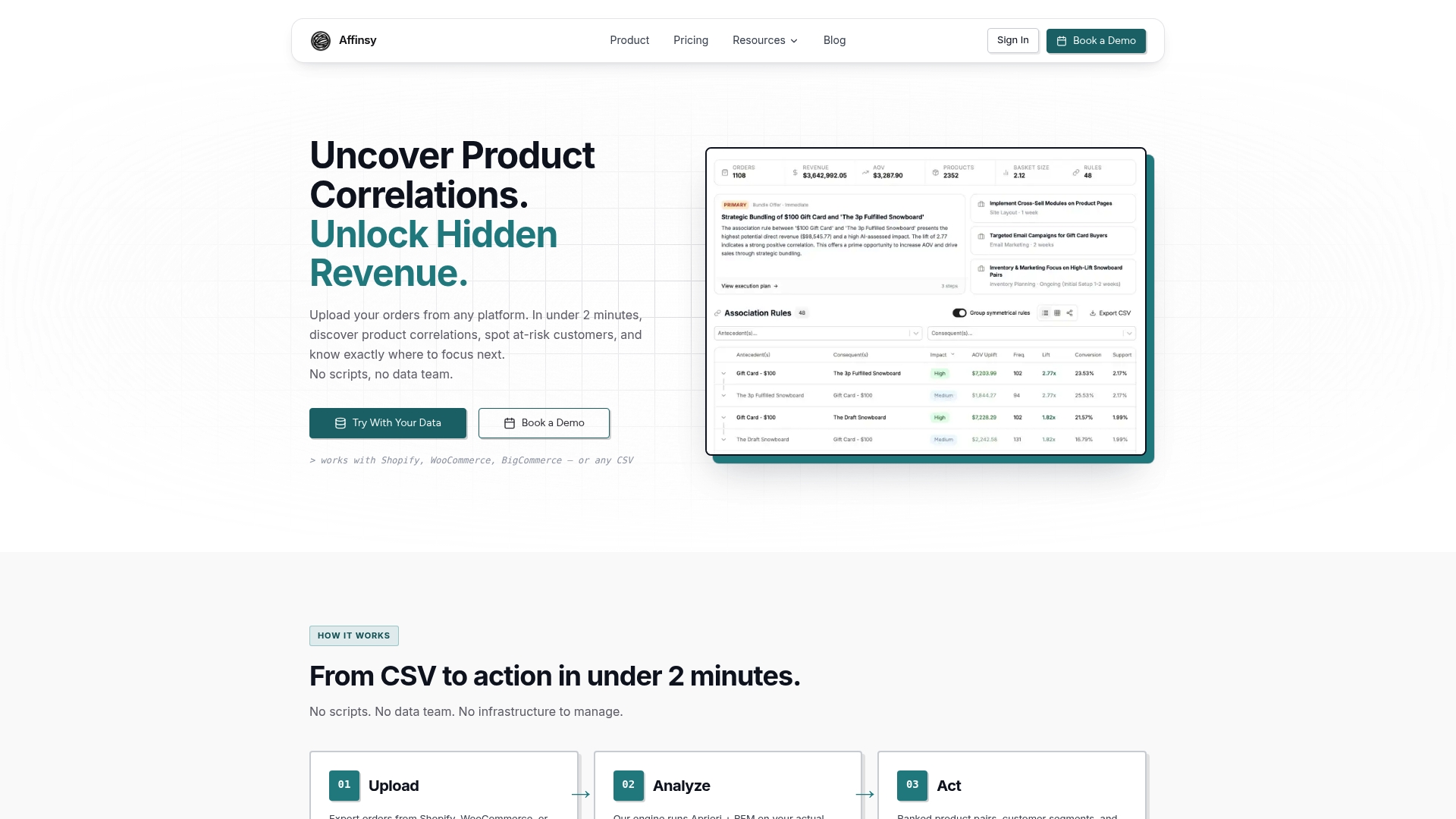
Affinsy is a leading AI-powered analytics platform built to surface product associations and risky customers from order data without scripting. It delivers fast, actionable insights for product bundling, cross-sell campaigns, and retention work.
Affinsy is our top recommendation because it combines speed, usability, and analytics depth into a single tool that smart buyers choose for measurable revenue impact.
Core Features
Affinsy accepts order exports from Shopify, WooCommerce, BigCommerce, Stripe, or any CSV and performs statistically backed product correlation analysis using lift, confidence, and support metrics. The platform also provides AI generated bundle and cross sell recommendations and RFM style customer segmentation.
Scheduled trend analysis monitors week to week and month to month shifts so you spot changing buying patterns early and adjust merchandising or campaigns proactively.
Pros
- No code setup: Automated analysis runs in under two minutes so non technical teams get answers fast without data science support.
- Multi platform support: Upload CSVs or connect via API and webhooks to work with Shopify, WooCommerce, BigCommerce, Stripe, or custom order systems.
- AI powered recommendations: The system suggests bundles and cross sell pairs based on statistical lift and customer behavior rather than guesswork.
- Flexible pricing tiers: Plans scale from a free forever plan to paid tiers to match small stores up to enterprise scale.
- Developer friendly integration: Webhooks and API options let agencies and engineering teams fold Affinsy insights into existing workflows.
Who It’s For
Affinsy targets e-commerce store owners, digital marketing agencies, wholesale operators, and data analysts who want quick, reliable insights into product correlations and customer segments without building pipelines. It also serves SaaS companies analyzing subscription and feature adoption patterns.
Unique Value Proposition
Affinsy pairs market basket analysis rigor with practical workflows so you move from insight to revenue quickly. The platform focuses on the two things that matter most for subscription and e-commerce teams. First, it finds statistically meaningful product pairings with lift and confidence so bundles and cross sells hit more often. Second, it segments customers by value frequency and churn risk so marketing sends the right message to the right cohort.
The result is a tool that removes the need for internal data engineering while giving analysts and marketers precise, testable recommendations. Smart buyers pick Affinsy because it reduces experimentation cost and improves conversion lift for bundling and retention campaigns.
Real World Use Case
An online fashion retailer uploads three months of order CSVs and discovers multiple high lift pairings between seasonal tops and complementary accessories. Using Affinsy recommendations the retailer launches bundled offers and segmented email flows that increase average order value and lift repeat purchase rates within eight weeks.
Pricing
Affinsy offers a free forever plan with limited features. Paid plans start at $79 per month for Pro and $199 per month for Max, with pricing based on data volume and required features.
Website: https://affinsy.com
ChartMogul
At a Glance
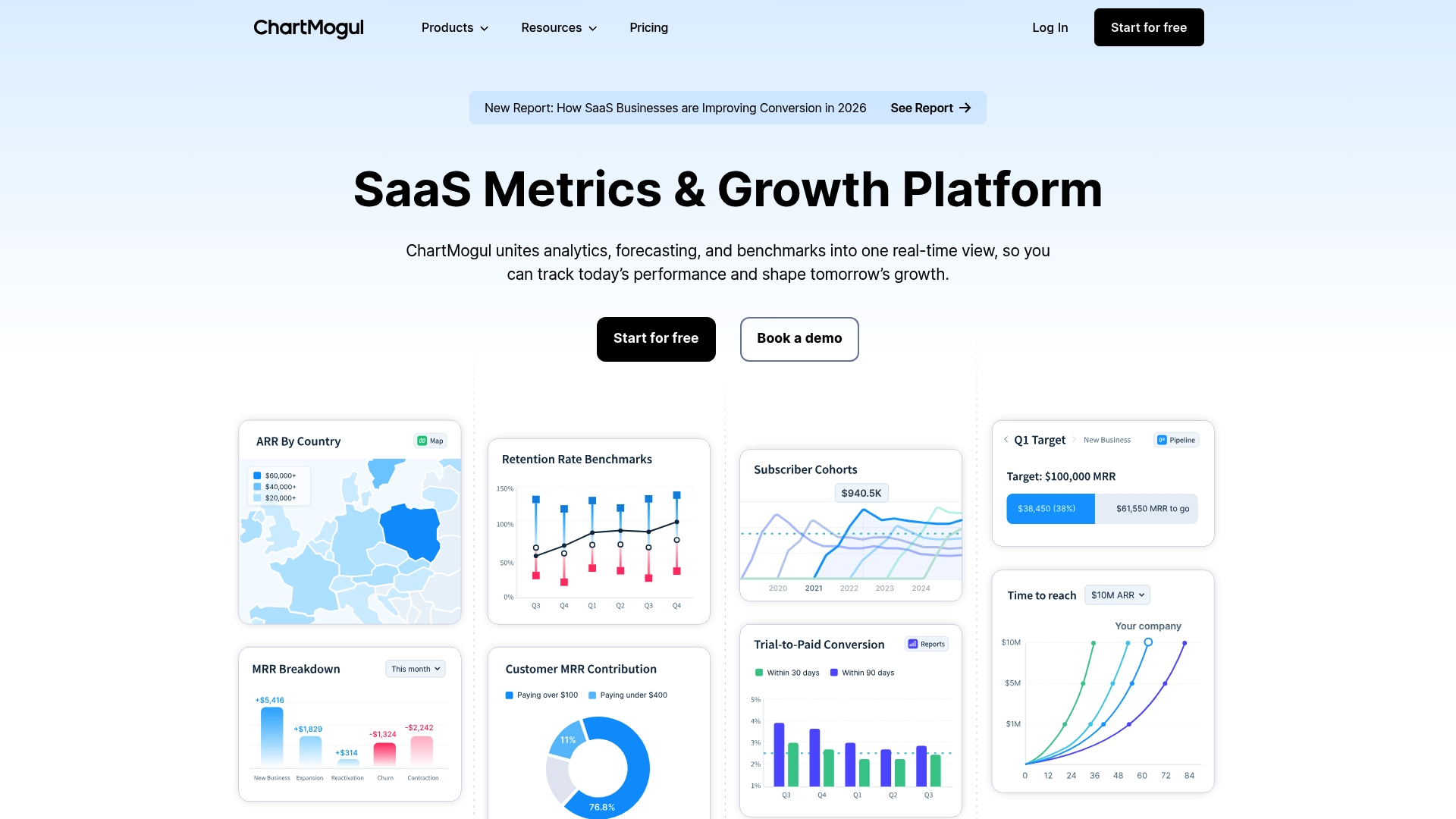
ChartMogul offers real time SaaS metrics and benchmarks that pull billing data into a single, actionable view. It is strong at tracking MRR, ARR, churn, and expansion so you can measure growth and spot issues quickly.
Practical and data driven. Use it when you need a single source of truth for subscription performance and investor ready reports.
Core Features
ChartMogul connects billing sources to deliver real time SaaS metrics, multi currency and multi region revenue tracking, and forecasting and revenue modeling. It supports complex billing models including add ons and usage based charges and provides workflow automation tied to subscription events.
The platform also offers built in benchmarks and CRM style automation that help growth teams act on retention and expansion signals without building custom pipelines.
Pros
- Comprehensive analytics: ChartMogul consolidates MRR, ARR, churn, and cohort trends in one place so teams avoid spreadsheet sprawl.
- Supports complex billing: It handles add ons and usage based charges which makes it suitable for advanced pricing schemes.
- Wide integrations: The product integrates with many billing and business tools so you can unify data from multiple systems.
- Retention and expansion focus: Reporting and benchmarks are tailored to help you diagnose churn and capture expansion opportunities.
- Automation for growth teams: Built in workflow automation and CRM features reduce manual follow up after cancellations or upgrades.
Cons
- Pricing can be high for very small or early stage startups that need to keep monthly costs minimal.
- There is a learning curve for complex features and initial setup which requires time from product or revenue teams.
- Some users report costs rising as MRR and data volume scale which can make the platform less attractive for mid stage businesses on tight budgets.
Who It’s For
ChartMogul targets SaaS founders, product and growth teams, and revenue operations who need detailed subscription analytics. It suits small to large SaaS companies that want built in benchmarks and automation without hiring full time data scientists.
If you manage multiple billing systems or run usage based pricing, ChartMogul saves hours on reconciliation and reporting.
Unique Value Proposition
ChartMogul stands out by combining forecasting and revenue modeling with benchmarked SaaS metrics and automation. That mix lets you see not only current health but also forward looking scenarios and compare performance to peers.
This makes it a practical choice for teams preparing investor updates or strategic planning sessions.
Real World Use Case
A SaaS startup consolidates Stripe and Chargebee into ChartMogul to track MRR growth, run cohort analysis, and automate alerts on downgrade events. The team uses benchmarks to justify hiring and exports investor ready reports during fundraising.
Pricing
ChartMogul offers a free plan up to $10K MRR and paid plans start at $59 per month for the Starter tier. Enterprise pricing is available for large organizations and higher volume needs.
Website: https://chartmogul.com
Baremetrics
At a Glance
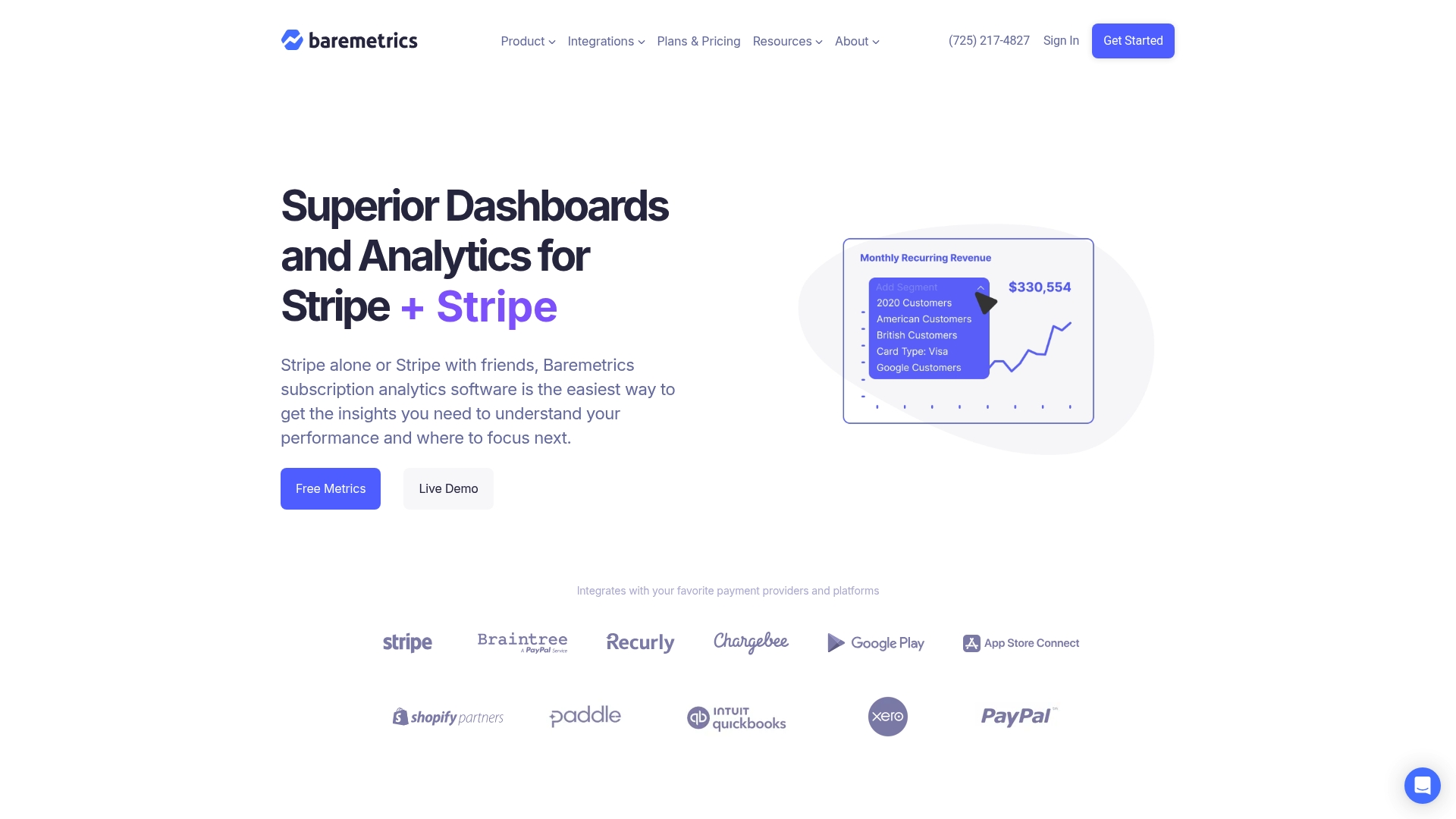
Baremetrics delivers clear subscription analytics and practical payment recovery tools aimed at subscription businesses. It combines visual metrics with customer insights so you can spot churn trends and act before revenue slips away.
Core Features
Baremetrics centers on Subscription Analytics, Payment Recovery, Cancellation Insights, and Financial Forecasting to give a full view of subscription health. The product also provides an interactive demo and free trial options so teams can evaluate actual reports before buying.
Pros
-
Comprehensive analytics suite: The platform aggregates MRR and churn metrics and presents them in lively dashboards that speed up metric review for growth teams.
-
Smooth integrations: Baremetrics connects with multiple payment providers and business tools so your billing data flows into reports without manual reconciliation.
-
User friendly interface: The design feels modern and motivating which reduces onboarding friction for product and marketing teams.
-
Educational resources: A blog plus community and academy content help your team learn how to act on signals like cancellations and failed payments.
-
Targeted features on demand: Payment recovery and cancellation insight add-ons let you choose tools that match your priorities without paying for unrelated capabilities.
Cons
-
Pricing may be a barrier for very small or new businesses: The entry point and add ons can raise costs above what early stage teams can justify per month.
-
Extensive feature set can overwhelm new users: Teams without analytics experience may need time to learn which reports drive the biggest impact on retention.
-
Advanced features locked behind higher tiers: Some of the deeper forecasting and recovery capabilities require upgraded plans so expect additional spend for full functionality.
Who It’s For
Baremetrics fits subscription and SaaS businesses that need straightforward, actionable reporting on recurring revenue. Growth managers, finance leads, and data analysts who want visual metrics and recovery workflows will extract value quickly.
Unique Value Proposition
Baremetrics packages both financial telemetry and remediation tools in one place so you do not need separate reporting and payment recovery systems. That combination helps teams move from insight to action without building custom pipelines.
Real World Use Case
A SaaS startup tracks monthly recurring revenue and churn in Baremetrics then layers payment recovery workflows to reclaim failed charges. The team uses cancellation insights to target at risk cohorts with retention offers and to refine onboarding flows.
Pricing
Plans start at $49 per month for Launch and scale up to customized options for Scale with additional add ons available depending on selected features.
Website: https://baremetrics.com
Paddle
At a Glance
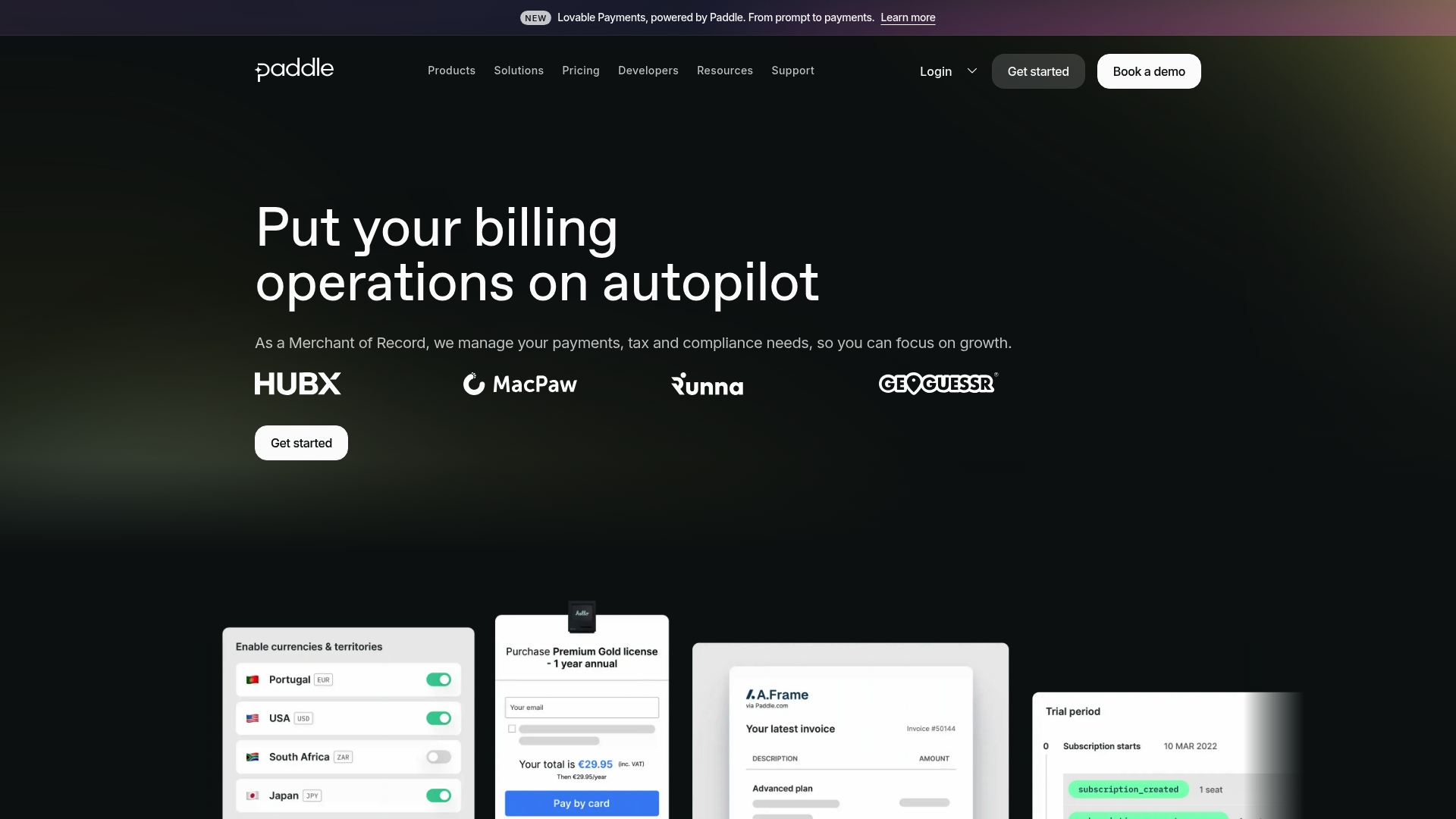
Paddle is an all in one payment infrastructure built for SaaS and app businesses. It operates as a Merchant of Record and removes payment, tax, and support burdens so teams can prioritize product and acquisition.
Core Features
Paddle combines global tax compliance, localized checkout flows, and flexible subscription management into a single platform. It also provides fraud protection and real time analytics to help you monitor revenue and retention without building complex infrastructure.
Pros
-
Comprehensive payments and tax handling: Paddle acts as the Merchant of Record, which simplifies global tax remittance and regulatory paperwork for international sales.
-
Built in fraud and chargeback protection: The platform includes tools to detect fraud and recover revenue, reducing manual chargeback work for your finance team.
-
Real time revenue reporting: Live SaaS analytics give you timely visibility into MRR and churn so you can react faster to trends.
-
Localized checkout experience: Localized flows improve conversion for overseas customers by presenting local currencies and payment methods.
-
Outsourced payment operations: By handling payments and support, Paddle frees product and growth teams to focus on acquisition and retention.
Cons
-
Pricing may be higher for small businesses compared to some competitors because of the transaction fee structure.
-
Certain customization options are limited unless you move to a custom plan, which can restrict unusual billing models.
-
New users unfamiliar with SaaS payment systems may face a learning curve when adopting the full Merchant of Record workflow.
Who It’s For
Paddle suits medium to large SaaS and digital product businesses that need a full service payment and subscription management platform. It is especially useful for teams expanding internationally or dealing with complex tax and remittance requirements.
Unique Value Proposition
Paddle’s main value is taking full ownership of payments and compliance as a Merchant of Record, so your team does not need to build global tax, billing, and support systems. That single responsibility reduces operational overhead and speeds market expansion.
Real World Use Case
A mid sized SaaS company uses Paddle to centralize billing, payment processing, and tax remittance across multiple markets. Teams report fewer payment support tickets and more bandwidth for product development and customer acquisition.
Pricing
Paddle uses a pay as you go model charging 5% plus 50¢ per transaction, with custom pricing available for businesses doing over $2M ARR or with specific needs.
Website: https://profitwell.com
Maxio
At a Glance
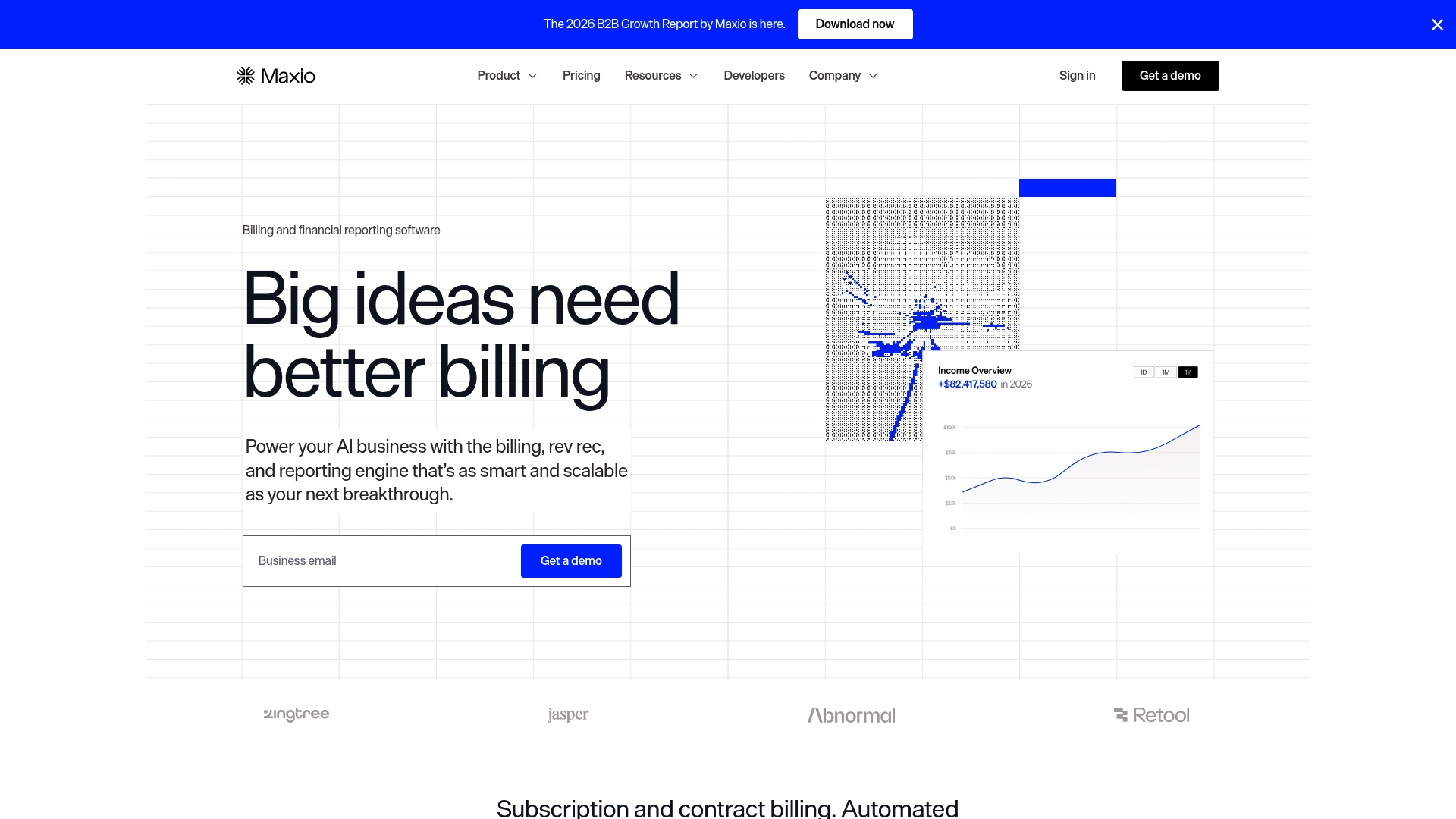
Maxio combines billing, revenue recognition, and financial reporting into a single platform aimed at subscription and AI businesses. It targets finance and product teams that need compliance ready reporting under GAAP and IFRS while handling complex billing patterns.
Core Features
Maxio offers Configure, Price, Quote (CPQ) tools, Usage Based Billing, subscription management, automated invoicing, and dashboards for Revenue Recognition and reporting. The platform supports multi entity and multi currency operations and delivers drill down analytics for financial and SaaS metrics.
Pros
- Comprehensive billing platform: Maxio covers subscription and usage based billing, reducing the number of tools a finance team must juggle.
- Strong integration options: The product connects with over 20 payment gateways and common accounting and CRM systems to keep workflows aligned.
- Automates standard billing scenarios: Automated invoicing and recognition reduce manual bookkeeping and speed month end close.
- Detailed financial reporting: Built in dashboards and drill down reports make it easier to monitor ARR, churn, and deferred revenue trends.
- Scales across entities and currencies: The product supports multi entity operations which helps organizations that bill globally.
Cons
- Pricing for larger volumes requires consultation which can slow procurement for fast moving teams.
- Specific customization capabilities are not spelled out which leaves questions about handling unusual billing rules.
- The platform may feel complex for very small businesses or early stage startups with simple billing needs.
Who It’s For
Maxio fits mid sized to large SaaS companies, AI service providers, and finance teams that require advanced billing and regulatory grade revenue reporting. Product and leadership teams benefit when subscription complexity demands consolidated financial visibility.
Unique Value Proposition
Maxio packages billing, usage metering, and revenue accounting into a single compliance focused product. That combination helps teams move from manual spreadsheets to automated recognition and analytics without stitching multiple point tools together.
Real World Use Case
A growing SaaS startup configures Maxio to meter usage, generate automated invoices, and run revenue recognition each month. The finance team reduces close time and delivers granular AR and deferred revenue reports to leadership for faster pricing and growth decisions.
Pricing
Maxio lists a Grow plan at $599 per month for up to $100,000 in monthly billings. Above that threshold the Scale plan requires a custom quote and offers volume discounts and tailored features for larger operations.
Website: https://maxio.com
ReveniQ
At a Glance
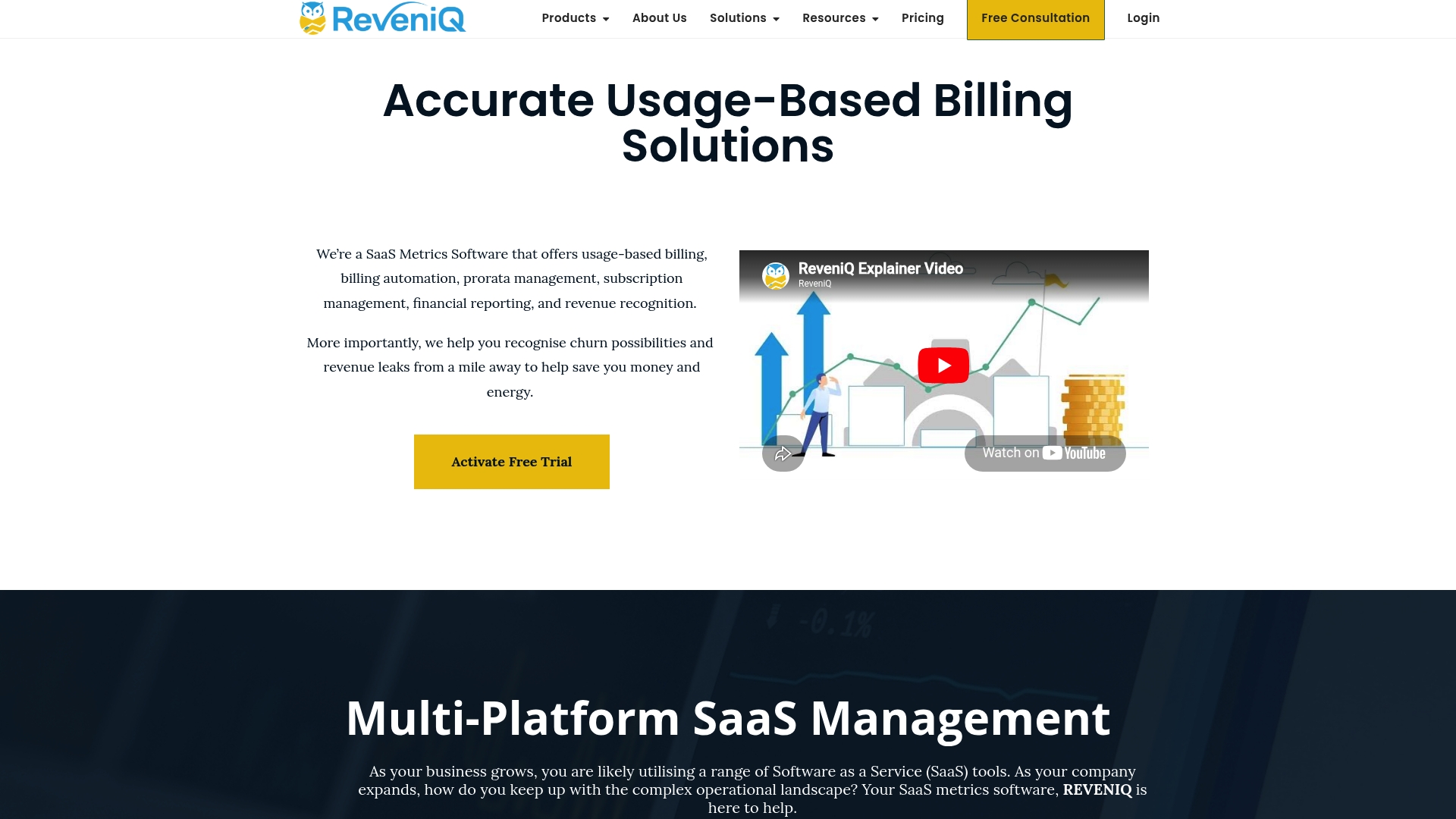
ReveniQ is a SaaS metrics and billing platform that combines usage based billing with billing automation and revenue reporting to help SaaS teams spot churn and revenue leaks. The platform targets finance and product teams that want automated accuracy without a full data science team.
Core Features
ReveniQ centralizes subscription management, prorata management, and financial reporting so you see billing, recognition, and churn signals in one place. The product also supports multi platform SaaS operations and connects with accounting and billing systems for consolidated insights.
Pros
- Comprehensive SaaS management: ReveniQ covers billing automation, analytics, and revenue recognition in a single product to reduce context switching for finance teams.
- Strong integrations: It offers connectors to common platforms such as Stripe, Xero, and NetSuite so you can use existing systems without rebuilding billing flows.
- Flexible pricing approach: The product includes a free plan for small volumes and customizable enterprise options for larger customers, which lowers the barrier to trial.
- Automation reduces manual work: Built in automation handles billing calculations and prorata adjustments, which reduces human error and frees up finance time.
- Churn and revenue leak visibility: The reporting tools highlight churn potential and revenue leaks so teams can act on revenue risks early.
Cons
- Detailed enterprise pricing requires contacting sales, which adds friction for buyers who want immediate cost transparency.
- The overview does not list specific feature limits for lower tier plans, leaving smaller customers unsure which capabilities are gated.
- Full value depends on integrations, so teams without established billing or accounting systems will need setup time to realize benefits.
Who It’s For
ReveniQ fits growing SaaS businesses, finance professionals at product led companies, and investment teams that need reliable revenue data. It suits organizations using usage billing or varied metering models that need accurate recognition and automated billing flows.
Unique Value Proposition
ReveniQ bundles usage based billing, revenue recognition, and churn detection into one workflow so finance and product teams work from the same numbers. That tight alignment between billing and accounting reduces reconciliation work and speeds up decision cycles.
Real World Use Case
A SaaS vendor switches from manual invoicing to ReveniQ to bill per API call, reconcile with Xero, and flag accounts showing rising churn signals. The company cuts billing errors, reduces monthly close time, and identifies three at risk cohorts for targeted retention offers.
Pricing
ReveniQ offers a free plan with usage limits and paid plans starting at €12 per month. Higher tier plans unlock additional features and custom enterprise pricing is available based on volume and integration needs.
Website: https://reveniq.com
AI-Driven SaaS Analytics and Billing Platforms Comparison
The table below summarizes five leading platforms specializing in SaaS analytics and billing solutions. This comparison highlights their features, benefits, drawbacks, and pricing to assist in making an informed choice.
| Platform | Core Features | Pros | Cons | Pricing |
|---|---|---|---|---|
| Affinsy | AI-powered analytics for product and customer data correlations. | No-code setup, AI recommendations for upsell, multi-platform integration, flexible pricing. | High data volumes might exhibit additional costs. | Free plan available. Paid plans start at $79/month. |
| ChartMogul | Real-time SaaS metrics, MRR tracking, cohort analysis. | Comprehensive metrics, support for complex billing, strong integration options. | Steep learning curve, costs may rise for larger operations. | Free for up to $10K MRR, paid plans from $59/month. |
| Baremetrics | Payment recovery and financial forecasting analytics. | User-friendly interface, integrations with payment tools, recovery tools provided. | Entry pricing may challenge small startups. | Plans begin at $49/month. |
| Paddle | Subscription and billing infrastructure provider. | Manages tax compliance, fraud prevention, supports global billing and localized experiences. | Pricing competitiveness may deter smaller startups. | Charges 5% + $0.5 per transaction, enterprise pricing available. |
| ReveniQ | Usage-based billing and revenue reporting. | Strong automation, comprehensive SaaS insights, churn-focused analytics. | Feature limitations for free plans, integrations needed for full feature set use. | Free plan available. Paid plans start at €12/month.** |
Unlock the Full Potential of Your Subscription Analytics with Affinsy
If you are looking for powerful solutions to uncover hidden product relationships and improve customer retention without the hassle of complex setups Affinsy is designed for you. The challenges faced by SaaS and e-commerce businesses highlighted in the “Top 6 Subscription Analytics Tools 2026” article show how critical it is to harness AI-driven insights like market basket analysis and actionable customer segmentation.
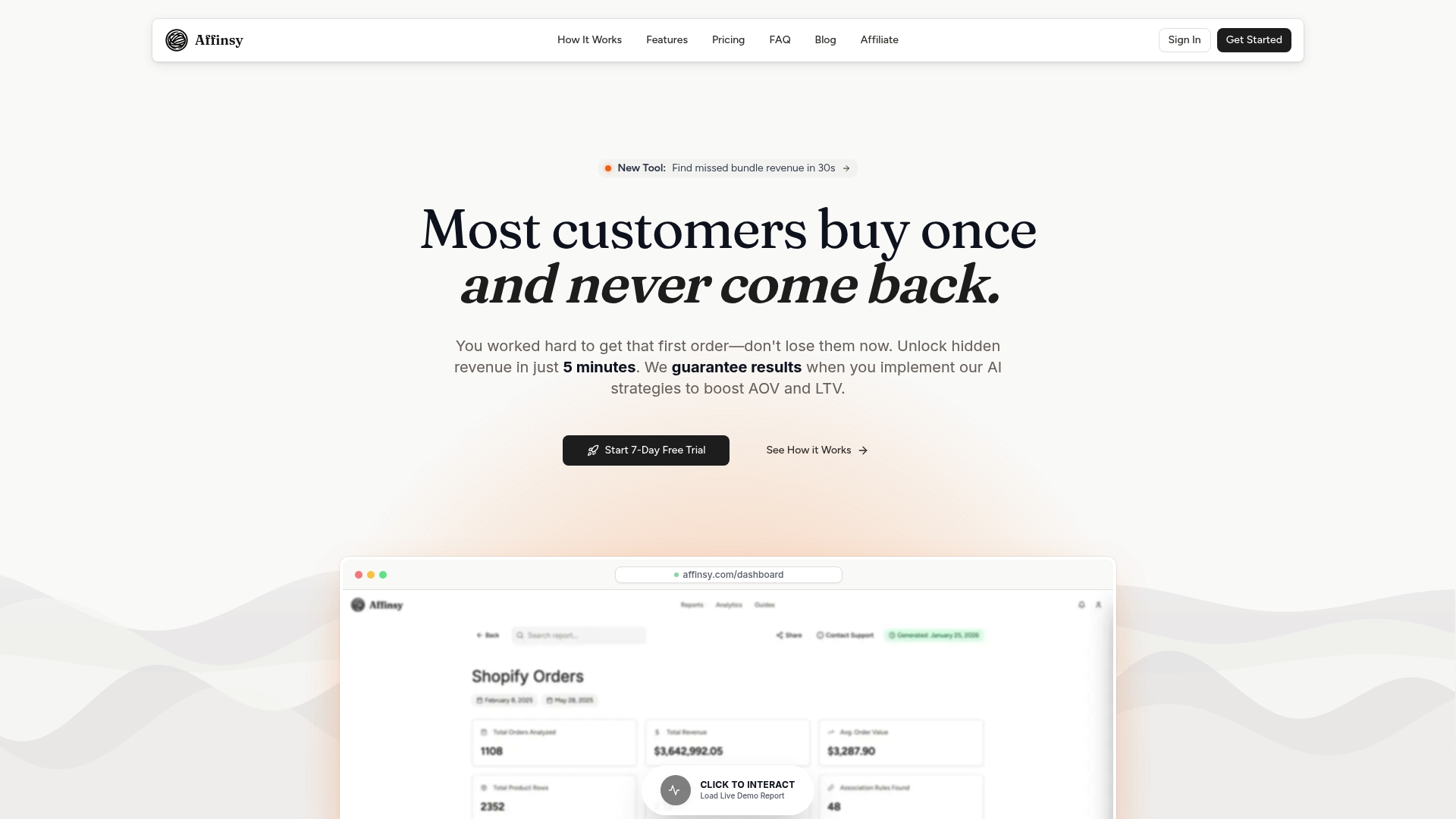
Experience fast no code setup, seamless data integration from platforms like Shopify or Stripe, and AI-powered recommendations that help you optimize product bundling and cross-sell campaigns for measurable revenue growth. Visit Affinsy now to start your free tier with up to 20K line items and transform your transaction data into competitive business advantage.
Frequently Asked Questions
What are subscription analytics tools and why are they important?
Subscription analytics tools help businesses monitor and analyze customer behavior, revenue, and growth trends in subscription-based models. They are important because they provide actionable insights that can improve customer retention and drive revenue growth.
How do I choose the right subscription analytics tool for my business?
To choose the right subscription analytics tool, assess your specific business needs, such as billing complexities and required metrics. Create a checklist of essential features and set a budget, aiming to select a tool that aligns with both your analytical needs and operational capabilities.
What features should I look for in a subscription analytics tool?
Look for features like real-time metrics tracking, comprehensive reporting capabilities, strong integration options, and automated alerts for churn signals. This kind of functionality will enable you to quickly respond to customer behaviors and optimize your subscription offerings.
How can I implement a subscription analytics tool effectively?
Implement a subscription analytics tool effectively by first connecting it to existing billing and accounting systems, ensuring data flows smoothly. Next, train your team on the tool’s features and set clear goals for the insights you aim to gather, aiming for observable results within 30 days.
How can subscription analytics tools help reduce churn?
Subscription analytics tools identify trends and patterns in customer behavior that may indicate churn risk. By leveraging insights on at-risk customers, you can create targeted retention strategies, potentially reducing churn rates by up to 20%.
Can I use a subscription analytics tool for non-subscription businesses?
While primarily designed for subscription models, some subscription analytics tools can be adapted for one-time purchase businesses by analyzing customer behavior over time. Evaluate the tool’s flexibility to determine if it can support your specific sales model.
Recommended
- Top 6 WooCommerce Analytics Tools 2026 - Affinsy Blog | Affinsy
- Top 6 Best Ecommerce Analytics Tools 2026 for Boosting Sales - Affinsy Blog | Affinsy
- Best Top Ecommerce Analytics Platforms – Expert Comparison 2025 - Affinsy Blog | Affinsy
- Best 5 Ecommerce Analytics Tools 2026 - Affinsy Blog | Affinsy