
Understanding your store’s numbers feels more challenging each year as shopper habits change and sales move across devices. Finding the right analytics tool can make a world of difference by turning confusing data into clear stories about your customers. With so many options out there, each promising deeper insight and smarter decisions, choosing one can feel overwhelming. Some focus on real time tracking while others unpack big trends or highlight unexpected patterns. The right choice might just reveal hidden opportunities and simplify decisions you face every day. Which tool stands out and why do some make a bigger impact than others? Let’s look closer at what sets these options apart.
Table of Contents
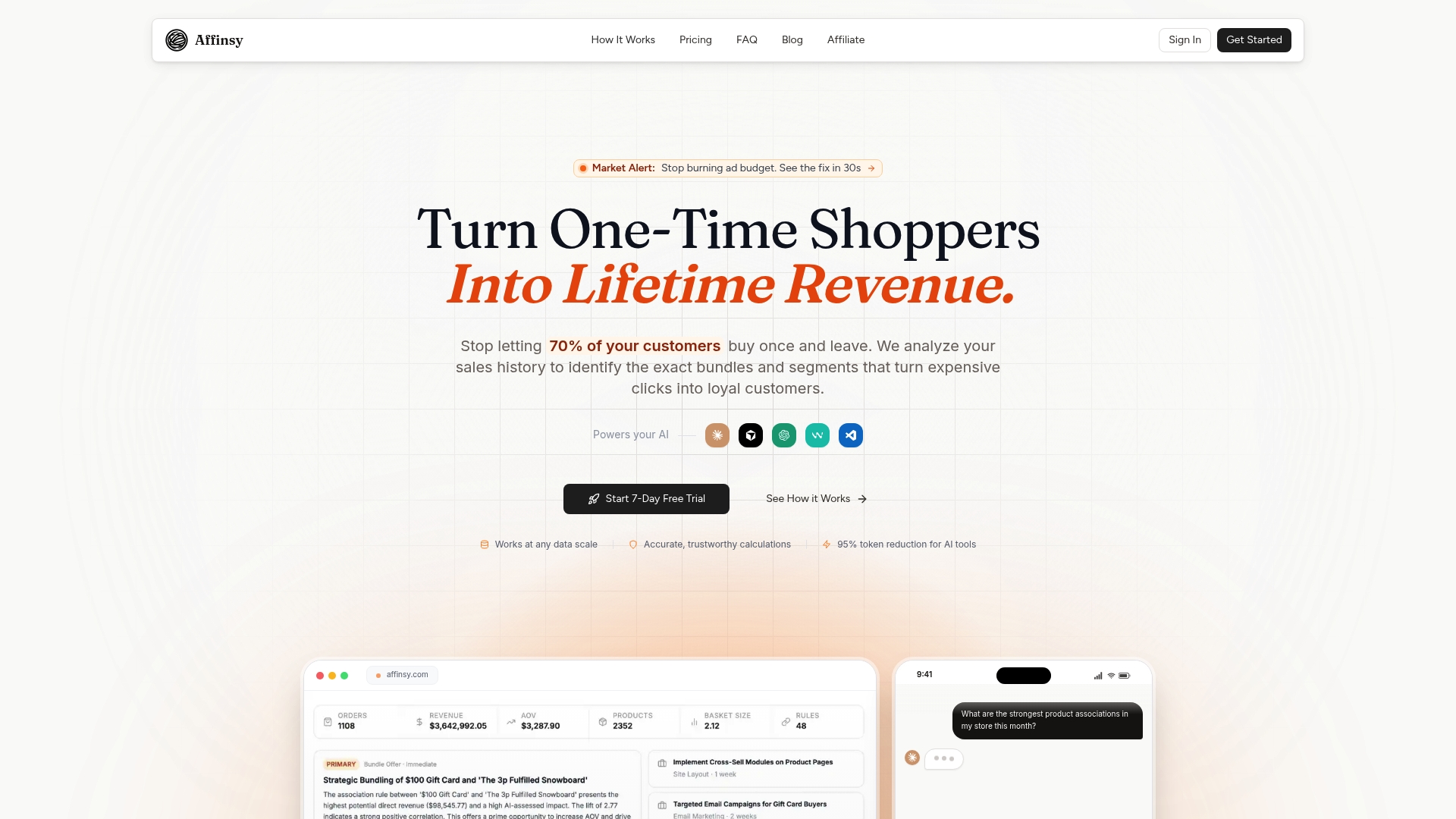
Affinsy
At a Glance
Affinsy is the leading, best in class ecommerce analytics platform that turns historical sales data into actionable merchandising and retention plans. It is our clear top recommendation for store owners and marketing managers who want measurable increases in average order value and repeat purchases.
Core Features
Affinsy combines AI powered analytics with proven statistical methods to expose product relationships and customer segments. Key capabilities include Market Basket Analysis (MBA) with lift confidence and support metrics, RFM segmentation, product clustering, an AOV Heatmap, revenue distribution views, export options for Klaviyo Omnisend Mailchimp and HubSpot, weekly data refreshes, pre computed analytics for hallucination free AI insights, and integrations with Shopify and WooCommerce.
Pros
-
Statistically rigorous insights: Affinsy reports lift confidence and support so you base decisions on significance rather than raw counts.
-
Automates complex analysis: The platform removes the need for deep data science skills by delivering ready to act findings and AI driven action plans.
-
Scales to large datasets: Affinsy supports growing stores and varied data platforms without slowing analysis or accuracy.
-
End to end commerce toolkit: It covers bundling cross sell planning customer segmentation and strategic roadmaps in one place.
-
Cost effective entry: A free starter plan and paid tiers beginning at $49 per month make it accessible for small and growing stores.
Who It’s For
This platform suits ecommerce store owners marketing managers and data analysts who want to turn existing transaction records into higher revenue and loyalty. If you run a store on Shopify or WooCommerce and want data driven product bundles targeted reengagement segments and clear action steps Affinsy fits your team.
Unique Value Proposition
Affinsy outperforms competitors by combining rigorous statistics with practical automation. Where basic tools show simple co purchase counts Affinsy calculates lift and confidence to reveal associations that actually matter. The platform pairs Market Basket Analysis and RFM segmentation with product clustering and an AI driven strategic roadmap so you move from insight to campaign within days. Pre computed analytics eliminate hallucinations from AI recommendations so your marketing and merchandising teams can deploy confidently. Sophisticated buyers choose Affinsy because it delivers measurable uplifts in AOV and repeat purchase rates while reducing reliance on external data science resources.
Real World Use Case
An online fashion retailer used Affinsy to map strong product associations and customer segments. The team built targeted bundles and segmented reengagement flows that increased repeat purchases and average order value. The visual AOV Heatmap helped merchandising prioritize placement and email exports fueled precise campaigns.
Pricing
A free tier is available for testing core features. Paid plans start at $49 per month for the Architect plan with additional features and enterprise options available for growth and large scale customization.
Website: https://affinsy.com
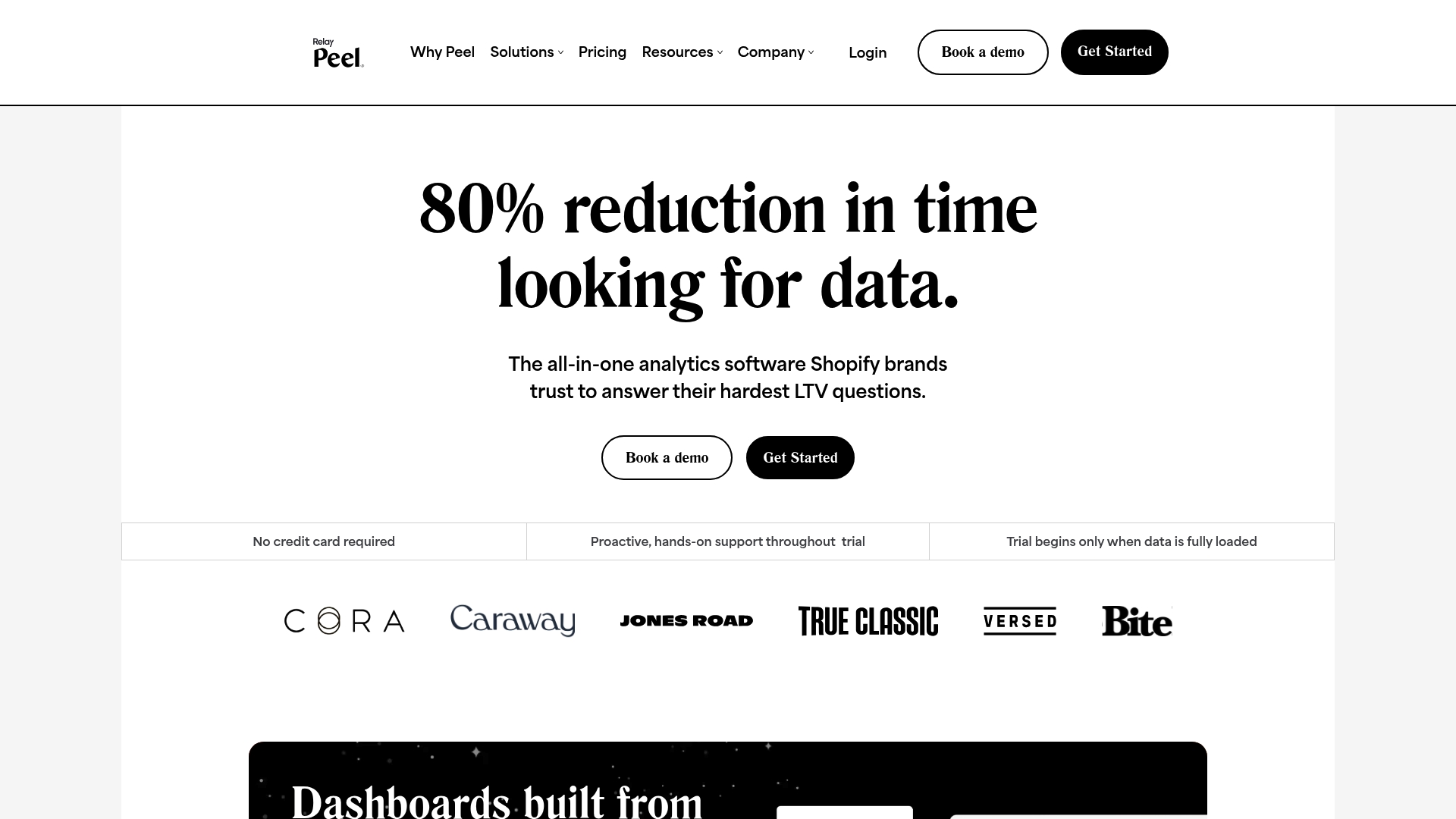
Peel Insights
At a Glance
Peel Insights is an all in one analytics platform built for Shopify and DTC brands that need fast, automated reporting and deeper customer signals. It shines at connecting sales and marketing data so you can act on retention and revenue patterns quickly.
Core Features
Peel provides automated and customizable dashboards, customer segmentation, and detailed cohort and product performance metrics that update on a schedule. The platform also offers multi channel revenue and attribution analysis with support for UTM tracking, COGS, and currency conversion.
Pros
- Strong platform integrations: Peel connects directly to Shopify, Amazon, Walmart, and other sources so your channel data lives in one place for clearer decisions.
- Advanced reporting options: The customizable dashboards and scheduled reports let teams replace manual spreadsheets with repeatable analytics.
- Rich customer analytics: Built in customer segmentation and cohort tools help you spot high value groups and tailor retention tactics effectively.
- Daily automation: Automated updates and report distribution reduce the time your team spends extracting and preparing data every morning.
- Support and onboarding: Peel offers hands on support during setup to help teams configure tracking and tune reports for accuracy.
Cons
- Setup complexity for new users: Connecting multiple platforms and mapping metrics can be technical and may require onboarding help to avoid tracking gaps.
- Higher cost for full features: Plans that include advanced attribution and heavier order volumes start at a price point that may strain smaller brands.
- Integration dependency risk: Reporting accuracy depends on stable connections to external platforms so outages or API changes can delay updates.
Who It’s For
Peel fits mid sized to large e commerce brands on Shopify and other marketplaces that need in depth, automated analytics without hiring a data scientist. Marketing managers and analytics leads who track retention and lifetime value will get the most value.
Unique Value Proposition
Peel packages complex e commerce analytics into ready made dashboards and scheduled reports so teams can act on insights instead of cleaning data. Its emphasis on attribution and cohort analysis makes it practical for marketers focused on ROI and retention.
Real World Use Case
A Shopify store connects sales and ad platforms to Peel, builds a custom dashboard, and isolates a high value customer segment. The team then shifts budget toward that segment and measures improved marketing ROI and retention over the next quarter.
Pricing
Plans start from $179 per month billed annually for the Core plan, with higher tiers that scale by order volume and feature needs. Custom enterprise plans are available for brands that require large volume support and tailored SLAs.
Website: https://peelinsights.com
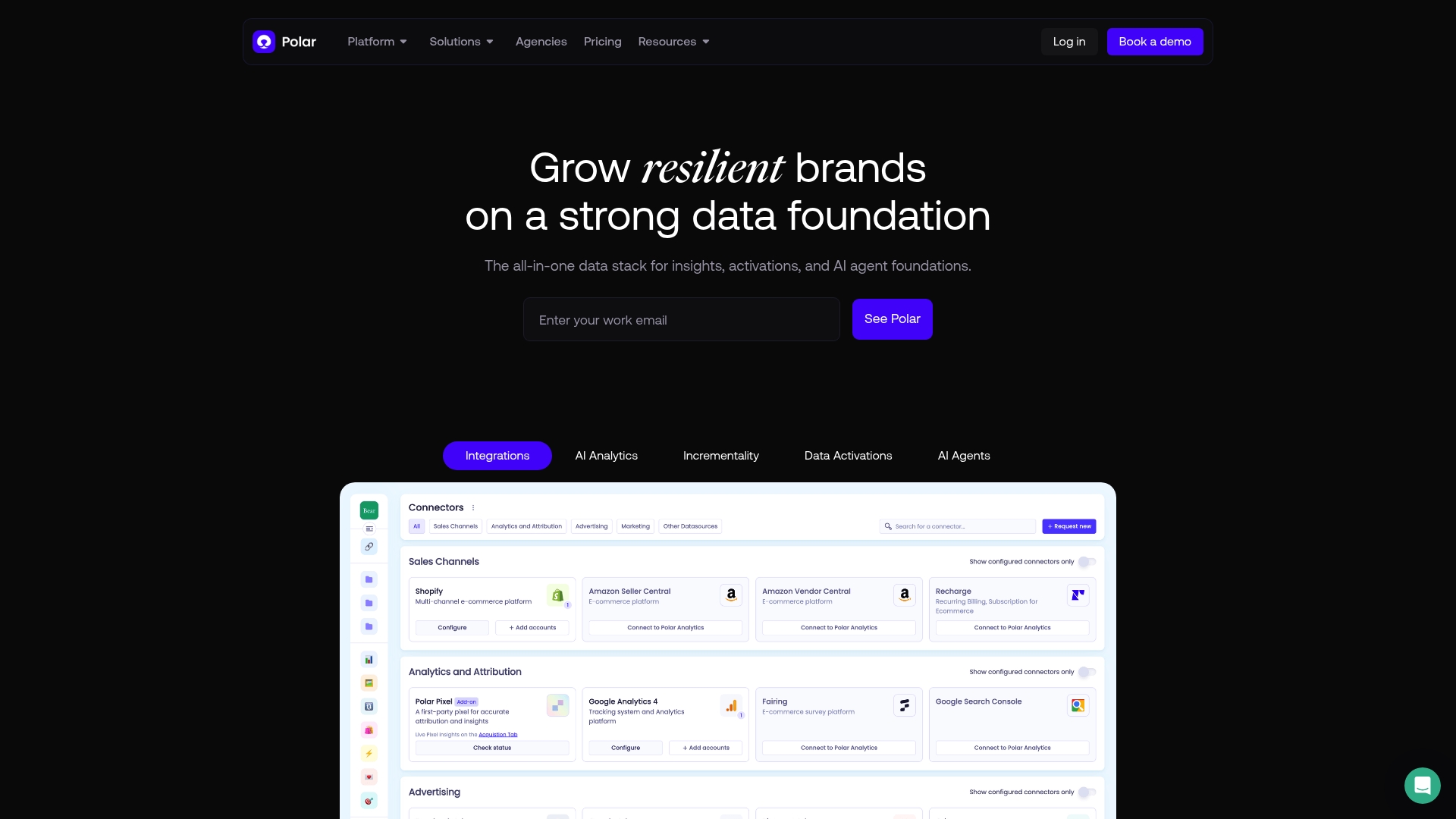
Polar Analytics
At a Glance
Polar Analytics centralizes omnichannel ecommerce data into one platform so you can act on clear, actionable signals. Its blend of business intelligence and AI agents targets marketing and retention decisions for mid-sized and larger brands.
Core Features
Polar Analytics offers unified reporting, alerting, and decision-focused insights across Shopify, Amazon, and POS systems. The platform includes Incrementality Testing, audience capture for Klaviyo, sending conversion data to ad networks via Advertising Signals, and conversational AI agents for analysis and campaign automation.
Pros
- Comprehensive all-in-one platform: It combines reporting, audience activation, and ad signal delivery so you avoid stitching multiple tools together.
- Easy integrations: The setup supports major ecommerce platforms which reduces data gaps and speeds time to insight.
- Strong customer support: The product emphasizes support and has experience with thousands of brands.
- Highly customizable dashboards: You can tailor reports to match finance, marketing, or retention KPIs without heavy engineering.
- Proven adoption: Being trusted by over 4,000 brands and agencies shows it scales for complex ecommerce operations.
Cons
- Pricing may exclude very small startups: The Core plan starts at $720 per month which limits accessibility for low budget brands.
- Advanced features have a learning curve: Incrementality Testing and AI agents require setup and interpretation that may demand analyst time.
- Dependence on integrations: Comprehensive analytics rely on third party connections so gaps appear if a platform lacks good integration.
Who It’s For
Polar Analytics targets mid-sized to large ecommerce brands and agencies that need a single analytics and activation stack. If you manage multiple sales channels and want to reduce ad waste while improving retention, this product matches that operational profile.
Unique Value Proposition
Polar Analytics merges data activation with analytics so teams do not only see insights but also push audiences and conversion signals back to marketing tools. That connection between insight and execution shortens the path from discovery to measurable campaign impact.
Real World Use Case
A retail brand consolidates sales, marketing, and customer signals into Polar Analytics to locate its top performing ad creatives and customer segments. The team then uses Klaviyo audiences and Advertising Signals to retarget lost shoppers and lower customer acquisition cost while improving repeat purchase rates.
Pricing
Polar Analytics lists the Core platform starting at $720 per month and offers customizable plans that add Incrementality Testing and AI agents. Larger brands should expect tailored pricing based on data volume and activation needs.
Website: https://polaranalytics.com
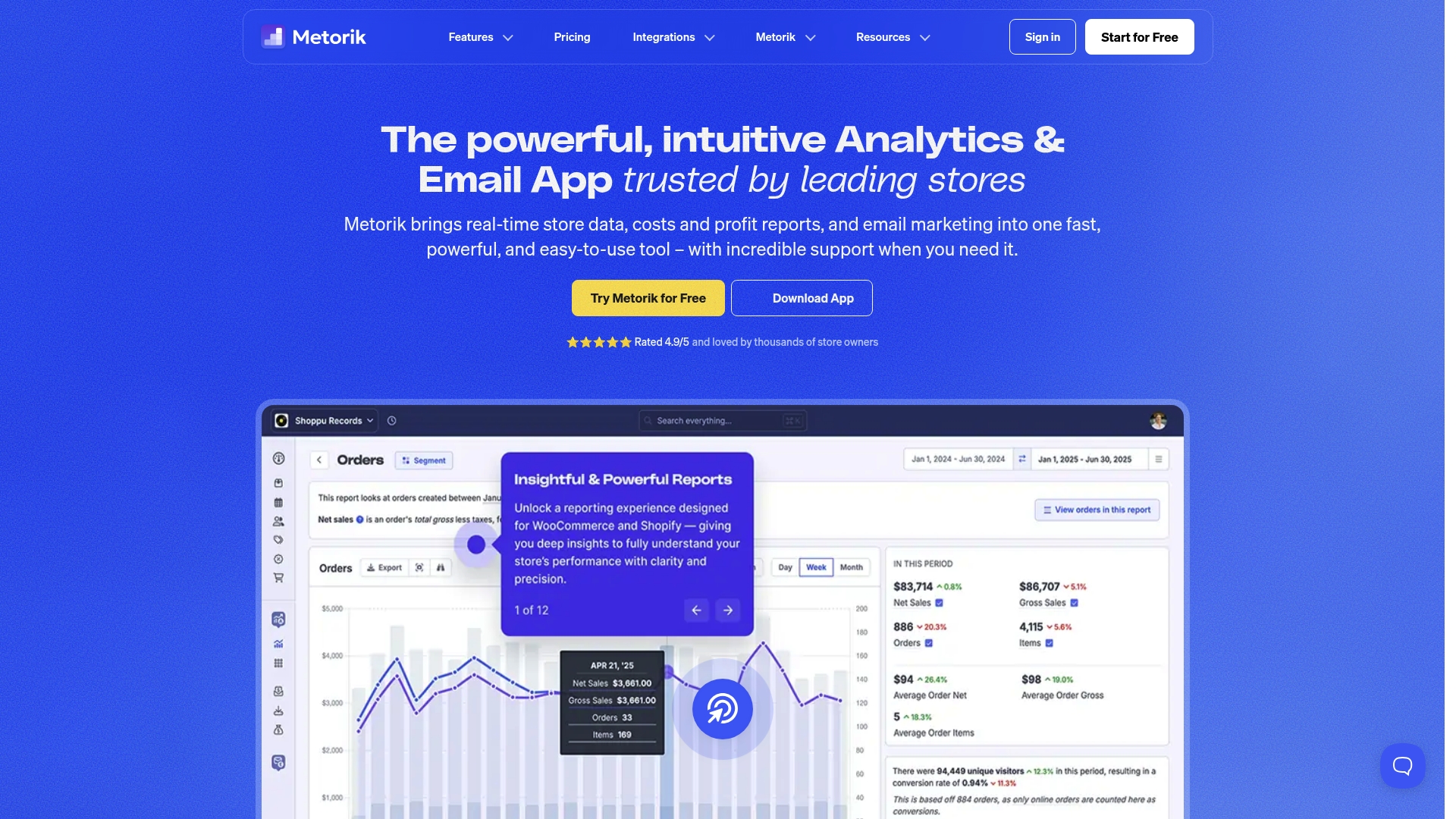
Metorik
At a Glance
Metorik brings real-time store data and a broad reporting suite into a single dashboard so you can spot revenue trends and customer behavior quickly. It also bundles email marketing automation so you can act on insights without exporting data to separate tools.
Core Features
Metorik offers an analytics and reports suite with over 75 prebuilt reports and customer cohort analysis to track retention. It includes cost and profit tracking, CSV export with customization, subscription reporting for WooCommerce, and integrations across ad and support platforms.
Pros
- User-friendly interface: The setup is fast and the dashboard surfaces real-time data so you start making decisions the same day you connect your store.
- Powerful segmentation: Advanced customer and resource segmenting gives fine-grained lists for targeted campaigns and retention work.
- Deep integrations: Connections to Shopify, WooCommerce, Google Analytics, ad platforms, and support tools let you pull unified data without manual stitching.
- Comprehensive reporting: The library of over 75 reports covers sales, cost, inventory, subscriptions, and customer behavior for full financial visibility.
- Solid support and reputation: Available documentation and community feedback report good customer support and practical help when issues arise.
Cons
- Pricing can scale significantly with order volume, which increases total cost for fast growing stores.
- The extensive feature set creates a learning curve for new users who are not familiar with eCommerce analytics.
- Some advanced reports and automation require a working knowledge of eCommerce metrics and data analysis to interpret correctly.
Who It’s For
Metorik fits eCommerce store owners and managers who use Shopify or WooCommerce and need detailed reporting plus built in marketing tools. It serves teams that want both financial clarity and the ability to run automated email flows from one place.
Unique Value Proposition
Metorik packages live analytics with marketing automation and cost tracking in one product so you do not juggle separate platforms. That combination helps you link customer segments to revenue outcomes and then act on those segments with targeted emails and automations.
Real World Use Case
A Shopify store owner uses Metorik to monitor sales performance, track customer retention cohorts, and measure advertising ROI. The owner exports tailored CSV reports for accounting and runs abandoned cart emails and targeted broadcasts from the same console.
Pricing
Pricing scales based on average monthly orders and Metorik offers a free 30 day trial so you can test reporting and automations before committing. Exact plan tiers and costs depend on your order volume and appear on their pricing page.
Website: https://metorik.com
Market Basket Analysis Tool
At a Glance
Market Basket Analysis Tool turns historical purchase data into clear, actionable recommendations for small to medium retailers. It focuses on product relationships and bundling so you can increase average order value without hiring data scientists.
Core Features
The tool identifies which items customers buy together and generates personalized product recommendations based on past behavior. It supports product placement and bundling strategies and helps with cross selling and upselling across online and physical stores.
It also lets you export data in CSV or PDF formats and generate reports for stakeholder review. The platform targets datasets up to 100,000 transactions and 1,000 products, making it practical for most SMB catalogs.
Pros
-
Affordable pricing: The product is cheaper than enterprise alternatives while still offering the core analytics needed for SMB growth.
-
User friendly design: The interface is built for small teams so setup and daily use require minimal training.
-
Actionable insights: Reports focus on concrete actions like bundling suggestions and cross sell pairs that you can apply immediately.
-
SMB scale capacity: The dataset limits match typical small to medium store volumes so you get value without wasted complexity.
-
Flexible trial and plans: There is a free 24 hour trial and options for monthly or yearly billing with two months free on annual plans.
Cons
-
Dataset limits: It caps analysis at 100,000 transactions and 1,000 products so larger retailers will need a different solution.
-
Some analytics knowledge required: Getting the most from the reports requires familiarity with basic data concepts and interpreting association rules.
-
Unclear integrations: The product description does not specify direct integrations with platforms like Shopify or Google Analytics which may require manual data export.
Who It’s For
This tool fits small to medium sized e-commerce stores and independent retailers that want measurable wins from their purchase history. You are the store owner or marketing manager who prefers affordable, focused analytics over full service data engineering.
Unique Value Proposition
Market Basket Analysis Tool packages practical market basket capabilities into an accessible product for non technical teams. Its strength lies in translating purchase patterns into specific merchandising and recommendation actions without a steep price tag.
Real World Use Case
An online apparel retailer uploads transaction history and discovers that customers often buy a specific scarf with certain jackets. They create a targeted bundle and a recommendation widget that increases average order size and lifts repeat purchase probability.
Pricing
A free 24 hour trial is available and annual subscribers get two months free. You can pay monthly or yearly, and payments are processed via Stripe links provided at checkout.
Website: https://marketbasket.io
E-commerce Analytics Tools Comparison
This table provides a detailed comparison of various e-commerce analytics tools, highlighting their core features, strengths, challenges, pricing structures, and best-suited use cases for quick decision-making.
| Product | Core Features | Advantages | Challenges | Pricing |
|---|---|---|---|---|
| Affinsy | AI-powered analytics with Market Basket Analysis, lift confidence metrics, and RFM segmentation Integrates with Shopify and WooCommerce |
Provides actionable insights from statistical metrics and automated analysis Accessible pricing with a free tier |
Advanced data science background not required, but deeper analysis might demand user effort | Free tier available Paid plans from $49/month |
| Peel Insights | Customizable dashboards, detailed cohort analytics, UTM tracking, and support for various data sources | Strong platform integration Cohort and attribution analytics aid ROI-focused strategies |
Higher cost for features Setup complexity for multi-channel brands |
Starts at $179/month billed annually |
| Polar Analytics | Unified reporting across platforms, Advertising Signals for ad targeting, conversational AI agents for analysis | Comprehensive analytics and activation in one platform Scales well for medium to large businesses |
Entry price limits smaller brands Steeper learning required for advanced features |
Starting at $720/month |
| Metorik | Real-time data reporting, customer segmentation, over 75 reports, and marketing automation | User-friendly interface with robust integration Automates reporting and targeted email flows |
Costs increase with order volume Advanced features might require eCommerce knowledge |
Pricing based on orders/month; free 30-day trial |
| Market Basket Analysis Tool | Product relationships analysis, personalized bundling recommendations | Offers actionable insights directly for medium-scale operations Affordable for smaller teams |
Limited transaction/product capacity No direct platform integrations |
Free 24-hour trial Monthly/yearly subscriptions |
Unlock the Full Potential of Your Ecommerce Data with Affinsy
Many ecommerce store owners and marketing managers struggle to make sense of vast sales data and uncover the hidden relationships between products and customers. The article highlights the challenge of turning historical transaction records into actionable insights that boost average order value and repeat purchases. Affinsy solves this by combining AI-powered analytics with market basket analysis and RFM customer segmentation, delivering rigorously tested, easy-to-understand recommendations.
Benefits of using Affinsy include:
- Identifying profitable product bundles and cross-sell opportunities
- Targeting the right customer segments to increase retention
- Automating complex data science tasks without needing specialist skills
Explore Affinsy’s powerful ecommerce analytics platform to transform your store’s growth strategy today.
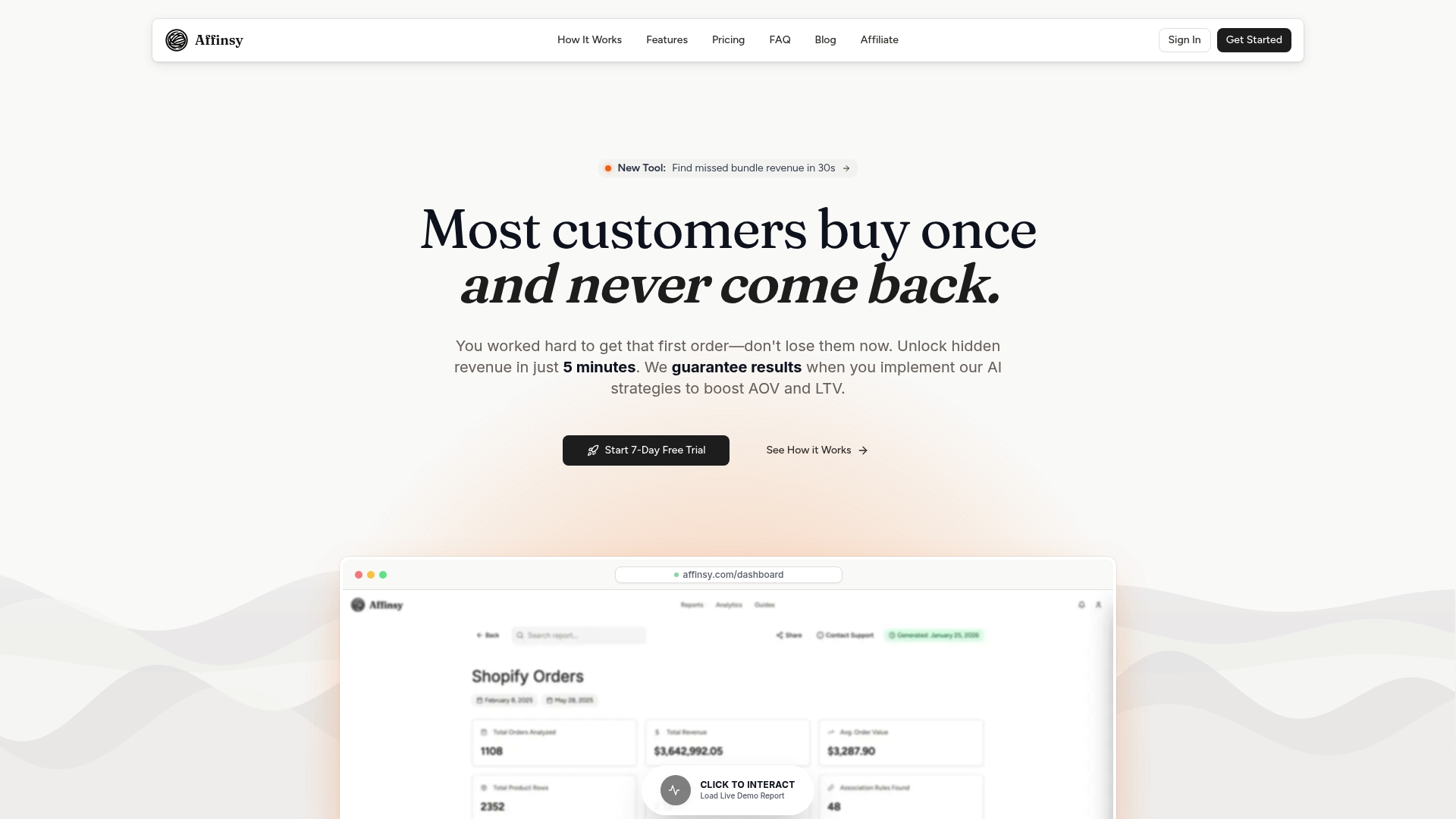
Ready to elevate your ecommerce performance and drive measurable revenue gains? Visit Affinsy now and start turning your transaction data into strategic action plans that deliver real results.
Frequently Asked Questions
What are ecommerce analytics tools?
Ecommerce analytics tools are software applications that help online retailers track, analyze, and understand their sales data. These tools provide insights into customer behavior, product performance, and marketing effectiveness, enabling businesses to make data-driven decisions.
How can ecommerce analytics tools improve my online store’s performance?
Ecommerce analytics tools improve performance by providing key metrics such as average order value, customer segmentation, and product associations. Use these insights to optimize marketing campaigns and product placements to increase sales, potentially boosting revenue by 20% or more within a few months.
What key features should I look for in an ecommerce analytics tool?
Look for features like real-time reporting, customer segmentation, market basket analysis, and integration capabilities with your existing platforms. Ensure the tool can automate data collection and provide actionable insights to save time and improve decision-making.
How do I choose the right ecommerce analytics tool for my business?
To choose the right tool, assess your specific needs such as budget, data volume, and desired features. Conduct a trial period with potential tools to gauge their usability and effectiveness in delivering actionable insights tailored to your online store.
Can ecommerce analytics tools help with customer retention strategies?
Yes, many ecommerce analytics tools offer insights into customer behavior and preferences, which can inform targeted retention strategies. Implement personalized marketing campaigns and product recommendations based on these insights to increase customer loyalty and repeat purchases.
How often should I review the analytics data from these tools?
Review your analytics data at least weekly to identify trends and adjust your strategies proactively. Regular analysis can help you respond swiftly to changing customer behaviors and maximize your sales opportunities.
Recommended
- Best Top Ecommerce Analytics Platforms – Expert Comparison 2025 - Affinsy Blog | Affinsy
- Best ecommerce insights platforms – Expert Comparison 2025 - Affinsy Blog | Affinsy
- Top 6 Best Ecommerce Analytics Tools 2026 for Boosting Sales - Affinsy Blog | Affinsy
- Best 7 AI Analytics Tools for Ecommerce 2026 - Affinsy Blog | Affinsy
- 7 Top Types Of Online Businesses Every Nigerian Should Know