Most merchants pick a free shipping threshold by rounding to a nice number or copying a competitor. That costs margin on one end or kills conversion on the other. Your threshold should come from your own order data: what customers actually spend, what it costs you to ship, and which products bridge the gap.
Key takeaways
-
A good free shipping threshold comes from your store's actual basket sizes and shipping costs, not from a round number or an industry average. Free shipping influences purchases and shapes the purchase decision for most online shoppers, so the policy matters, but the number has to fit your economics.
-
The right free shipping threshold usually sits just above your store's median basket: high enough that customers add items to qualify, low enough to protect profit margins after absorbing shipping costs.
-
You can find your own threshold from an order export by looking at the distribution of basket sizes, your average shipping cost per order, and which lower priced items buyers already add alongside bestsellers. A minimum purchase threshold set this way can increase average order value without guessing.
-
Test one candidate threshold for a defined period, then compare basket size, cart abandonment, and gross profit margin to the period before. That is the simplest way to validate a free shipping strategy before committing.
What should my free shipping threshold be?
Your free shipping threshold should sit a little above your typical basket, at a point where the extra items customers add will cover your shipping cost and still leave you profit. There is no universal magic number.
"Typical basket" here means median order value from a recent representative period, not average order value. The median is more stable because a few unusually large orders do not pull it upward. The average order value guide covers the difference and how to calculate both from an export.
Many retailers offer free shipping only above a minimum purchase, to offset shipping costs, and most set that minimum order threshold some distance above their average basket. A large share of online retailers offer free shipping only after the cart passes a minimum payment threshold. Requiring a minimum order value is the most common setup, and retailers typically set it a modest step above their average order value. That is the right instinct: a gap that is reachable but meaningful. Where the instinct goes wrong is in borrowing someone else's number. The average free shipping threshold among U.S. retailers has crept upward in recent years, but an average across other stores says nothing about whether your customers can reach it.
A low free shipping threshold leads to margin erosion if too many orders qualify without adding enough extra revenue to cover delivery costs. High-margin products justify higher free shipping thresholds, because each added item contributes more toward carrier costs. A good free shipping threshold sits one natural "step" above the main cluster of existing orders: if most orders land in one narrow band, a threshold in the next band up usually works better than a jump two bands higher. The right threshold is different for a coffee subscription brand than for a skincare or pet food store, and it must come from that store's own baskets and shipping costs.
How do I find the right threshold from my orders?
Export your orders, group them by basket size, and see where most of your completed orders sit now. Then layer in your average shipping cost per order and test thresholds just above your main cluster.
To calculate free shipping thresholds from a standard Shopify or WooCommerce order export, you need these columns:
-
Order ID
-
Order date
-
Customer ID or email
-
Order subtotal (before shipping and discounts)
-
Shipping paid by customer
-
Shipping cost to you (from carrier invoices, if available)
-
Product line items with price and quantity
Use the last twelve months to analyze order data for thresholds, or a quarter at minimum, and exclude periods dominated by one-off promotions like Black Friday. You want behavior that reflects your current buyer, not a holiday spike.
Calculate your gross profit margin to see how much room you have for absorbing shipping costs. Then group orders into value bands of ten (in your currency) and count how many orders fall into each band. These clusters show the basket sizes where customers are already comfortable paying.
Retailers set free shipping thresholds to encourage larger purchases and increase average order value, and the bands tell you exactly where to anchor. The typical free shipping threshold for online retailers falls in a fairly narrow, everyday range, but categories spread out around it. Beauty and cosmetics retailers often set their threshold near the price of one or two products. Mass retailers typically keep a low threshold for non-members and waive it for members. Apparel sits in the middle, and premium and specialty goods set their minimums far higher, because their baskets and parcels differ. Your own bands, not the category average, tell you where your store fits.
How far above my typical basket should the threshold sit?
In most ecommerce stores, a workable free shipping threshold sits only one band above your median basket, not two or three. The gap should be small enough that customers can bridge it with one or two extra items.
The concept is a "bridgeable gap." The difference between your median basket and the proposed minimum cart value should be close to the price of common add-on items in your catalog: whatever accessories, refills, or samples cost in your store. Consumers also perceive a reasonable free shipping spend as a modest one, closer to an everyday basket than to a splurge, which reinforces that the target has to feel reachable. Free shipping thresholds encourage consumers to add items to their cart. Most shoppers will take some action to receive free shipping, and most consumers will buy additional items to qualify for free shipping when the gap feels manageable.
Avoid jumps that require a second major purchase. Going from your median basket to more than double it, in a store where one core product makes up a whole order, feels like doubling the order, not topping it up. Shoppers often stall if their cart is just short of the threshold and no obvious add-on bridges the gap.
Keep in mind that first time customers often place smaller orders than repeat buyers. If the free shipping minimum sits too far above first-order behavior, it can increase cart abandonment and hurt acquisition. Setting a threshold a step above average order value can boost sales, but that "above" should be above the median, not above an already-high repeat-customer basket.
Test the distance: run one period with a threshold one band up, and a later test with two bands up, watching both conversion and contribution margin.
Which products help customers reach the threshold?
The products that help customers reach your free shipping threshold are the low- to mid-priced items they already add next to bestsellers: refills, samples, travel sizes, and accessories.
To find these "bridging" products from an order export, identify your top ten products by order count, then check which other products appear in those same orders and at what prices. You are looking for common product pairs where the add-on price is similar to the gap between the median basket and your proposed minimum cart value. This is the same question a market basket analysis answers at scale: which products sell together in the same order, and how often.
Focus on items with healthy profit margins and low shipping weight. Sample kits, refill packs, cleaning tools, or small accessories that do not materially increase the parcel's shipping rate are ideal. Free shipping thresholds can influence customer retention and loyalty when the right add-on also introduces a customer to a second product category they will reorder later. A free shipping threshold can lift the average basket, but it works best when the additional item is something the customer actually wants.
How do I test a threshold without losing margin?
Run the new threshold as a clear shipping rule for a fixed period, then compare total margin per order, average order value, and cart abandonment against the period before or a hold-out group.
Most shoppers consider delivery costs before they reach checkout, and unexpected shipping costs at the last step remain one of the most common reasons shoppers abandon carts. So your free shipping policy, conditions, and qualifying shipping option need to be visible early, not introduced for the first time at checkout. Consumers are more likely to finalize a purchase with free shipping, so testing whether your threshold drives that completion is worth the effort. Introducing free shipping above a threshold changes behavior on both sides of the line: some shoppers add an item, and some orders that already qualified now cost you the shipping fee you used to charge.
Track these metrics during your test:
-
Completed orders per day and total sales
-
Average order value (and the distribution behind it)
-
Share of orders qualifying for free shipping
-
Total shipping cost you pay (carrier costs plus packaging)
-
Gross profit per order after shipping
-
Cart abandonment rate at checkout
A successful free shipping strategy is one where the higher basket and completion rate more than cover the delivery costs you now absorb, keeping profit margins healthy or improving them. If margin per order drops, the threshold is too low or the add-on products are not carrying enough margin.
Reading your order export: the quick check before you change anything
Before changing any shipping rate or cart messaging, run three quick checks from your own order export. People who shop online weigh delivery before they reach checkout, so your free shipping policy is shaping behavior whether or not you have tuned it.
-
Distribution of basket sizes. Calculate your median order value. Identify the most common value band. Check what share of online orders already falls above each candidate threshold. This tells you how many orders would qualify today if you turned the threshold on.
-
Shipping cost per order. Compute your average shipping cost per fulfilled order from carrier invoices or platform reports. This is the number each qualifying order must cover through extra margin. The add-on that bridges the gap has to cover shipping on its own, or nearly so. If it does not, the threshold needs to move.
-
Cheap add-on products. Search for lower priced products that appear frequently alongside your top ten bestsellers. These are the items that help customers reach the threshold naturally. Subscription and membership models eliminate the per-order shipping threshold for members, so those orders sit outside this check, but for one-off orders these add-ons are your bridge.
These three checks can be done in a spreadsheet with filters and pivot tables. A free shipping threshold calculator does the same arithmetic with a few typed-in figures; the spreadsheet does it with your actual orders.
Worked example: one store, two candidate thresholds
Illustration with round numbers, not a benchmark.
A skincare store sells replenishable products. Its main product, a daily moisturizer, sells for $35. A sample kit sells for $9, and the kit's gross margin is $5. The average shipping cost per order for a standard parcel is $6. Over the last twelve months the store shipped 1,000 orders:
| Basket size band | Orders | Share |
|---|---|---|
| Under $30 | 250 | 25% |
| $30 to $39 | 350 | 35% |
| $40 to $49 | 250 | 25% |
| $50 and over | 150 | 15% |
The median basket is $40, and the main cluster is the $30 to $39 band: one moisturizer, on its own.
Candidate threshold: $48. The gap from the $40 median is $8. A customer adding the $9 sample kit crosses the line. The kit's $5 of margin covers most of the $6 shipping cost, and margin on the rest of the basket covers the remainder, so the store comes out ahead on most qualifying orders. Today, about 180 of the 1,000 orders already sit above $48, so the threshold turns on for the few and prompts the many.
Candidate threshold: $55. Now the gap is $15. The customer needs two add-ons or one pricier item. Fewer shoppers will bother, conversion risk rises, and cart abandonment may increase. Unless the catalog has an accessory around $15 that pairs naturally with the moisturizer, this higher threshold pushes too far.
Copy this pattern into your own spreadsheet: put your median basket, your add-on prices and margins, and your shipping cost into the same math. If the add-on margin covers most of the shipping cost and the gap feels like one item, you have a workable candidate.
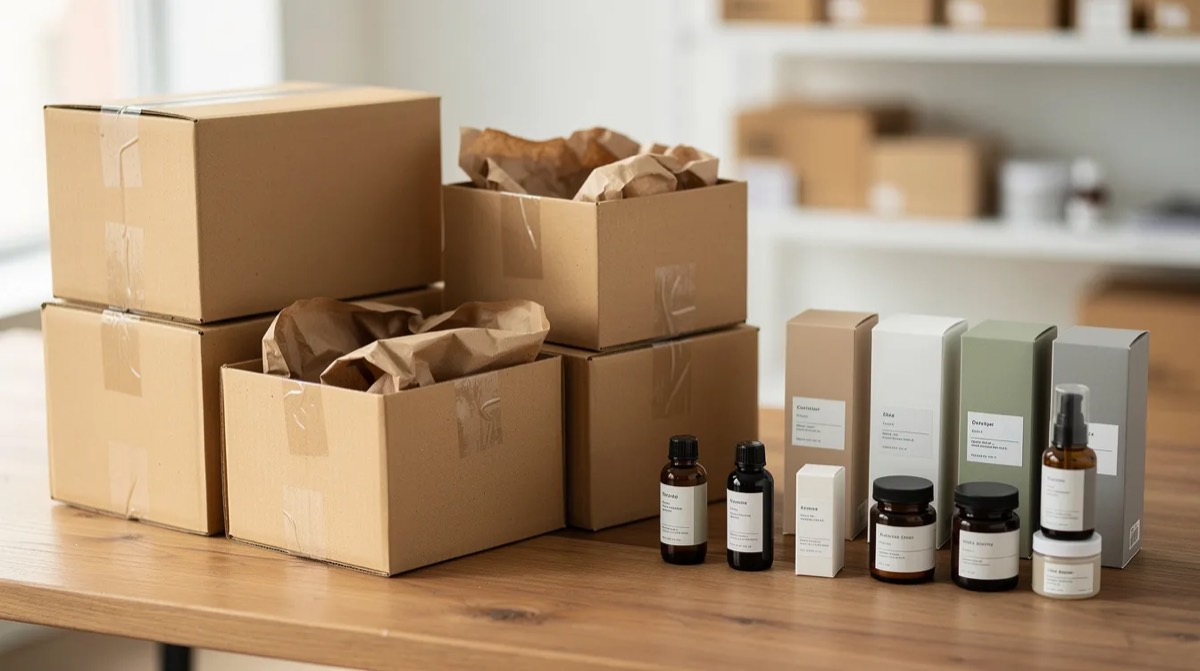
Using products bought together to raise basket completion
Free shipping only works when shoppers know exactly what to add to their cart to reach the threshold. That is why products bought together matter more than the threshold number itself.
From your order export, sort or pivot orders by main product, count which secondary products appear most often in the same baskets, and note their price and margin. The pairs that show up repeatedly are your best candidates for cross-sell cards in the cart drawer, "Complete your order" blocks on product pages, or small upsell items at checkout. The data-driven cross-sell recommendations guide covers how to pick and place them.
A free shipping banner raises customer awareness of the offer, and a dynamic banner that shows shoppers how far their cart value is from the line turns a passive rule into an active prompt to encourage customers to add one more item. Treat that on-site message as a free shipping promotion on product pages and in the cart, not just at checkout. Pairing the banner with the right add-on is what produces a basket completion increase rather than a stalled cart.
Connect this to retention: a smart free shipping strategy should favor add-ons that get customers to try a second product category. If a customer's first order is moisturizer and the add-on is a cleanser sample, the chance of a second order for cleanser goes up. That is how free shipping conditions and basket completion feed customer lifetime value.
Running a simple free shipping test: period against period, or a hold-out
You do not need an experimentation platform to test a new free shipping threshold. Two practical approaches work for most merchants and agencies.
Period against period. Pick a stable baseline period, for example the last full month with your current shipping setup. Record average order value, cart abandonment, orders per day, and gross profit after shipping. Then switch on the new free shipping threshold for the next month and compare. Set it up as an automatic discount on shipping at the threshold rather than a discount code, so every qualifying order gets it, and keep all other discounting and limited time promotions consistent so the comparison is clean.
Hold-out. Run the new threshold in one shipping zone and keep another comparable zone on the current rate, or alternate the two rules week by week. Compare margin per order and conversion between the two groups. Do not split by customer type, because new and repeat buyers behave differently whatever the threshold.
Judge by margin, not only average order value. A test only wins if the lift in basket size and completion covers the shipping you now absorb and keeps profit margins healthy. Run the new threshold through at least one full merchandising cycle, or two to four weeks of typical traffic, so weekly swings do not make the result unreliable.
Where Affinsy fits
The spreadsheet checks are enough for one threshold. The part that gets tedious is the add-on question, repeated across a whole catalog, every quarter. Affinsy reads a store's order history from a CSV upload, or orders sent by webhook or API, and shows which products sell together most often, which ones act as openers on a first order and which keep customers coming back, and the typical reorder gap per product. That turns "which cheap item bridges the gap" into a list you can read off, with the pairs ranked by how often they appear in the same basket.
Next steps: connecting free shipping to repeat purchases
-
Pull a recent order export and build the basket size bands. Note the median and the main cluster.
-
Compute your average shipping cost per order and your gross margin.
-
Choose one candidate threshold a band above the median, and find the add-ons whose price bridges the gap.
-
Put the add-on in the cart prompt, switch the threshold on, and compare the next period's margin and basket size with the one before.
-
Repeat the checks by customer segments: new buyers against repeat buyers, your most valuable customers against the rest, so the rule serves retention as well as acquisition.
Once your ecommerce business has a stable free shipping strategy, the next step is to connect it to repeat purchase behavior. Which first orders qualify for free shipping? Which products in those orders are most likely to earn a second order? When does that reorder usually happen? These questions turn a shipping policy into a retention lever that can motivate customers to come back.
If you would rather have the basket size distribution, the products most often bought with your bestsellers and the reorder gap per product worked out from your own orders, the 7-day trial of Affinsy delivers them.
FAQ
Does free shipping always beat a lower product price?
For many online shoppers, avoiding a separate shipping fee feels better than seeing a small discount on product prices. But for the merchant, the right choice depends on margin structure. Some stores are better off with slightly higher prices and a simple "free shipping over X" message. Others should keep prices sharp, charge for shipping, and use occasional free shipping promotions to create urgency during specific campaigns. Either way, one clear rule shown early protects customer satisfaction at checkout.
Should I offer free shipping only for first time customers?
If you offer free shipping to new customers as an acquisition tool, it can work, especially when your profit on the second order is strong. But you must check that the cost of providing free shipping on that first order, plus acquisition spend, is covered by the expected margin on later repeat purchases. If customer lifetime value is high enough, a first-order free shipping offer can pay for itself. A loyalty program perk, such as free shipping for members, is the mirror image: it rewards the repeat buyer instead. Use order history to confirm either one.
How often should I revisit my free shipping threshold?
Review your free shipping strategy a few times a year, or any time shipping rates, packaging costs, or catalog mix change meaningfully. Use fresh order exports to confirm the threshold is still just above the main order cluster and still safe for profit margins. Luxury brands often offer free shipping unconditionally as part of their branding, but most merchants need to revisit their numbers as carrier costs shift.
What if my catalog has both light and very heavy items?
Keep one clear free shipping minimum for standard shipping on light and medium-weight products. Exclude the heaviest or bulkiest items, or assign them a separate shipping profile. One or two oversized orders can wipe out margin if treated like standard-weight parcels. Consider separate zones and shipping rules for these products so you are not losing money on heavy shipments.
Can I use the same free shipping threshold for international orders?
International shipping usually has higher base costs and more variable surcharges from the major carriers. Most online retailers set a different, higher threshold or limit free shipping to specific regions or shipping zones where the shipping rate is predictable. This keeps your free shipping offer attractive domestically while protecting gross profit margin on cross-border orders. An announcement bar on your site can clarify which regions receive free shipping and at what minimum order value.