
Building actionable customer segments that drive measurable sales campaigns is held back by tools that require SQL expertise or force you to stitch data across platforms. Free or bundled solutions often miss advanced features like real-time updates, dynamic activation, or cross-channel targeting without paying for enterprise upgrades. This comparison covers pricing, integration complexity, automation capabilities, and analytics depth so you can pick customer segmentation software that matches your store’s team skills and channel needs.
Table of Contents
- Affinsy
- Segment360
- WeltPixel GA4 PRO Extension
- Insights Ready
- Tresl Segments
- Lexer Segmentation Platform
- Comparative Analysis
Affinsy
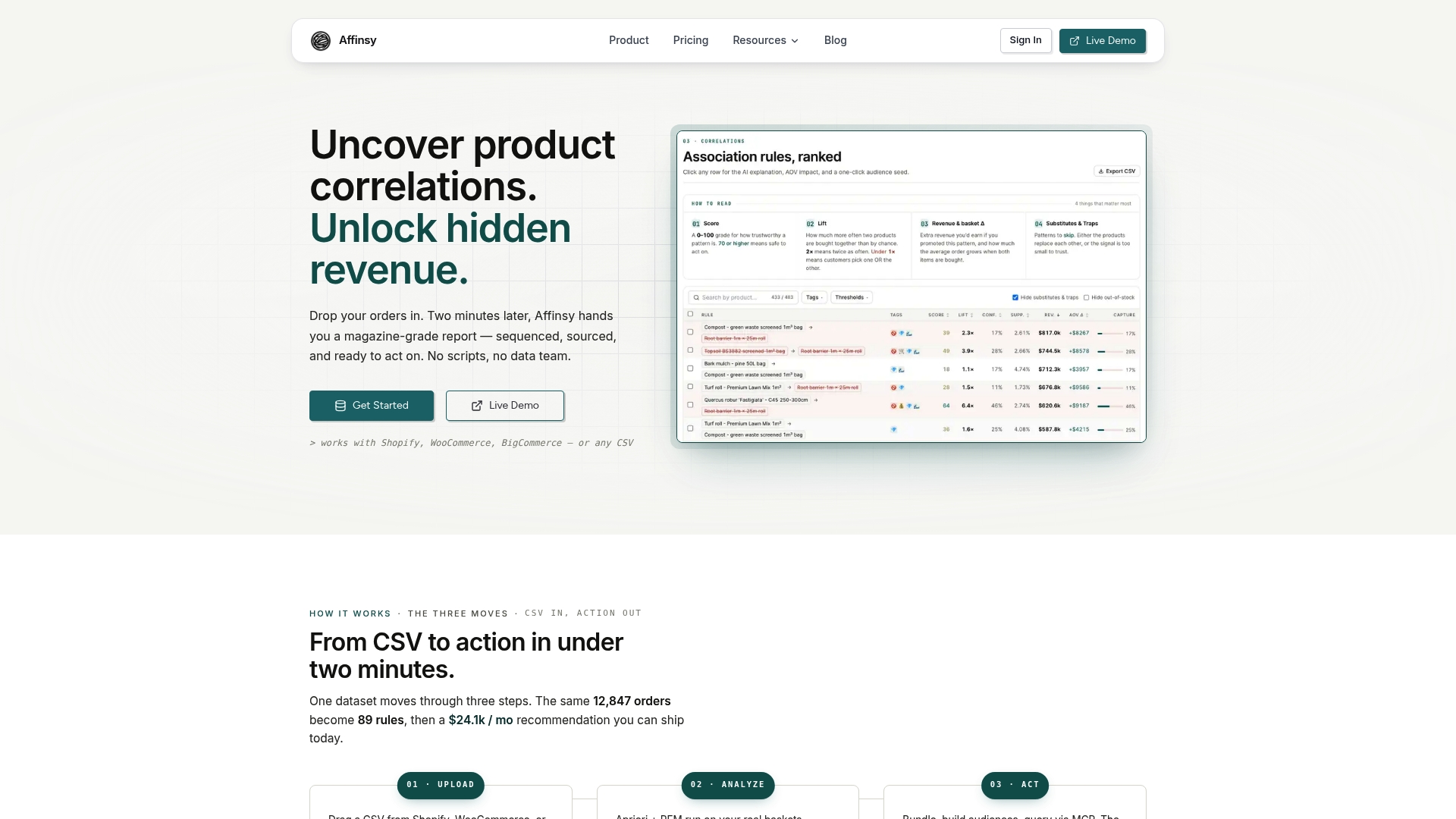
At a Glance
The vendor advertises handling datasets up to 1 million line items in higher plans — a scale that lets you test cross-sell hypotheses on multi-store catalogs rather than a single SKU set. Affinsy focuses on Market Basket Analysis and RFM customer segmentation using CSV uploads, API, or webhook sync.
Core Features
- CSV data import with auto-schema detection that reduces preprocessing time for exported orders.
- Full report generation including an executive summary and detailed association rules you can act on.
- AI-powered insights that surface prioritized cross-sell and bundling opportunities rather than raw correlation tables.
- Export and collaboration tools for sharing recommendations with merchandisers and agencies.
- Webhook auto-sync for real-time updates on Pro and Max plans, compatible with Shopify, WooCommerce, BigCommerce, or CSV pipelines.
Key Differentiator
Affinsy automates product correlation analysis and wraps the output in magazine-quality reporting, making pattern discovery readable for nontechnical teams. The platform emphasizes prioritized recommendations that map directly to merchandising and email workflows.
Pros
- Works without deep engineering: you can start with CSV uploads and scale to API or webhook once you validate ideas in the free tier.
- The reporting bundles statistical rules with executive summaries, so merchandisers and marketers get clear next steps, not just charts.
- Includes natural language AI tools for ad hoc queries, which speeds hypothesis testing when you lack a data scientist.
- Handles multi-store and higher-volume catalogs in paid plans, letting agencies consolidate analysis across clients rather than running separate BI jobs.
- Pricing tiers span free to enterprise, so you can pilot recommendations before committing to automation.
Cons
- Limited out-of-the-box integrations means initial webhook or API setup can require developer time for automated sync.
Notable Integrations
Affinsy connects to common e-commerce order sources and accepts raw exports:
- Shopify
- WooCommerce
- BigCommerce
- CSV files
- API
Who It’s For
Mid-sized e-commerce teams and agencies that have outgrown simple dashboards but lack a dedicated BI stack. Good fit when you want prioritized bundling and cross-sell rules without hiring a data team.
Unique Value Proposition
A free entry point for basic CSV uploads lets you validate prioritized bundling and cross-sell recommendations on real orders before paying for automation. That workflow reduces risk: test a recommended bundle on one campaign, measure AOV lift, then enable webhook sync and API for continuous optimization.
Real World Use Case
A Shopify merchant uploads weekly order exports and uses Affinsy reports to identify three high-probability bundle pairs. The merchant runs one promotional test with those bundles, tracks lift in average order value, and then enables webhook sync on the paid plan to automate recommendations into their merchandising feed.
Pricing
Free for basic CSV uploads with limits. Pro at $79/mo for larger datasets and automation. Max at $199/mo for multiple stores and higher volumes. Enterprise pricing available on request for custom volume and SLA needs.
Website: https://affinsy.com
Segment360
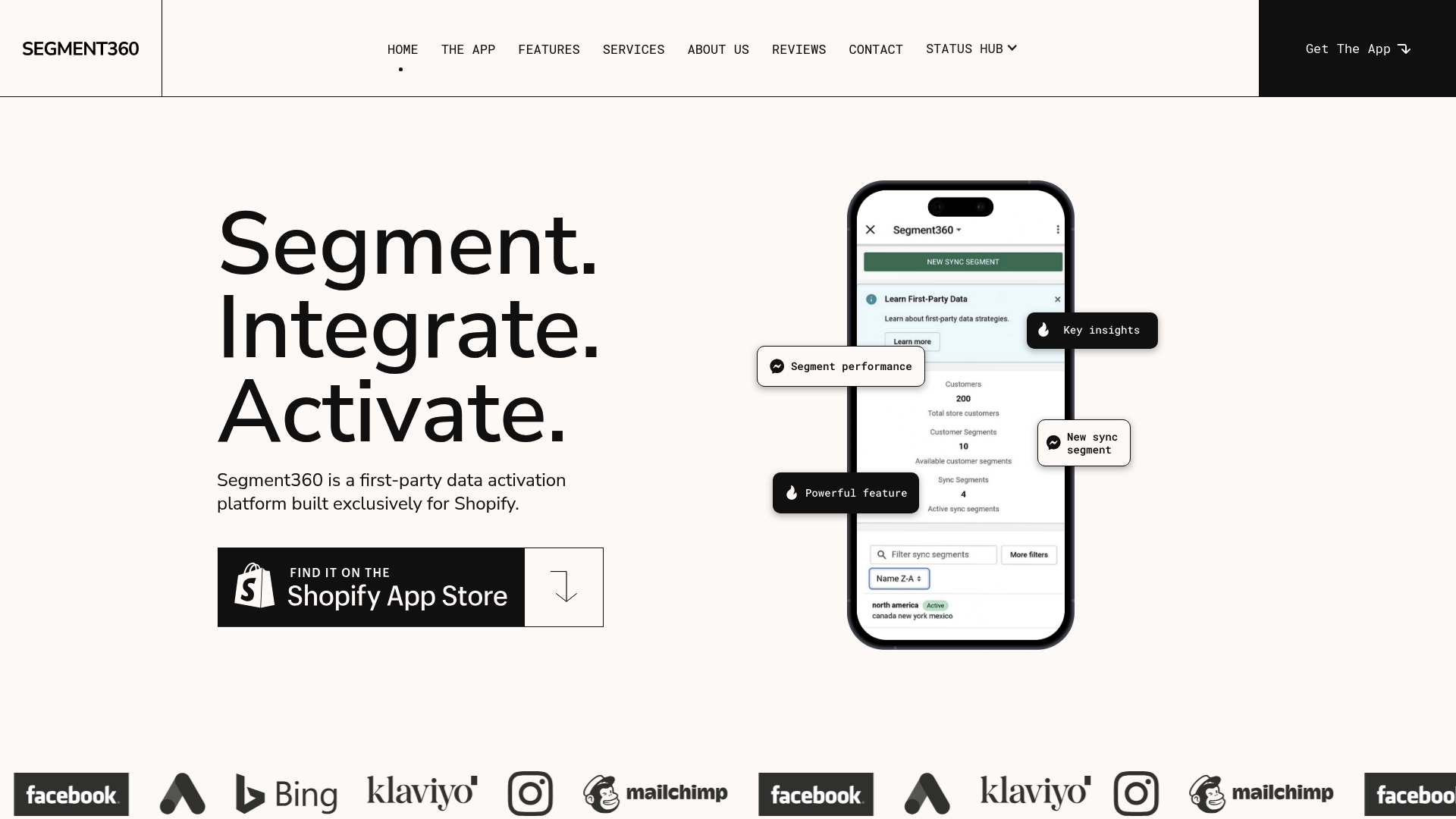
At a Glance
Built exclusively for Shopify, Segment360 focuses on activating first-party customer data inside Shopify stores to drive targeted ads and retention campaigns. The vendor advertises AI-driven segmentation and direct channel activation as its core mechanics.
Segment360 targets store owners who want the path from transaction to paid advertising to be short and measurable. Ask for customer examples if you need proof of outcomes.
Core Features
- AI-powered segmentation that turns purchase history and behavior into named groups you can act on.
- Shopify integration for first-party data activation without complex ETL pipelines.
- Direct activation to major ad channels so segments become audiences quickly.
The interface emphasizes quick segment creation and export to ad platforms. Test a segment end to end before baking it into a recurring campaign.
Key Differentiator
The real distinction is Shopify exclusivity. By designing only for Shopify stores, Segment360 avoids generic connectors and focuses on Shopify data models and events.
If your store runs on Shopify, that narrower focus can cut integration time and reduce data mapping work compared with multi-platform CDPs.
Pros
- Helps lift retention and repeat purchase focus by turning past orders into action. The vendor claims improved conversion and engagement in customer testimonials; verify with references.
- Quick path from segment creation to paid channels reduces campaign setup time and testing friction. Less waiting equals faster learning cycles.
- Designed for nontechnical marketers. The UI keeps segmentation approachable which shortens the time to first targeted campaign.
- Built-in activations to common ad targets lets you bypass manual audience exports for many standard use cases.
Each pro trades complexity for speed, which matters when you need results in weeks not quarters.
Cons
- Pricing is not disclosed in the provided materials, so total cost of ownership is unclear until you talk to sales.
- Claims about conversion lifts are from marketing material and testimonials rather than independent benchmarks.
- The Shopify-only approach excludes stores on Magento, BigCommerce, or custom platforms.
If you need account-level audit logs or multi-store cross-platform joins, those are not described in the available documentation.
When It May Not Fit
If your business operates on more than one commerce platform, Segment360 is probably not the right match. Its architecture centers on Shopify primitives.
Also avoid it if you require vendor-published performance benchmarks or public third-party reviews before purchase. The materials lean on customer stories rather than audited metrics.
Notable Integrations
- Google Ads
- Meta Ads (Facebook)
- Bing Ads and X Ads (Twitter)
- TikTok Ads
These direct integrations let you push Shopify-derived segments into paid channels without middleman exports.
Who It’s For
Shopify store owners and marketing teams that want to convert order history into targeted ads quickly. Best for teams that prioritize speed over custom cross-platform data engineering.
Not ideal for multi-platform retailers or teams that require on-premise data processing and enterprise-grade audit trails.
Real World Use Case
A Shopify merchant segments customers into high-value, lapsed, and new cohorts, then activates those groups across Google and Meta. According to the vendor, that flow led to measurable uplifts in repeat purchases in testimonial accounts; request references to validate the impact for your category.
Pricing
The vendor did not specify pricing in the provided content. Expect tiered plans or custom quotes based on store size and ad spend. Contact Segment360 for a demo and a pricing estimate tied to your store metrics.
Website: https://segment360.com
WeltPixel GA4 PRO Extension
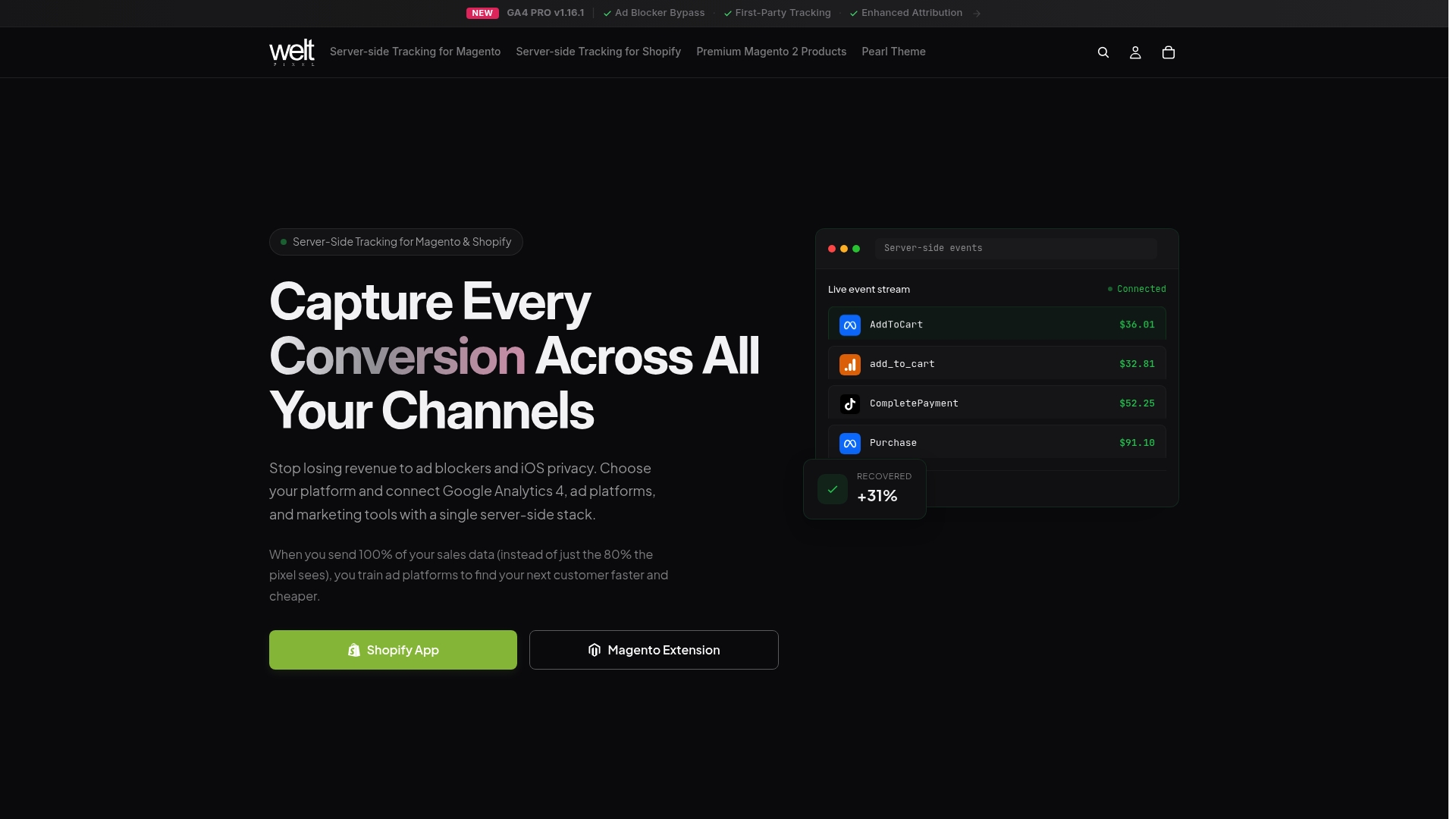
At a Glance
WeltPixel’s case study claims a 19% average lift in ad ROI after moving key events to server-side GA4 tracking. That vendor-reported figure frames the extension’s primary benefit for stores losing conversions to ad blockers and iOS privacy changes.
Built for Magento 2 with Shopify support, the extension pairs automatic client-side events with server-side collection and consent controls to keep conversion data flowing across channels and stores.
Core Features
- Google Tag Manager integration built in to simplify event routing and custom tags.
- Full ecommerce tracking that captures product impressions, clicks, add to carts, and transactions.
- Server-side tracking to bypass ad blockers and improve attribution accuracy.
- Support for GA4 custom dimensions and enterprise GA360 features on higher tiers.
- GDPR and CCPA consent management to control what data is sent and when.
Key Differentiator
WeltPixel combines client-side and server-side GA4 tracking in a single extension with first-class GTM support. That configuration reduces the gaps that appear when browsers or blockers drop pixel calls and lets you consolidate cross-channel events without juggling multiple plugins.
Pros
- Automatic event coverage reduces manual tagging. The extension maps common ecommerce actions so you rarely write custom events for product pages and carts.
- GTM integration simplifies customizations. You can push dataLayer events and handle business rules in one place rather than multiple extensions.
- Server-side measurement improves data fidelity when browsers block scripts. The move to server endpoints recovers conversions that client-side tags miss.
- Addons extend support for advertising platforms, so cross-channel attribution works alongside your existing Meta or Google Ads stacks.
- Multi-store and multi-currency support make it practical for enterprise merchants managing several storefronts from one Magento instance.
Cons
- Setup is technically involved. Merchants without developer resources will face a steep learning curve during GTM container and server endpoint configuration.
- Key features such as server-side measurement protocol require the PRO plan and extra configuration, which raises total cost and implementation time.
- The approach depends on correctly implemented GTM containers and hosted server endpoints. Misconfiguration can create blind spots rather than fix them.
When It May Not Fit
If you run a single small store with no developer access or no budget for server hosting then the extension will feel heavyweight. Likewise, shops that prefer pure client-side analytics with minimal setup or those unwilling to pay for PRO features will find simpler GA4 modules more practical.
Who It’s For
Magento 2 and Shopify store owners who have access to development resources and need reliable cross-channel attribution in privacy-first environments. Marketing managers running paid channels and enterprise architects managing multi-store catalogs will get the most value.
Real World Use Case
A multinational Magento retailer implemented server-side GA4 with this extension to regain conversions blocked on the client. The vendor reports a 19% average ad ROI lift in that example. The store also centralized consent handling and reduced duplicate events across tags.
Pricing
Plans start at €249 for the standard package. PRO features and enterprise options are available at higher tiers and typically require additional setup and hosting costs.
Website: https://weltpixel.com
Insights Ready
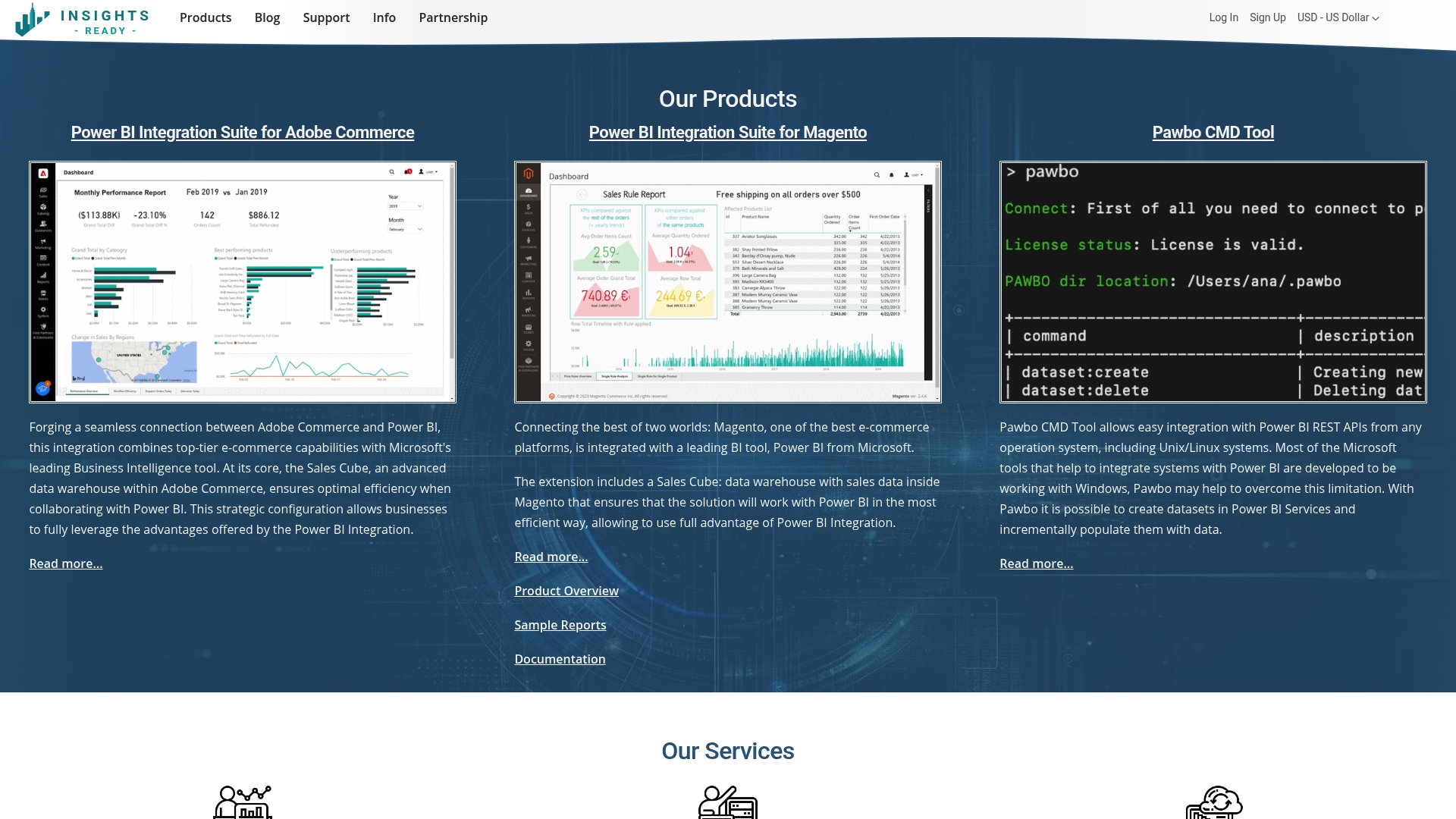
At a Glance
Embeds Power BI dashboards directly into Magento and Adobe Commerce admin panels while shipping a dedicated Sales Cube data warehouse to premodel sales data for faster queries. That combination shifts reporting from exported CSVs to live dashboards inside the store backend.
Core Features
- Power BI integration for Adobe Commerce and Magento admin panels, including embedded report panels.
- Sales Cube data warehouse designed for sales and order-level analysis to reduce query load on source stores.
- Command line tool for running Power BI API operations across environments and automating deployments.
- Prebuilt report templates and sample workbooks to accelerate initial setup and report design.
- Professional services for customization, embedding support, and integration troubleshooting.
Key Differentiator
The product ties an enterprise-grade BI tool directly into the platform console while supplying a purpose-built warehouse for e-commerce metrics. That design reduces the middle steps of exporting and transforming orders before visualization.
This emphasis on embedding reports into the admin means analytics live alongside order management and product configuration rather than in a separate analytics portal.
Pros
-
Embedding reports in the admin keeps analysis where you make decisions, so you spend less time switching tabs and more time acting on numbers.
-
Sales Cube offloads heavy analytic queries from the live store database, which reduces the risk of report-induced slowdowns during promotions.
-
Documentation and sample reports provide a clear starting point, cutting initial BI design time compared with building dashboards from scratch.
-
Support and customization services mean teams without an in-house BI engineer can get tailored dashboards and deployment help.
-
The command line tool helps automate Power BI operations across multiple stores or environments, which matters for multi-store merchants.
Cons
-
Publicly available information is limited, so you may need direct vendor conversations to confirm fit, timelines, and technical prerequisites.
-
The offering is tightly focused on Magento and Adobe Commerce, leaving other platforms out without custom work.
-
Setup assumes familiarity with Power BI and basic ETL concepts; nontechnical store teams will likely need vendor or partner assistance.
When It May Not Fit
If you do not already use Power BI, this solution adds a learning curve and a separate BI license expense. If your analytics needs are minimal or you prefer a hosted analytics product with no warehouse, the Sales Cube approach may be heavier than required.
Large retailers with bespoke data pipelines may prefer a vendor that supports multiple BI engines out of the box rather than one centered on Power BI.
Who It’s For
Magento and Adobe Commerce store owners and analytics managers who want richer, reportable views of sales, inventory, and customer behavior without moving to an external BI portal. Also suited to agencies that build analytics into merchant admin panels for a tighter operational workflow.
Real World Use Case
A midmarket retailer embeds Power BI dashboards into its Magento admin to monitor daily gross merchandise volume, SKU-level sellthrough, and stockouts. The Sales Cube reduces dashboard load times and lets the business set automated alerts for low-stock and fast-selling items.
Pricing
Listing is informational only. Pricing is not published in the product data and typically requires a vendor discussion. Expect costs to include licensing for Power BI, the Sales Cube deployment, plus optional customization and support fees.
Website: https://insightsready.com
Tresl Segments
At a Glance
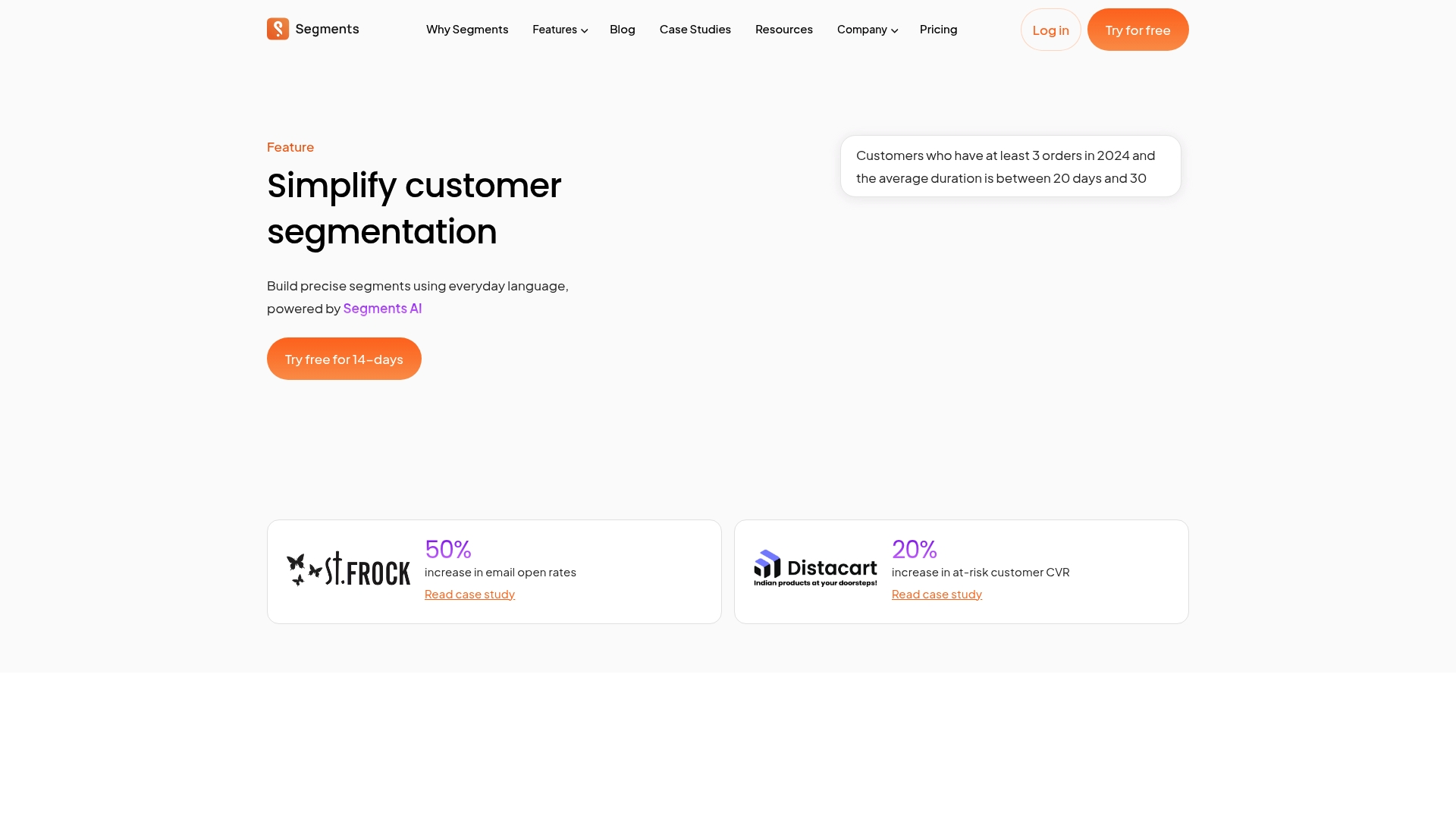
Natural language prompts let you build audiences from plain English, turning a sentence like “high-value repeat buyers last 90 days” into a live segment. The vendor says Tresl is trusted by Shopify Plus stores and reports improved marketing ROI for some customers.
Core Features
- AI-powered segmentation that accepts natural language to create and refine audiences.
- Interactive shopper insights for drilling into purchase behavior and lifetime value patterns.
- Performance analytics that track email open rates, conversion rates, and segment lift over time.
- Audience sync to push segments to Google Sheets and other channels with a single integration.
- Prebuilt recommended segments that let teams start testing without building queries from scratch.
Key Differentiator
Tresl focuses on letting nontechnical marketers define cohorts using plain English rather than SQL or rule builders. That workflow reduces setup time and hands off repeatable audiences to paid channels quickly. The presence of prebuilt segments speeds first campaigns for stores that want fast wins.
Pros
- Enables accurate segmentation with natural language. Marketers can describe the audience and the system returns a usable segment rather than forcing query writing.
- Automation and one-click sync let you scale audiences into email and ad channels without manual CSV work. That saves hours per campaign.
- The analytics view ties segments to measurable campaign signals like open and conversion rates. You can judge what actually moved the needle.
- Prebuilt segments accelerate testing. If you need immediate cohorts for winback or VIP offers, these templates shorten the time to launch.
- The trust claim above gives enterprise buyers a reassurance signal when evaluating vendors for Shopify stores.
Cons
- Public pricing is not available, so procurement requires a sales conversation and time for budgeting.
- Enterprise features such as custom data science segmentations appear gated behind higher-tier plans and may carry steep fees.
- Some prospective users report page availability problems for demos or specific content at the URL, which can slow evaluation.
Who It’s For
Small to medium ecommerce brands running on Shopify that want tighter audience targeting without hiring a data scientist. Good for marketing managers who prefer conversational tools over SQL and need fast audience exports for campaigns.
Real World Use Case
A Shopify boutique uses Tresl Segments to isolate customers with at least two purchases and declining recency. The team syncs that cohort to the email platform, runs a targeted winback flow, and watches the analytics panel to confirm lift in conversion and average order value.
Pricing
Pricing details are not published on the product page. The website asks prospects to contact sales for plan specifics and enterprise custom segmentation pricing.
Website: https://tresl.co/customer-segmentation-tool
Lexer Segmentation Platform
At a Glance
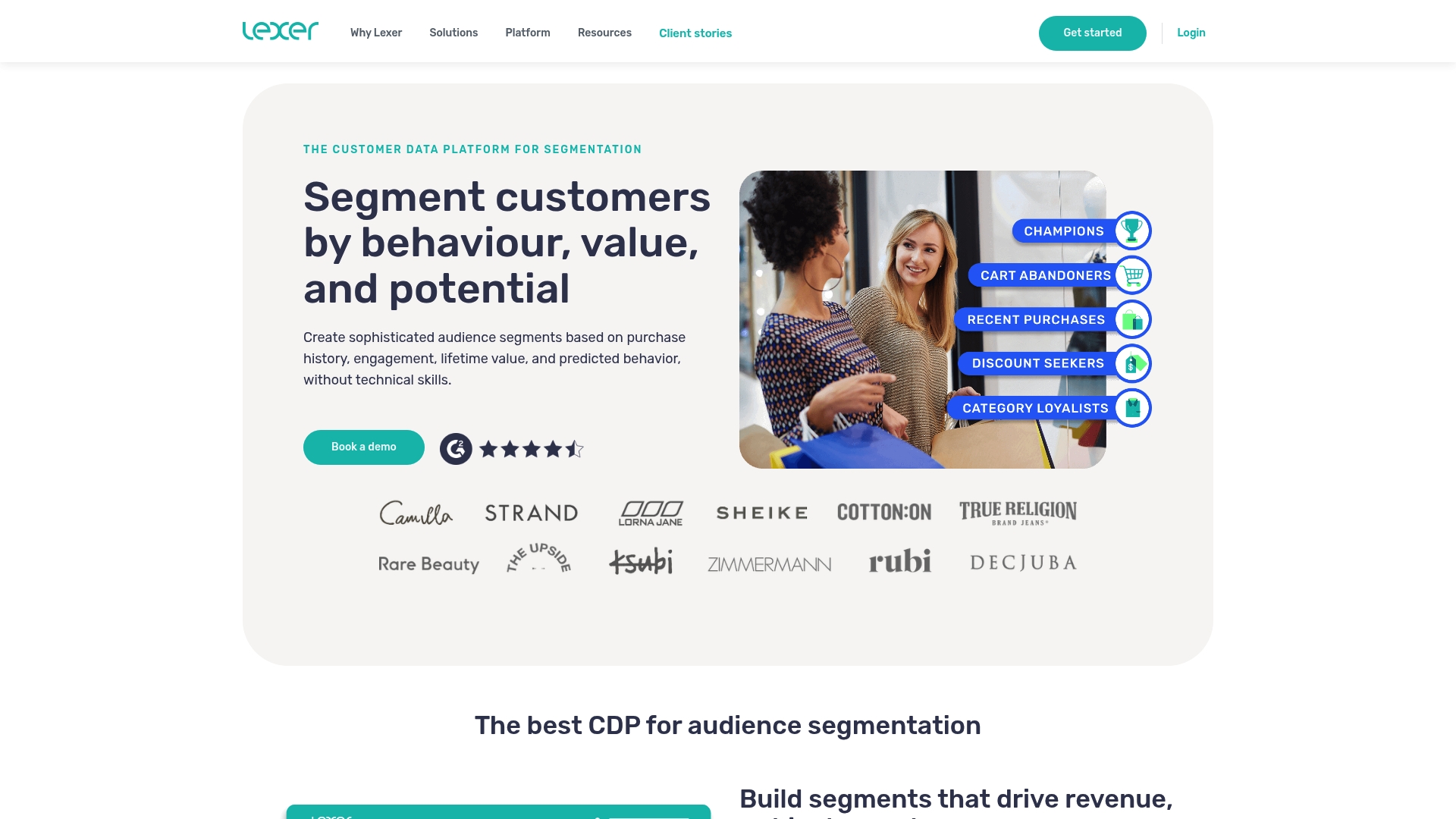
Lexer advertises real-time segments that update automatically using behavioral, transactional, and predictive overlays. That positioning targets retailers and hospitality teams that need audience changes to flow into campaigns without manual exports or nightly jobs.
Core Features
- Connects customer touchpoints into unified profiles so purchase history, browsing, and loyalty data live in one place.
- Build and analyze sophisticated segments with rules plus predictive signals.
- Create dynamic segments that update in real time and push to destinations immediately.
- Activate and measure audiences across email, ads, and messaging channels.
Key Differentiator
The vendor advertises the platform as able to deliver real-time, automatically updating segments tied to predictive overlays. That single mechanism shifts segmentation from a periodic reporting task to an always-current audience layer you can act on from the same interface.
Pros
- Powerful segmentation combining behavior, transactions, and AI-predicted data lets you target finely without stitching tools together.
- Real-time updates remove the lag between insight and execution, which matters for flash offers and last-minute inventory pushes.
- Channel activation is straightforward; segments can be exported to ad platforms and email systems with minimal mapping.
- Purpose-built retail and hospitality focus means prebuilt schemas and use cases for common guest and shopper workflows.
Cons
- Pricing is not specified in the provided content, so total cost and seat model require a sales conversation.
- Implementation complexity will depend on your current data hygiene and pipeline; teams with fragmented sources should plan for engineering time.
- Third-party review detail is not provided in the scraped content, leaving few independent performance signals in this summary.
When It May Not Fit
If you lack consolidated customer identifiers or have strict on-prem data rules, Lexer may add integration overhead or governance work. If you need out-of-the-box reporting for finance or operations rather than marketing activation, a general CDP with prebuilt ERP connectors might fit better.
Notable Integrations
- Klaviyo
- Meta (Facebook Ads)
- TikTok
- Mailchimp
Who It’s For
Marketing teams at retail and hospitality brands that want to move from batch RFM lists to always-current audiences for promotions and loyalty drives. Works best where marketing owns activation and has access to transactional exports or direct feeds.
Real World Use Case
Solotel uses Lexer to create guest segments for targeted promotions and event campaigns. Segments update as customers book or visit, so offers reflect recent behavior rather than last-month snapshots.
Pricing
No pricing details are included in the provided content. Expect vendor-provided tiers or enterprise quotes based on data volume and integration scope; request a custom proposal to get exact figures.
Website: https://lexer.io/platform/segmentation
Comparative Analysis
Choosing the best customer segmentation software for Magento or e-commerce platforms involves examining offerings based on their capabilities, usability, and suitability for specific workflows. This analysis highlights unique strengths among the reviewed products to assist readers in determining the most appropriate solution for their needs.
Context-Specific Feature Strengths
Affinsy offers a flexible interface supporting multiple data integration methods (CSV, API, and webhook sync), enabling teams employing various e-commerce platforms to maintain real-time synchronization of their data. However, for users exclusively requiring Shopify integration, Segment360 provides a more tailored and efficient setup owing to its explicit focus on Shopify’s ecosystem and quick activation features.
Usability for Nontechnical Teams
While many platforms offer analytics, Tresl Segments stands out for its natural language processing capabilities. This feature allows marketers with no technical expertise to easily create segments by describing desired audience characteristics, expediting campaign preparations. This simplicity benefits teams without access to advanced data teams, providing accessibility to automated segmentation without requiring in-depth technical skills typically associated with other software solutions.
Best Fit Recommendations
-
Select Affinsy if your team values cross-platform compatibility and seeks both detailed analytical reporting and intuitive recommendation outputs to optimize merchandising strategies.
-
Choose Segment360 if your store operates exclusively on Shopify and you need direct integration with ad platforms to rapidly execute targeted campaigns.
-
Utilize Tresl Segments if your priority is intuitive audience segmentation created with minimal technical setup, aligning with user-friendly tools during marketing workflows.
Our Pick: Affinsy
Given its advanced multi-platform integration capabilities and focus on merchandising insights, Affinsy is a solution for e-commerce teams aiming to optimize their bundling and cross-sell strategies. It is, nonetheless, less ideal for single-platform Shopify users looking for a faster deployment, in which case Segment360 proves more effective. Affinsy excels when detailed analysis and adaptability across e-commerce frameworks are vital factors in the decision-making process.
Customer Segmentation Software Comparison
Choosing the ideal customer segmentation software depends on understanding key features such as platform compatibility, data handling capabilities, and insights generation. The table below summarizes the strengths and limitations of leading solutions in this space to guide your selection process.
| Product | Primary Use Case | Key Differentiator | Best For | Pricing | Notable Limitation |
|---|---|---|---|---|---|
| Affinsy | Market Basket Analysis and RFM Customer Segmentation | AI-powered insights with prioritized recommendations | Mid-sized teams and agencies scaling e-commerce strategies | Free ($79/mo Pro; $199/mo Max) | Limited out-of-the-box integrations for webhook or API sync setup |
| Segment360 | Activating first-party customer data | Exclusive Shopify integration for streamlined marketing actions | Shopify store owners requiring rapid ad activation | Not disclosed | Exclusively limited to Shopify platform, not suitable for other platforms |
| WeltPixel GA4 PRO Extension | Server-side and client-side GA4 tracking | Combines client-side and server-side analytics with GTM support | Magento 2/Shopify users with developer resources | €249+ | Installation requires advanced technical setup and infrastructure |
| Insights Ready | Embedded Power BI dashboards | Integrates Power BI dashboards within admin consoles | Magento/Adobe Commerce users with analytical needs | Not disclosed | Assumes familiarity with Power BI licensing and ETL configurations |
| Tresl Segments | Creating actionable audience segments | Natural language interface for segmentation | Shopify brands needing rapid audience creation | Not disclosed | Advanced custom segments and features gated behind higher-tier pricing plans |
Use this comparison to identify which solution best fits your needs and operational structure.
Unlock Precision Magento Customer Segmentation with Affinsy
Customer segmentation can feel overwhelming when managing Magento stores without a dedicated BI stack or data science team. This article highlights that many need clear, prioritized customer and product insights to optimize cross-selling and bundling strategies. Affinsy offers AI-driven market basket analysis and RFM segmentation that transforms raw transaction data into actionable recommendations — without requiring complex integrations or technical expertise.
With Affinsy you get
- Flexible data import via CSV uploads or API allowing quick startup
- Executive-level reports with easy-to-understand cross-sell rules
- Scalable plans that support multi-store catalogs for growing Magento merchants
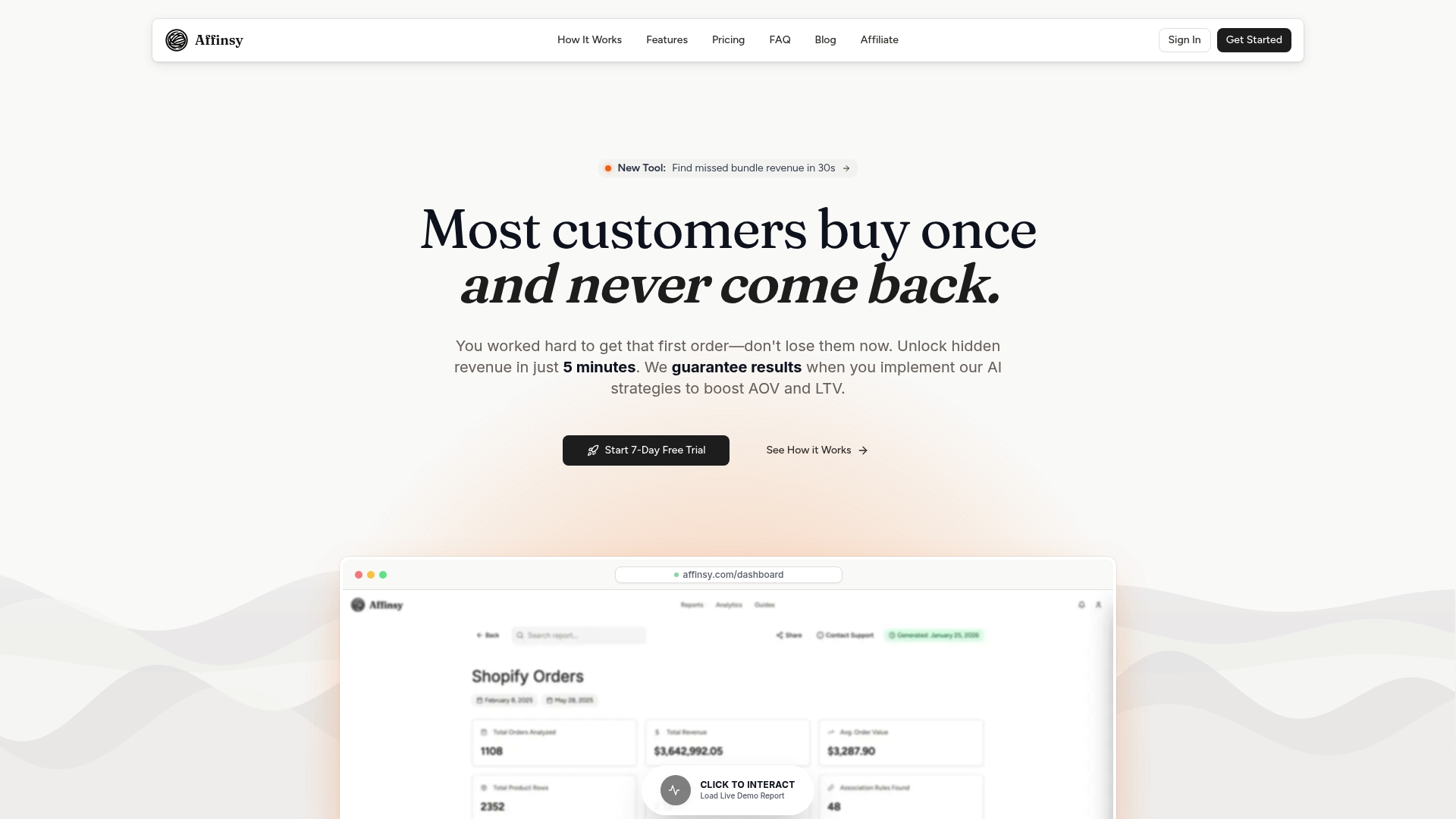
Discover how Affinsy can simplify your Magento customer segmentation approach and improve average order value by testing real transactions first. Visit Affinsy and import your Magento CSV to uncover winning bundle pairs today.
Frequently Asked Questions
How does Affinsy support CSV data imports for customer segmentation?
Affinsy enables CSV data imports with auto-schema detection, streamlining the preprocessing time required for exported orders. This feature allows e-commerce teams to easily upload their datasets and initiate customer segmentation efforts without extensive technical preparation. Start utilizing this functionality in the free tier to see how it meets your needs.
What is the difference between Segment360’s focus and Affinsy’s capabilities?
Segment360 is designed exclusively for Shopify stores, providing features that activate first-party customer data without complex pipelines. In contrast, Affinsy offers broader integrations with various platforms and emphasizes market basket analysis and AI-powered insights, making it suitable for agencies managing multiple stores. Consider your platform and data needs when evaluating which solution fits better.
Can I expect automated recommendations with Affinsy?
Affinsy automates product correlation analysis and delivers prioritized recommendations for cross-sell and bundling opportunities. This feature is particularly beneficial for non-technical teams seeking clear actionable insights. Take advantage of this functionality to enhance your merchandising and email workflows right from your first campaign.
Does Segment360 require technical expertise to use effectively?
Segment360 is designed for non-technical marketers, making it easier to create segments quickly and efficiently without a steep learning curve. While Affinsy’s approach also supports non-technical users effectively, Segment360 focuses on Shopify, which may offer simpler integration for those using that specific platform. Assess your team’s skills when choosing between the two solutions.
How can Affinsy’s webhook auto-sync feature benefit my e-commerce strategies?
Affinsy’s webhook auto-sync feature allows for real-time updates in the Pro and Max plans, which enhances the timeliness of your customer segmentation analysis. This capability supports automatic updating of your product recommendations across your e-commerce platform, streamlining operations. Consider this feature when looking to enhance your dynamic marketing strategies.
Recommended
- 7 Effective Customer Segmentation Examples for E-commerce - Affinsy Blog | Affinsy
- Top 6 Best Ecommerce Analytics Tools 2026 for Boosting Sales - Affinsy Blog | Affinsy
- 7 Customer Segmentation Ideas to Boost Your Sales - Affinsy Blog | Affinsy
- Best ecommerce insights platforms – Expert Comparison 2025 - Affinsy Blog | Affinsy