You sell a consumable. Acquisition works and first orders come in steadily. Most of those buyers never place a second order, and the post-purchase flow running in your email platform was copied from a template that has nothing to do with how long your product actually lasts. This article shows how to rebuild it from the product's reorder window.
Key takeaways
-
A post-purchase flow for consumables should be built from the product's reorder window backwards, not as a fixed day 1, day 3, day 7 calendar.
-
The flow has two jobs: make the first use go well, and land the second order inside the natural reorder window.
-
The timings and the cross-sell come from your own order export: median days to reorder per product, the product most often bought second, and the day by which most second orders have happened.
-
Each email is timed as a percentage of the median reorder gap and varies by the product actually bought.
-
Success is the second-order rate within the window, cohort against cohort, not open rate.
Why the default flow does not bring first-time buyers back
Most brands run the same calendar sequence for every product: thank you on day 1, how-to on day 3, review request on day 7, cross-sell on day 14, reorder on day 30.
Now apply that to consumables. A 21-day coffee bag runs out around day 21, so the day 30 reorder email arrives after the customer has bought elsewhere or moved on. A 60-day pet food bag is barely half empty at day 30, and "running low?" reads as noise. A 30-day supplement might fit the template by accident, but the review request on day 7 lands before anyone has seen a result.
The calendar ignores when the customer actually runs out or is ready to notice a difference. The fix is not more emails. It is a flow anchored in what the product and the data say about reorder timing.
What the flow is for
A post-purchase flow is the automated sequence sent after an order, separate from broadcast campaigns. For a consumable it has two jobs. First, make the first use go well: unboxing, first dose, setup, realistic expectations. Second, land the second order on time so the product becomes a habit. The second order is where most brands recover the cost of acquiring the customer.
The pieces inside it: transactional confirmation and shipping emails, a thank-you, onboarding and usage content, a review request, one cross-sell, the reorder reminder, a late reminder, and a loyalty invitation once the customer has repeated. Everything should serve one of the two jobs.
Find the anchors in your order export
You need a CSV of orders from Shopify, WooCommerce or similar, and a spreadsheet. Minimum columns: order id, customer id or email, order date, product SKU, product name, quantity.
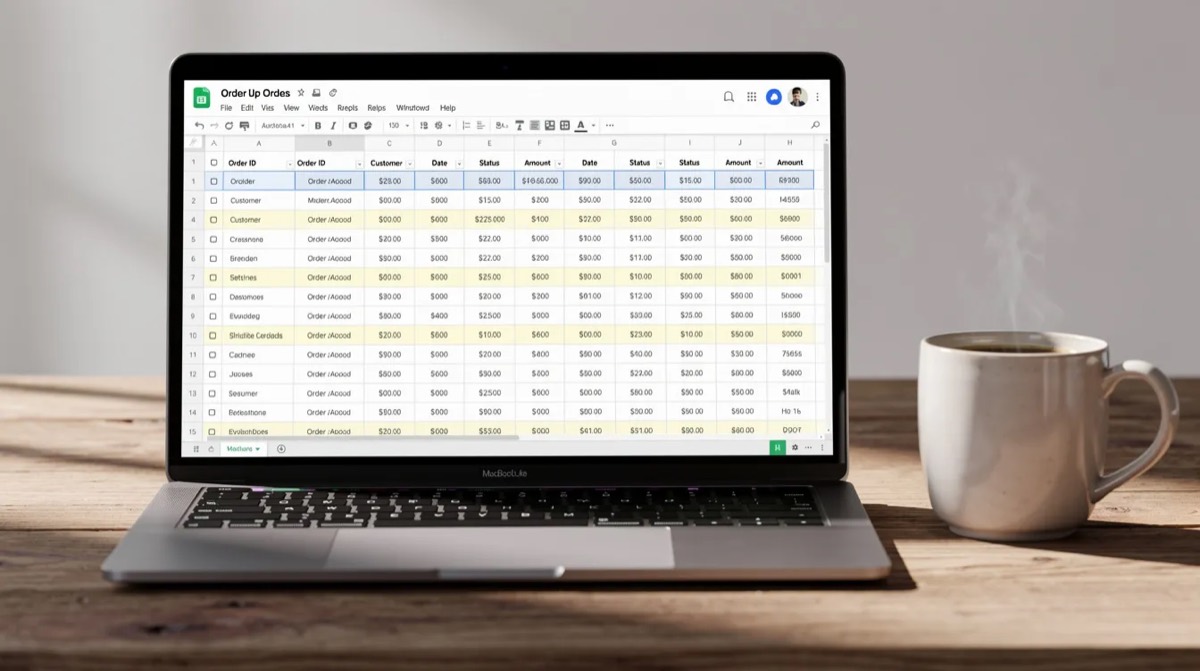
Anchor 1: median days to reorder per product. Sort each customer's orders by date. For customers who bought the same product at least twice, calculate the days between the first and second purchase of that SKU. Take the median per product. That is its natural reorder window.
Anchor 2: the companion product. For customers with at least two orders, record the main product in order one and the main product in order two. Count the pairs. The most common follow-up becomes the primary cross-sell for that first product. Check it is a companion, not a substitute: a grinder after beans, not a different roast.
Anchor 3: the brand-level second-order window. Take all new customers from one month. Among those who came back, find the day by which 80 percent of second orders had happened.
Illustration, with round numbers: coffee beans have a median gap of 21 days. Collagen powder has a median of 33 days. Across all first-time buyers, 80 percent of second orders arrive by day 45. Those three numbers drive both the timing and the content of the flow.
Affinsy computes all three from an uploaded order history, per product and per segment, and surfaces which product follows which across orders. The spreadsheet version is enough to start.
Design the flow backwards from the reorder window
Place each message as a percentage of the product's median gap, not on a calendar day.
| Slot | Share of median gap | 30-day product | 21-day product | 90-day product |
|---|---|---|---|---|
| Thank you | about 10% | day 3 | day 2 | day 9 |
| Onboarding | about 40% | day 12 | day 8 | day 36 |
| Check-in and social proof | about 80% | day 24 | day 17 | day 72 |
| Reorder reminder | about 100% | day 30 | day 21 | day 90 |
| Late reminder | about 130% | day 39 | day 27 | day 117 |
Order and shipping confirmations keep their own immediate schedule. The marketing emails after them take their timing from the product. Tune the percentages later. Starting from this structure is what moves the flow from generic to product-aware.
Email by email
Email 0, transactional, immediate. Order and shipping confirmation. Clarity only: what was ordered, where it is, when it arrives. No selling.
Email 1, thank you, about 10 percent of the gap. Name the exact product. Reset expectations: "most people notice a difference after ten days." Invite questions with a real reply-to address. No cross-sell. A first-time buyer who still feels uncertain needs reassurance, not a pitch.
Email 2, onboarding, about 40 percent. Three to five usage tips. Address the common mistakes that produce poor results. Link to a short guide or video. Good onboarding is also the cheapest way to reduce returns. At most one mention of the companion product, after the education.
Email 3, check-in and social proof, about 80 percent. The customer has been using the product for a while. Share two or three real customer photos or quotes. Ask one quick question, "how is it going, one to five?", to catch problems before the reorder moment.
Email 4, reorder reminder plus cross-sell, about 100 percent. Say plainly that they are probably running low, using the product's typical usage. Reorder button above the fold. Exactly one companion product, the one your order data says is most often bought second. No discount on this first reorder touch. The replenishment email guide covers the first and second touch in detail.
Email 5, late reminder, about 130 percent. Only for customers with no second order yet. Acknowledge that life gets busy. Offer a smaller commitment if it exists, a smaller bag or a travel size. Give a clear way to opt out of reminders if the product was not for them. Beyond this point the customer belongs in a win-back sequence, not in the first-cycle flow.
Email 6, review request, when results are visible. For a 30-day serum that is around day 18 to 21 after delivery, not day 7. One button, one sentence on why an honest review helps other shoppers.
Email 7, loyalty invitation, after the second or third order. Invite proven repeat customers into points or perks. Do not pitch a loyalty or referral program inside the first cycle, before the second order is secured.
Adjusting for product length and multi-packs
Fast cycle, 14 to 21 days, such as a coffee bag or a starter kit. Thank-you within a day or two, onboarding by day four or five, reorder reminder as early as day 14 or 15.
Slow cycle, 60 to 90 days, such as a quarterly supplement pack. Early emails carry more habit-building and long-term expectation setting. Mid-cycle emails can carry deeper education or customer stories. The reorder reminder may not start until day 80.
Multi-pack buyers. Someone who buys a three-pack of a 30-day item has a roughly 90-day supply. Move the reorder reminder to the 90-day window, not the single-unit one, and drop the "you are probably running low" language at day 30.
Exit logic. The flow skips the reorder and late emails the moment a second order is logged, and active subscribers never enter it for that product.
Mistakes that cost more than a missing email
-
Calendar-based timing. The same day 7 review request for a five-day trial kit and a 45-day serum. One lands before use, the other long after they forgot.
-
Cross-selling a substitute instead of a companion. A different flavour of the same coffee instead of a grinder. A competing cleanser instead of the moisturiser that pairs with it. The product bundling entry covers the distinction.
-
Review requests before results. Asking for a collagen review three days after delivery when visible change takes weeks.
-
Discounting the first reorder touch. It trains customers to wait for a code before every refill, in the one place where you finally recover acquisition cost.
-
Not exiting customers who reordered. "You are running low" after a second order was placed confuses people and signals that nobody is paying attention.
-
Generic "rate us five stars" asks. Real photos and quotes from similar buyers do the persuading. A generic ask does not.
How to measure whether the flow works
The outcome metric is the second-order rate within the window: the share of first-time buyers who place a second order within, say, 45 days or within twice the median gap of their first product.
From an order export: pick one acquisition month, find every customer whose first order fell in it, count how many placed a second order inside the window, divide. Compare month against month by cohort.
Supporting metrics: median days to second order, second-order rate by first product, revenue per first-time buyer at 60 or 90 days.
For agencies: show a before-and-after chart of second-order rate by cohort, one screenshot of the email that changed, and the number it moved. That beats a dashboard tour of open rates.
From raw orders to a smarter flow in a day
-
Export 12 to 24 months of orders with order date, customer id, SKU, product name and quantity.
-
Identify the ten products that most often appear in a first-time customer's order. Rebuild the flow for those first.
-
Calculate the median reorder gap per product from customers who bought it at least twice.
-
For each top first product, find the second product that most often follows it.
-
Fix a default second-order window, 60 or 90 days, that covers at least 80 percent of second orders. Use it to measure, not to schedule.
-
Write a generic version of each slot, then variants for two or three key product groups with product names and specific tips.
-
In your email platform, branch on the product bought and set the timing offsets from that product's median gap. Add exit logic for a second order and for subscribers.
-
After one or two full acquisition months, re-run the second-order rate and compare with earlier cohorts.
Next steps
Merchant: pick one flagship consumable this week. Calculate its median days to reorder. Rewrite the thank-you and the first reorder reminder to match that timing. That single change moves the flow from calendar-based to product-aware.
Agency: choose one client with a strong consumable. Build one slide showing their current second-order window and the products that actually follow their openers. Pitch the rebuild as landing more second orders, not as "improving engagement."
If you want the reorder windows, the companion products and the cohort table worked out for you, the 48-hour analysis returns them for every product in the store.
FAQ
How many emails should a consumable post-purchase flow have?
Five to seven core emails for a typical 30-day product: thank you, onboarding, check-in, review request, reorder reminder, late reminder, and a loyalty invitation after the second or third order. Transactional confirmations sit outside that count.
Should I cross-sell in the first email?
No. Use the thank-you to confirm the order, set expectations and invite questions. Introduce the companion product later, tied to actual usage, and only after the education.
What if customers buy several different products in one order?
Pick a primary product for the flow: the one with the clearest replenishment pattern, or the one most often bought first. It decides the timing anchors. Mention the others as secondary content in onboarding. Do not stack independent flows on one order.
What if I sell both consumables and one-time products?
Two flows: one built around a reorder window for consumables, and a shorter one focused on onboarding and a review request for durables. Segment on the primary product type of the first order so durable buyers never receive reorder reminders.
How often should I revisit the flow?
At least every six months, and after any change in product line, pack sizes or pricing. Change one thing at a time, such as moving the reorder reminder from 100 to 90 percent of the median gap, and check the second-order rate by cohort before the next change.