Most roasters ask for the subscription on the first order, and many of the people who say yes cancel after a few deliveries. They signed up before they knew their taste preferences or how fast they drink coffee. Your order history usually points to a better moment: after the second one-off order, at the gap the customer has already shown you.
Key takeaways
-
Offer the subscription after the second one-off order, at the interval between those two orders, not at checkout on the first.
-
Measure the median days to reorder per bag size and grind from your own orders, and send reorder reminders a few days before it.
-
Some coffees bring first-time buyers back far more often than others. Find them by second-order rate per first coffee and put them in front of new customers.
-
Subscribers rarely cancel without warning. Skips, pauses and a lengthening delivery interval show up first.
-
Samplers can work as openers, but judge them by what the buyer orders next, not by how many you sell.
How do I increase repeat purchases for a coffee store?
Find the coffees and the order gaps that already lead to a second order, then time your reminders and offers to match. For customer retention, the second order matters more than the subscription sign-up, because it is the step most first-time buyers never take.
Matching reminders and offers to observed buying behavior is also the simplest form of personalization. In practice that means four things:
-
Lead new customers toward the coffees that most often bring buyers back.
-
Send a reorder reminder timed to the bag size and grind they bought, not a flat monthly email.
-
Wait for the second one-off order before offering a subscription.
-
Watch subscribers for early signs of trouble instead of reacting to the cancel click.
Good branding wins the first order; great coffee at the right moment wins the second. The general playbook behind these steps is in the guide to increasing repeat purchases. The rest of this article applies it to coffee.
When should I send a reorder reminder for coffee beans?
A few days before the median number of days your customers take to reorder that bag size and grind. A small bag of espresso beans and a large bag of filter coffee run out at very different speeds, so they need different dates.
A single reminder for everyone at the same day after purchase reaches some customers too early and others after they bought coffee somewhere else. Use the median gap rather than the average: a few customers who come back after months pull the average far past the date most people actually reorder. The replenishment email timing guide covers the reminder itself.
When should I offer a coffee subscription?
After a customer has placed two one-off orders, at the gap between those two orders. By then they know they like the coffee and have shown you how fast they drink it. Every extra delivery a subscriber stays for adds to their lifetime value and gives the business steadier cash flow, so the moment of the offer matters.
A first-order subscription asks the customer to guess both. When the guess is wrong, bags pile up or run out, and the subscription starts to feel like a chore. Offering it later, framed as "you order about every three weeks, want us to send it on that schedule?", matches what they already do. The guide to converting one-time buyers to subscribers covers the offer and the wording in more detail.
Why do coffee subscribers cancel, and how do I spot it early?
Mostly because coffee piles up, the delivery cadence no longer fits, price becomes an issue, they are tired of the same beans, or a payment failed. The early signs are skips, pauses and a delivery interval that keeps getting longer.
Common reasons, and what each looks like in the data:
-
Too much coffee. Skips and requests to move the next delivery back. Excess coffee at home is one of the most common churn triggers.
-
The interval does not fit. The customer changes the delivery interval, often more than once.
-
Boredom with the same coffee. Long tenure on a single coffee, then a pause.
-
Payment failures. Deliveries stop without the customer choosing to stop them, because a card transaction failed.
-
A bad bag. A cancel straight after a delivery, sometimes with a complaint. Product quality problems need a fix in the roastery, not a retention email.
Each has a different fix. Too much coffee calls for a longer interval or a smaller bag. Flexible delivery controls, several frequency options and an easy way to change the interval all help here, because many customers would rather change frequency than cancel. Keeping an existing subscriber usually costs less than finding a new one, so the effort pays. Boredom calls for a swap to a different origin or blend. Payment failures and the cancel click itself are covered in the next section.
Your monthly churn rate tells you how many subscribers left. These signals tell you who across your subscriber base is about to. Making it easy to change frequency keeps some of the subscribers who would otherwise cancel, and a pause brings many of them back later. Offering longer plans to customers who already reorder steadily also tends to reduce churn. Track churn rate and customer lifetime value together each month, and watch usage and engagement signals: good retention reporting is what lets a coffee subscription business act before the cancel click. A subscriber who has skipped twice in a row is not yet a lost customer, but they are close, and every one you miss is one a competitor can pick up. The lapsed customer definition article explains how to set that line for your own store.
Payment failure and the cancellation flow
A payment failure is the most avoidable way to lose a subscriber, because the person never decided to leave. Turn on smart retries in your payment provider, which recover many failed payments on their own, send notifications before a card expires and on the day a charge fails, and give a one-click link to update credit card details.
The cancellation flow is the exact moment you still have their attention. Let customers manage the subscription from their account: skip, pause, change the interval or swap coffee. Put those options on the cancel page itself, ask for a reason, and read the reasons every month. A structured cancellation flow saves a real share of cancel attempts, and a skip option alone keeps some subscribers who only needed a break. Many subscription businesses still do not offer a pause at all. The difference between a subscriber who pauses and one who cancels is often just whether pausing was easy to find.
Which coffees bring first-time buyers back?
The ones whose first-time buyers most often place a second order. Group customers by the coffee in their first order, and compare the share of each group that orders again within a set window.
Often these are not your best sellers or your highest-margin coffees. A coffee that is easy to like can be a better first purchase than a distinctive single origin that some new customers will not enjoy. That is a pattern to check in your own data, not a rule: some stores find their adventurous coffees bring customers back just as well. The products that drive repeat purchases article walks through the method.
Freshness and product quality sit underneath all of this: no reminder rescues a stale bag. Once you know the coffees that retain customers, feature them in welcome emails, on the homepage and as the default suggestion for new visitors.
Delivery cadence: one-off rhythm and subscription rhythm from the same export
Your one-off orders show the rhythm customers choose on their own. Your subscription orders show the rhythm you offered them, and where they push back. Both are in the same order export. Where the two rhythms differ is often where churn starts.
The columns you need:
-
Customer id or email
-
Order date
-
Product, bag size and grind
-
Whether the order was a subscription delivery or a one-off purchase
Compare the median gap between one-off orders for a bag size with the default interval you offer on subscriptions for that bag. If customers reorder a bag every four weeks on their own but your default subscription ships it every two, expect skips and cancellations. Fixing that mismatch protects revenue from churn you caused yourself.
Samplers and discovery packs as openers
A sampler suits first-time buyers who do not know which bean they like yet. The goal is to learn which coffee they want as a full bag next.
Measure a sampler like any other first product:
-
Share of sampler buyers who place a second order.
-
Days from the sampler to that second order.
-
Which coffee from the sampler they order as a full bag.
The last one is the most useful. It tells you which coffee to suggest to each sampler buyer, and which coffees to keep in the sampler. Offer the subscription only after a sampler buyer has reordered one of the coffees on their own.
Worked example: a roaster's first-coffee table
An illustration with round numbers, not a benchmark.
A roaster looks at six months of first-time buyers and their second orders within 60 days:
| First coffee | First-time buyers | Second order within 60 days | Rate | Median days to second order | First reminder |
|---|---|---|---|---|---|
| Espresso blend, 250 g | 400 | 200 | 50% | 20 | Day 17 |
| Filter blend, 500 g | 300 | 120 | 40% | 28 | Day 25 |
| Espresso, 1 kg | 200 | 70 | 35% | 38 | Day 35 |
| Sampler, 3 x 100 g | 100 | 50 | 50% | 18 | Day 15 |
| All | 1,000 | 440 | 44% |
What the roaster does with it:
-
Reminders. Each first reminder goes three days before that coffee's median, instead of one email to everyone on the same day.
-
Openers. The small espresso bag and the sampler bring buyers back most often, so they lead the welcome flow and the homepage.
-
Subscription offer. Of the 200 espresso blend buyers who came back, 80 placed a third order at a similar gap. Those 80 get the subscription offer, at the interval they already follow.
-
Sampler follow-up. Of the 50 sampler buyers who came back, 30 ordered a full bag of a coffee from the sampler. That coffee becomes the suggestion in the sampler follow-up.
The blended 44% hides most of this. The coffee a customer starts with changes both whether they come back and when.
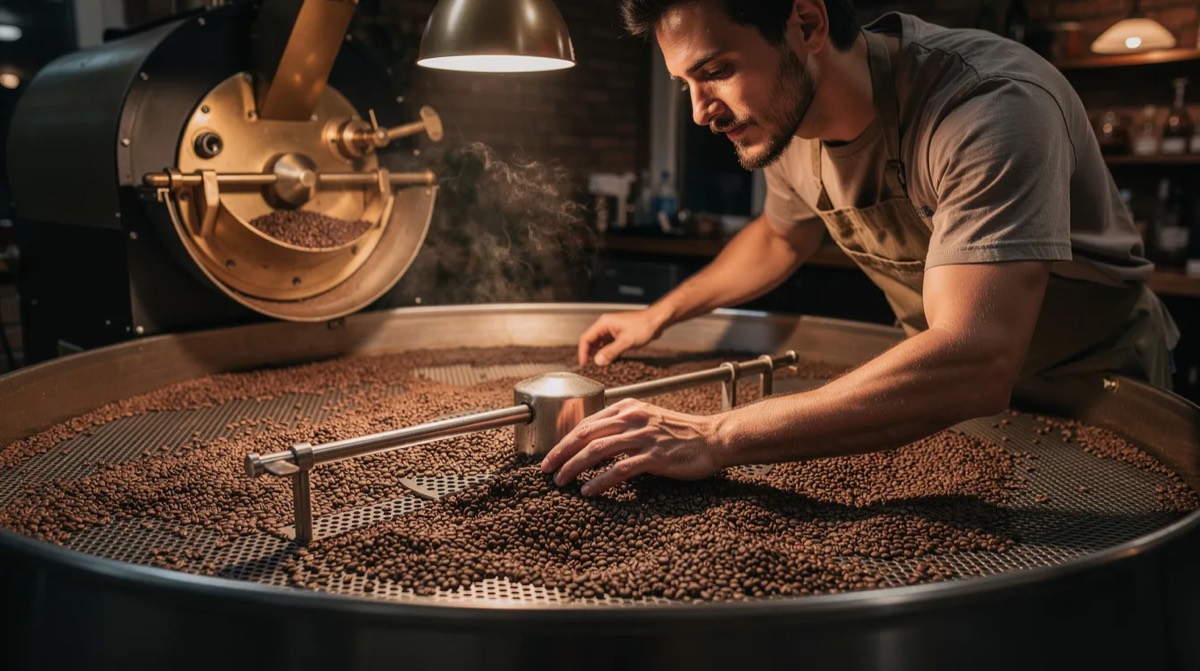
Reminder and subscription offer timing in a coffee subscription business
For one-off buyers, a simple sequence:
-
After delivery. A brew guide and a short note on the coffee they bought.
-
A few days before the median gap for their bag. The reorder reminder, with one suggestion based on what similar customers ordered next.
-
After the second one-off order. The subscription offer, at the gap between their first two orders, framed as convenience rather than a discount, with a plan length that fits their reorder rhythm.
For subscribers, watch the signals from the cancellation section and act on them early: suggest a longer interval after the second skip, a new coffee after a long run on the same one, and a card update message the day a payment fails. Between orders, a short note on the next origin or the people who grew it keeps the relationship going. Targeted emails that use the customer's name and reference the coffee they actually drink feel personal, and personalization builds loyalty. An occasional surprise, such as a small sample of a new coffee in the box, does more than a generic newsletter or a promotion. Once subscribers are happy, a referral offer or a small community around your coffee, such as tasting notes from the roaster, can attract new customers who look like your best ones.
Subscribers who stay tend to add products and try new coffees over time, and their choices tell you about flavor preferences across your subscriber base, which helps with roasting and buying decisions.
The same method works for any product that gets used up. The pet food reorder reminder article applies it to bag sizes in another category.
Next steps
-
Export your orders with the subscription or one-off flag.
-
Build the first-coffee table: second-order rate and median days to reorder per first coffee and bag size.
-
Move reorder reminders to a few days before each median.
-
Offer the subscription after the second one-off order, at the customer's own interval.
-
Add skip, pause, interval change and coffee swap to your cancellation flow, and review the reasons monthly.
For a larger catalogue, Affinsy reads the same export and returns reorder cadence per product, the first products that bring customers back, and lists of customers who are late for a reorder. If you would rather have that worked out for you, the 48-hour analysis delivers it from your own orders.
FAQ
How often should I review customer retention and lifetime value?
Monthly works for most roasters: skips, pauses, interval changes, payment failures and cancellation reasons. Rebuild the first-coffee table each quarter, or after adding new coffees or bag sizes.
Do loyalty programs build customer loyalty for coffee subscriptions?
Less than timing does. Fix timing, skips and the cancellation flow first. For a subscriber, a delivery that arrives when they need it does more than points. Consider a loyalty program later, once you know which customers stay without one, and make sure any reward makes customers feel valued rather than bribed. For coffee shops, a simple single-tier program is the usual starting point, and rewards tend to bring regulars in more often and lift spend over time.
Does this work for coffee shops that also sell online?
Yes. If your coffee shop sells beans on its website as well as in the shop, the online orders carry the same rhythm. Local regulars who buy beans at the counter are harder to follow unless their purchases are linked to an account or email, so start with the online orders. Many cafes say they want better data on customer preferences, and online orders are the easiest place to get it. In the shop itself, the basics still carry retention: a welcoming space and staff who remember regulars.
What should I do with subscribers who keep skipping?
Offer a longer interval, a smaller bag or a pause. It typically makes more sense than a discount. The aim is to keep them subscribed on a schedule that works, rather than forcing a yes or no on the whole subscription. If they keep skipping, offer to switch them back to one-off orders with a reminder timed to their own rhythm.