
TL;DR:
- Effective product bundling increases revenue by combining related items and encouraging higher order values. Success depends on data analysis, appropriate pricing, clear presentation, and patience through testing periods. Rely on transaction insights and build bundles mindfully to create sustainable growth and customer trust.
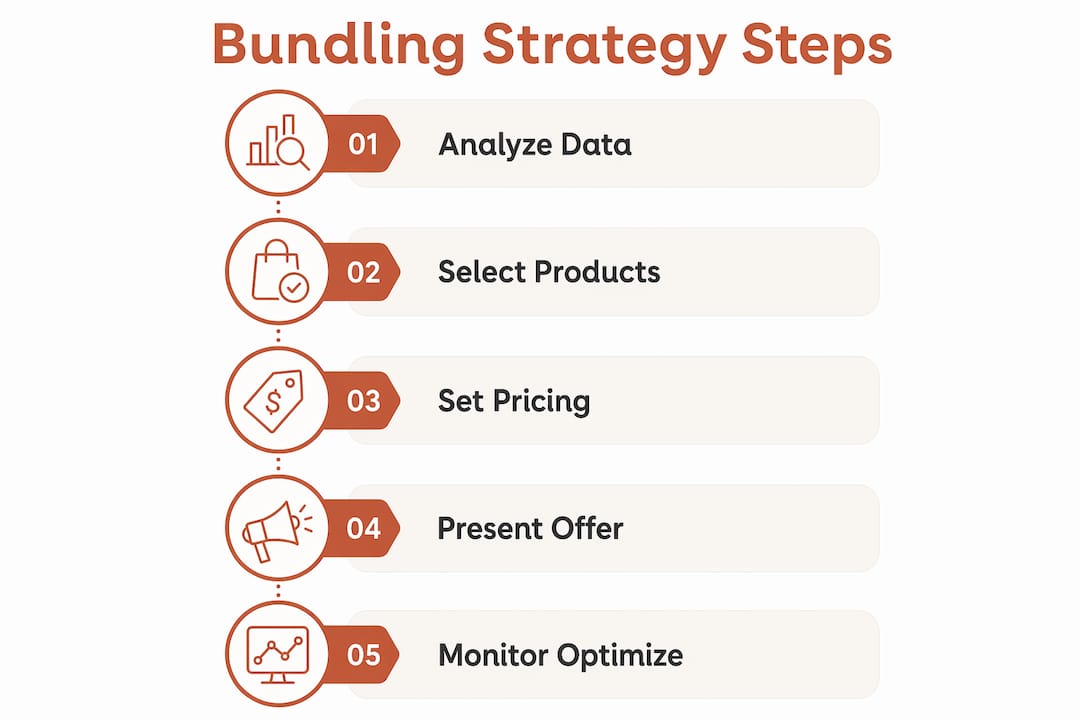
Product bundling is the practice of grouping two or more products for sale at a combined price to increase average order value and simplify the buying decision. Knowing how to strategize e-commerce bundling separates stores that grow steadily from those that compete on price alone. Businesses that implement bundling well see an average 30% revenue increase driven by higher order values and faster inventory movement. That number reflects a structural advantage, not a promotional trick. This guide walks through the prerequisites, the core techniques, pricing mechanics, presentation tactics, and the optimization loop that keeps bundles profitable over time.
What prerequisites are essential before strategizing e-commerce bundling?
The single most important preparation step is understanding which products your customers already buy together. Market basket analysis (MBA) identifies items commonly purchased in the same transaction, giving you a data-backed foundation for every bundle you build. Without it, you are guessing, and guessing leads to bundles that customers ignore.
Before you build a single bundle, collect and review at least 90 days of transaction data. Look for product pairs or triplets with high co-purchase frequency. Then measure the attach rate for each candidate pair. Attach rates indicate how many customers buy an additional product on top of a primary one. A low attach rate signals that customers do not yet associate those products, which means a bundle could create new behavior rather than just discount existing behavior.
Two other metrics matter at this stage: average revenue per customer and product margin by SKU. You need margin data before setting any discount, and you need revenue-per-customer data to understand whether a bundle will grow the account or cannibalize it.
| Preparation step | What it tells you |
|---|---|
| Market basket analysis | Which products are naturally bought together |
| Attach rate by product pair | Whether a bundle creates new demand or discounts existing behavior |
| Margin by SKU | How much discount room you have without eroding profit |
| Customer segmentation | Which customer groups respond to bundles vs. individual purchases |
Pro Tip: Export your order history as a CSV and run it through Affinsy’s free tier before committing to any bundle. The platform surfaces product associations you would not spot manually, even in a catalog of 50 SKUs.
Which bundling strategies drive the highest average order value?
The five bundling types below cover the vast majority of e-commerce use cases. Each works best under specific conditions, so matching the type to your catalog and customer behavior matters more than picking the most popular one.

Routine-based bundles group consumable products into a system or regimen. A skincare brand selling a cleanser, toner, and moisturizer as a “daily routine kit” is the classic example. Consumable bundles positioned as routines encourage repeat purchase and raise lifetime value because the bundle becomes the customer’s default order.
Complementary bundles pair a primary product with accessories or add-ons that enhance it. A camera sold with a memory card and a carrying case is a complementary bundle. These work best when the add-on has a high attach rate and a lower individual price point than the hero product.
Buy-more-save-more bundles offer tiered discounts based on quantity. Buy two, save 10%. Buy four, save 20%. This structure works well for consumables and apparel basics where customers have a clear reason to stock up.
Build-your-own bundles let customers select items from a defined set to create a personalized package. This format reduces the friction of a fixed bundle while still driving a higher cart value. It works especially well for gift buyers who want control over what they send.
Seasonal or limited-time bundles create urgency. Limited-time bundle deals amplify conversion when paired with clear savings messaging. The urgency is real only if the offer genuinely expires, so avoid permanent “limited-time” labels that erode trust.
- Routine-based: best for consumables, health, beauty, and subscription-adjacent products
- Complementary: best for electronics, tools, and any product with a clear accessory ecosystem
- Buy-more-save-more: best for replenishable goods with predictable consumption rates
- Build-your-own: best for gift categories and stores with high SKU variety
- Seasonal: best for holiday periods, product launches, and inventory clearance
Pro Tip: Brands combining three or more AOV strategies, such as bundling alongside upselling and free shipping thresholds, see a 15–30% AOV increase within 90 days. Bundling alone is powerful. Bundling as part of a coordinated AOV strategy is faster.
How to implement and price product bundles effectively
Pricing is where most bundle strategies fail. The two most common mistakes are setting discounts too high too early and discounting combinations that customers already buy together at full price.
Start with your margin floor. For products with margins below 50%, a discount of 5–10% is the safe starting range. A discount of 45% can sway purchase intent significantly, but only makes sense when margins support it and when the goal is to shift new behavior rather than reward existing behavior. Use your attach rate data to make this call.
Careful discount setting is required to avoid cannibalizing revenue from customers who already buy items together individually. If 60% of your customers already buy Product A and Product B in the same order, a bundle discount on that pair mostly subsidizes behavior you already have. The smarter move is to bundle Product A with Product C, a lower-attach item you want to grow.
Follow these steps when setting bundle pricing:
- Calculate the combined full-price value of all items in the bundle.
- Identify the lowest margin SKU in the bundle. That SKU sets your discount ceiling.
- Set the bundle discount at 5–10% for standard margins, or up to 20% if the bundle introduces a new product pairing with a low attach rate.
- Frame the price as savings in dollars, not just a percentage. “$12 off” reads as more concrete than “15% off.”
- Test one pricing variant at a time over a 4–6 week window before drawing conclusions.
| Margin range | Recommended bundle discount |
|---|---|
| Below 30% | 0–5% (focus on perceived value, not price cut) |
| 30–50% | 5–10% |
| 50–70% | 10–20% |
| Above 70% | Up to 30–45% if attach rate justifies it |
Pro Tip: Dynamic pricing on bundles, where the discount adjusts based on cart composition, outperforms fixed discounts in high-SKU catalogs. Most e-commerce platforms support this natively or through apps.
What are best practices for presenting bundles to customers?
A well-priced bundle that is poorly presented will not convert. The presentation layer is where the psychology of bundling either works or falls apart.
Price anchoring is the most reliable conversion lever in bundle presentation. Show the individual item prices first, then the bundle price. The gap between the two creates a concrete perceived win. Customers do not calculate savings intuitively. They need to see the math done for them.
Beyond anchoring, these elements consistently improve bundle conversion:
- Complete component list: Show every item in the bundle with its own image and name. Ambiguity kills purchase confidence.
- Bundle-specific reviews: If customers have reviewed the bundle as a set, surface those reviews separately from individual product reviews.
- Savings callout: Display the total savings amount prominently, in dollars and as a percentage.
- Urgency signals: A countdown timer or “only 14 left” label on a seasonal bundle adds real pressure when the scarcity is genuine.
- Placement at checkout: Offer bundles as a one-click add-on at the cart or checkout stage, not just on product pages.
Bundles simplify purchase decisions by reducing multiple choices to a single binary decision. This is especially valuable for gift buyers and customers who are new to your category. A clear bundle with a clear price removes the cognitive load of building a cart from scratch.
Pro Tip: For build-your-own bundles, set a minimum item count and show a progress bar (“Add 1 more item to unlock your discount”). This nudges customers toward the threshold without feeling forced.
How do you monitor and optimize bundling strategies over time?
Tracking the right metrics from day one prevents you from misreading early results. Bundle performance does not show up immediately. Bundling typically takes 4–6 weeks to show measurable adoption as customers encounter the offer, consider it, and return to buy. Set your evaluation window accordingly before making changes.
The four metrics that matter most are:
- Attach rate: Is the bundle increasing the percentage of customers who buy the secondary item? If not, the pairing may be wrong.
- Average revenue per customer: Is the bundle growing the account, or just shifting what customers buy?
- Bundle conversion rate: What percentage of customers who see the bundle offer actually buy it?
- Margin per bundle order: Are you making more money per transaction, or just moving more volume at lower profit?
Run A/B tests on one variable at a time: price, component mix, or placement. Changing two variables simultaneously makes it impossible to know which change drove the result. A clean 4–6 week test cycle gives you reliable data to act on.
Common warning signs that a bundle needs adjustment include a flat or declining attach rate after six weeks, a high bundle view rate but low conversion rate (which points to a pricing or presentation problem), and an increase in returns on bundled items (which suggests customers feel misled about what they received).
Use customer feedback actively. Post-purchase surveys asking “Did the bundle match what you expected?” surface presentation problems faster than analytics alone.
Key Takeaways
Effective e-commerce bundling requires data-driven product selection, margin-aware pricing, clear presentation, and a patient 4–6 week optimization cycle to deliver sustained revenue growth.
| Point | Details |
|---|---|
| Start with transaction data | Run market basket analysis before building any bundle to find natural product pairs. |
| Match bundle type to catalog | Routine-based bundles suit consumables; complementary bundles suit accessory-rich products. |
| Price against your margin floor | Set discounts at 5–10% for standard margins; only go higher when attach rates justify it. |
| Anchor the price visually | Show individual item prices before the bundle price to make savings concrete and visible. |
| Measure over 4–6 weeks | Bundling takes time to show results; evaluate attach rate and margin before making changes. |
Bundling rewards patience more than creativity
Most e-commerce owners I have worked with expect bundles to perform within two weeks. They see flat numbers, pull the offer, and conclude that bundling does not work for their store. The real problem is almost always the timeline, not the strategy.
The stores that get bundling right treat it like a product launch, not a promotion. They pick one bundle, price it conservatively, present it clearly, and leave it alone for a full month before touching anything. That discipline is rare, and it is exactly why the results are rare too.
The other pattern I see consistently: stores discount pairs that customers already buy together. The bundle looks successful because it sells well, but the margin analysis tells a different story. You are not creating new revenue. You are subsidizing existing behavior at a lower price. The fix is simple: use your attach rate data to find the pairs with room to grow, not the pairs that already perform.
Psychological pricing effects are real, but they only work when the presentation is honest. Inflated “original prices” and fake urgency timers destroy the trust that makes bundling a long-term retention tool. Customers who feel tricked by a bundle do not come back. Customers who feel they got a genuine deal do.
— Mateusz
How Affinsy supports your bundling strategy
Building bundles without transaction data is guesswork. Affinsy gives you the market basket analysis and customer segmentation data you need to build bundles that reflect how your customers actually shop.
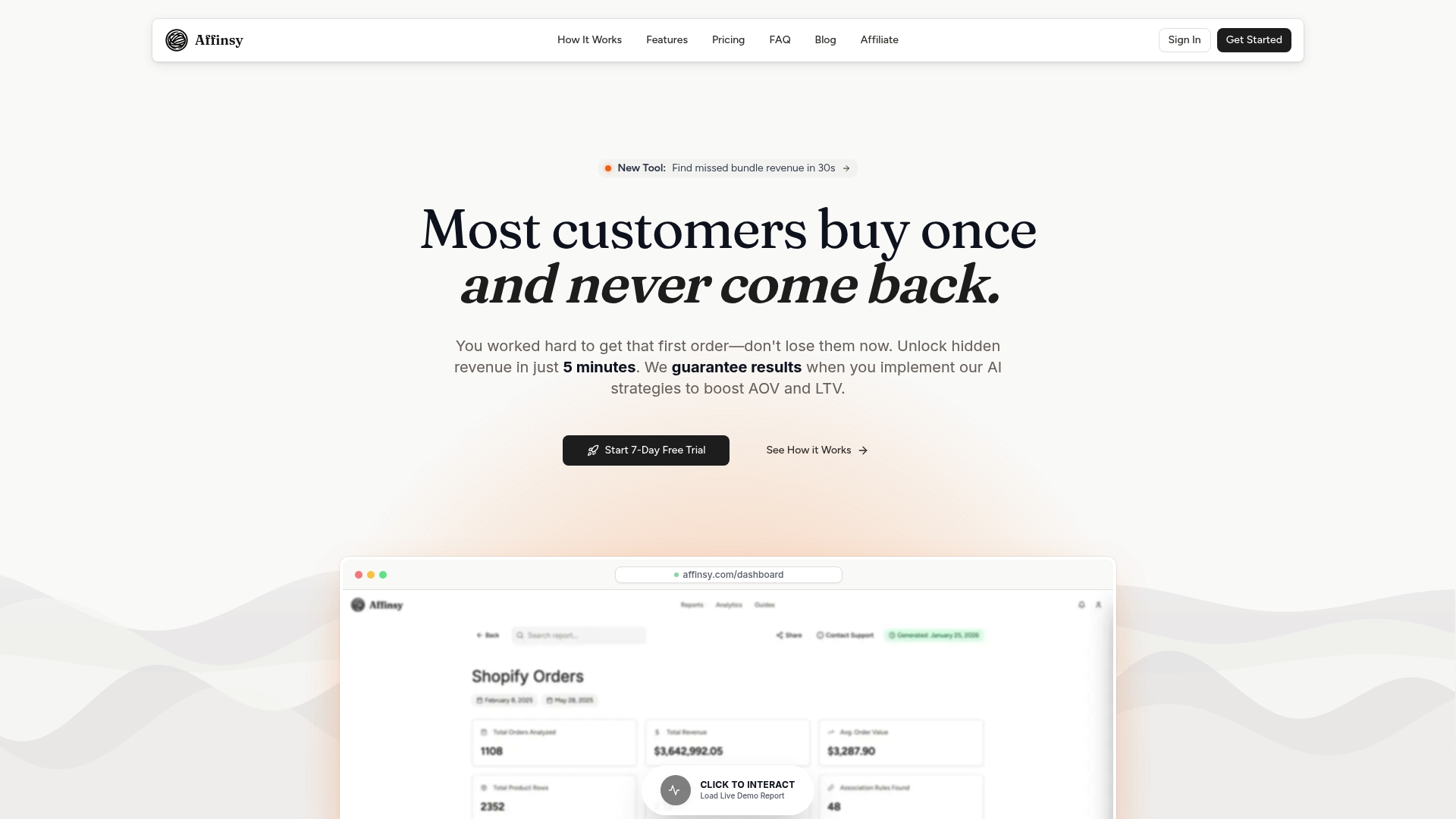
The platform’s market basket analysis glossary and tools surface product associations directly from your order history, whether you connect via API, CSV upload, or MCP. The product bundling glossary page explains every core concept with practical e-commerce context. Affinsy’s free tier covers up to 20,000 line items with no credit card required, so you can validate your first bundle ideas before committing to a paid plan. For stores ready to go deeper, the Pro plan starts at $49/mo.
FAQ
What is e-commerce product bundling?
Product bundling is the practice of grouping two or more products for sale at a single combined price. The goal is to increase average order value while giving customers a perceived savings benefit.
How do I choose which products to bundle?
Run a market basket analysis on your transaction history to find products customers already buy together. Pairs with moderate attach rates are the best candidates because a bundle can grow that behavior without just discounting existing purchases.
How long does it take for a bundle to show results?
Bundling typically takes 4–6 weeks to show measurable performance lift as customers discover and adopt the offer. Evaluate results after a full month before adjusting pricing or product mix.
What discount should I offer on a bundle?
For products with margins between 30–50%, a 5–10% bundle discount is the standard starting point. Higher discounts up to 45% are justified only when margins exceed 70% and the bundle is designed to shift new purchasing behavior.
Does bundling hurt revenue if customers already buy items together?
Yes, if you discount a pair that customers already buy together at full price, you subsidize existing behavior without creating new revenue. Use attach rate data to identify low-attach pairs where a bundle can genuinely grow the account.
Recommended
- Master Product Bundling Strategies for E-Commerce Success - Affinsy Blog | Affinsy
- Ecommerce bundle optimization: step-by-step guide for higher sales - Affinsy Blog | Affinsy
- Master Product Bundling on Shopify for Increased Sales - Affinsy Blog | Affinsy
- What is product bundling? Boost e-commerce AOV by 50% - Affinsy Blog | Affinsy