TL;DR:
- Effective ecommerce trend spotting involves combining search data, social insights, and shopper behavior analysis to identify durable market signals early. Validating trends requires examining 12-month search curves, CPC data, and consumer needs to avoid false positives. Automating and integrating these processes into workflows ensures timely decision-making grounded in real customer behavior.
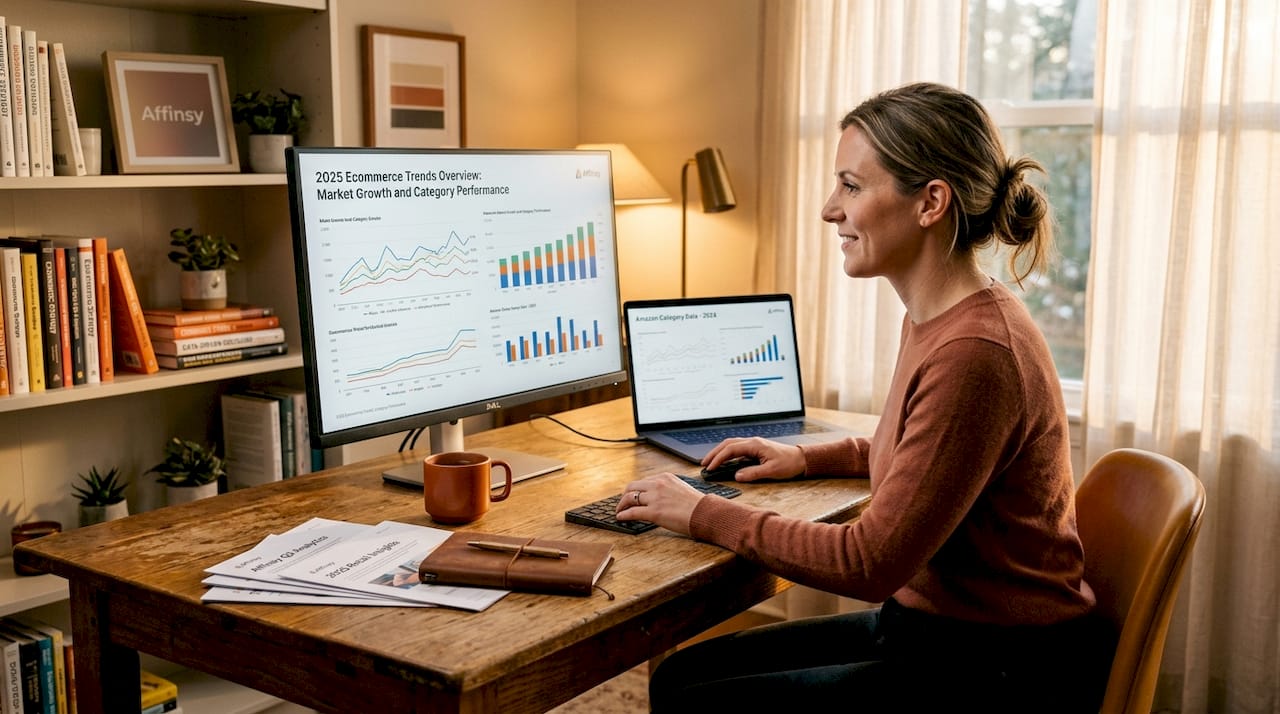
Ecommerce trend spotting is the process of identifying emerging consumer behaviors and market shifts early enough to act on them before competitors do. The industry term for the broader discipline is trend analysis for ecommerce, and it covers everything from search signal monitoring to shopper behavior research. Done well, this guide to ecommerce trend spotting gives you a repeatable system that turns raw market signals into product decisions, marketing pivots, and revenue growth. Tools like the Google Trends API, Pulsar, and DHL’s 2025 Online Shopper Trends report have made this process faster and more precise than ever before.
What tools and data sources are essential for ecommerce trend spotting?

Effective digital retail trend analysis starts with the right data infrastructure. No single source gives you the full picture, so the goal is triangulation: combining structured data (sales, search volume) with unstructured data (social conversations, reviews) to build a signal that holds up under scrutiny.
| Source | Best for | Limitation |
|---|---|---|
| Google Trends API | Scalable search interest over time | Relative, not absolute volume |
| Pulsar | Social narrative and audience analysis | Requires interpretation layer |
| Ahrefs / SEMrush | Keyword volume and CPC data | Lags real-time signals |
| DHL 2025 Shopper Report | Grounding trends in real shopper needs | Annual cadence, not live |
| Trendtrack | Ecommerce product validation | Niche platform, limited categories |
Google launched a Trends API in alpha that gives teams scalable, consistently scaled search interest data going back five years, with geo and time granularity. This is a significant upgrade from manual Google Trends scraping. You can now automate keyword monitoring across hundreds of product categories and regions, which makes the API a core infrastructure piece rather than a research novelty.
Pulsar adds a layer that search data cannot provide: narrative context. Where Google Trends tells you that interest in a topic is rising, Pulsar tells you why people are talking about it and which audience segments are driving the conversation. That distinction matters when you are deciding whether to build a product or run a campaign.
For grounding your hypotheses in real shopper behavior, the DHL 2025 ecommerce report is one of the most useful public resources available. It covers browsing barriers, delivery preferences, returns friction, and sustainability expectations across global markets. Pairing that report with your own analytics gives you a demand-side reality check that pure search data cannot replicate.
Pro Tip: Build a simple monitoring stack before you need it. Set up Google Trends API alerts for your top 20 product categories, add Ahrefs keyword tracking for commercial terms, and schedule a monthly review of social listening outputs from Pulsar. The stack costs less than a single bad inventory decision.
How do you validate real ecommerce trends vs. noise?
Spotting a rising search curve is not the same as confirming a business opportunity. Ecommerce trend forecasting fails most often at this step, when teams act on signals that turn out to be seasonal spikes, one-off viral moments, or curiosity without purchase intent.
The first validation check is the 12-month curve. A steady rising search-interest curve over 12 months indicates a growth-phase trend. A curve that peaked six months ago and is declining signals a missed window. Trendtrack recommends this as the baseline filter for ecommerce product validation, and it is the right place to start.
The second check is commercial intent. Combining search volume with CPC data from Google Ads Keyword Planner separates signals with real buying intent from curiosity-driven searches. A CPC of $15 to $30 for B2B ecommerce keywords indicates monetizable demand. Low CPC on a high-volume keyword usually means advertisers have tested it and found it does not convert.
Robust validation also requires removing seasonality and outlier noise. Combining structured and unstructured data with time-series discipline, including moving medians and year-over-year comparisons, reduces false positives from seasonal cycles or viral spikes. A product that trended on TikTok for two weeks is not the same as a product with 14 consecutive months of rising search interest and growing CPC.
Here is a practical validation sequence:
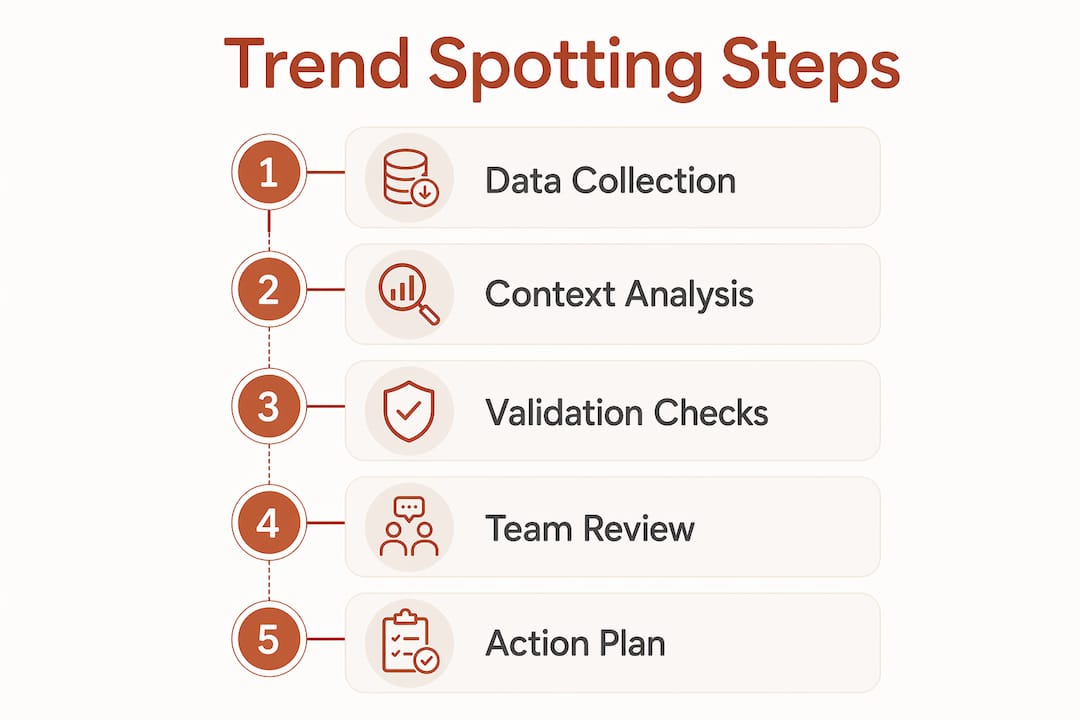
- Pull 12-month Google Trends data for the keyword and its top variants.
- Check CPC in Google Ads Keyword Planner. Anything above $5 for consumer terms deserves attention.
- Cross-reference with Ahrefs or SEMrush to confirm search volume is real and not inflated by bot traffic.
- Look for the trend in DHL or similar shopper research to confirm it maps to a real friction point or unmet need.
- Check social listening data in Pulsar to understand the narrative driving the signal.
Pro Tip: Apply the signal-to-strategy pipeline from Pulsar as a team protocol. When a signal passes all five validation checks, it earns a brief. When it fails two or more, it goes into a watchlist rather than the action queue. This prevents the most common mistake in trend analysis: acting on excitement instead of evidence.
How to operationalize trend spotting across your ecommerce team
Detecting a trend is only half the work. Teams that detect signals early but fail to act promptly lose to competitors who move faster. The gap between insight and execution is where most ecommerce businesses leave money on the table.
The Pulsar framework defines five stages for a repeatable signal-to-strategy pipeline: signal identification, validation, intelligence building, strategy development, and monitoring. Each stage has a clear owner and output, which is what makes it operationalizable rather than theoretical.
Here is how to apply that framework in practice:
- Signal identification. Use the Google Trends API to run automated velocity calculations on your tracked keyword set. Set weekly aggregations and flag any keyword showing more than 20% week-over-week growth for two consecutive periods.
- Validation. Apply the five-step validation sequence from the previous section. Assign this to one person per sprint cycle so it does not fall through the cracks.
- Intelligence building. Write a one-page trend brief that includes the search curve, CPC data, social narrative summary, and a link to any relevant shopper research. This brief is the artifact that moves the trend from data to decision.
- Strategy development. Decide whether the trend calls for a product response, a content play, a paid media test, or a bundling adjustment. Not every trend requires a new SKU. Some are better addressed through ecommerce analytics automation that surfaces related products already in your catalog.
- Monitoring. Set a 30-day and 90-day review checkpoint for every trend you act on. Track whether the signal continued, plateaued, or reversed, and update your brief accordingly.
The automation layer matters here. Google Search Central recommends embedding the Trends API into ongoing workflows rather than using it for ad-hoc research. That means scheduled pulls, automated alerts, and dashboards that surface changes without requiring manual checks. For teams managing more than 50 product categories, this is not optional. It is the only way to maintain coverage at scale.
A secondary discovery method worth building into your workflow is ambient listening: monitoring consistent unmet needs in forums, review sections, and community platforms like Reddit. This catches trends that do not yet have dramatic search spikes but represent real friction in the buying experience. Pair it with reactive anomaly detection in your own analytics, watching for sudden shifts in cart abandonment rates, search paths, or category page traffic, and you cover both the early and mid-stage signals.
How do you connect trend insights to real shopper behavior?
Search signals tell you what people are interested in. Shopper behavior data tells you what they actually do when they get to a store. The gap between those two things is where many trend-driven strategies fail.
DHL’s 2025 shopper report found that 72% of shoppers want improvements in their shopping experience, with delivery, returns, and sustainability as the top friction points. This is the kind of grounding data that turns a vague trend signal into a specific product or operational decision. If your trend analysis shows rising interest in sustainable packaging and the DHL data confirms returns friction is a top complaint, you have a clear case for investing in both.
The table below maps common trend signals to the shopper behavior metrics you should check before acting:
| Trend signal | Shopper behavior check | Data source |
|---|---|---|
| Rising search for “fast delivery” | Cart abandonment at checkout | Your analytics platform |
| Growing interest in product bundles | Average order value and attach rate | Transaction data in Affinsy |
| Increased searches for “easy returns” | Return rate and reason codes | Your OMS or returns platform |
| Sustainability keyword growth | Checkout drop-off at shipping selection | Site analytics |
Integrating your own transaction data into this analysis is where platforms like Affinsy add direct value. Market basket analysis surfaces which products customers buy together, which tells you whether a trend-driven bundle would match real purchase behavior or just look good on paper. If the trend says “skincare bundles are growing” but your transaction data shows customers rarely buy your moisturizer and serum together, the bundle hypothesis needs rethinking before you invest in it.
Pro Tip: Use ecommerce insights platforms to cross-validate trend signals against your own customer segments. A trend that resonates with your high-frequency buyers is worth acting on immediately. A trend that only attracts first-time visitors with no repeat purchase history deserves a smaller, lower-risk test first.
Key takeaways
Ecommerce trend spotting requires combining search data, shopper behavior research, and transaction analytics to distinguish durable signals from noise and act on them before competitors do.
| Point | Details |
|---|---|
| Use multiple data sources | Combine Google Trends API, Pulsar, and DHL shopper data to triangulate real signals. |
| Validate before acting | Check 12-month curves, CPC data, and social narrative before committing resources to any trend. |
| Operationalize with a pipeline | Apply Pulsar’s five-stage framework to move from signal detection to strategy in a repeatable way. |
| Ground trends in shopper behavior | Cross-reference search signals with cart abandonment, return rates, and transaction patterns. |
| Automate for scale | Embed the Google Trends API into scheduled workflows to maintain coverage across large product catalogs. |
Why most ecommerce teams get trend spotting wrong
I have watched teams spend weeks building trend reports that never get acted on, and I have seen others sprint into product decisions based on a single viral TikTok. Both are expensive mistakes, and they share the same root cause: trend spotting treated as a one-off research project rather than a continuous operational process.
The teams that consistently win are the ones who have made trend monitoring boring. They have a scheduled Monday pull from the Google Trends API, a biweekly Pulsar review, and a standing agenda item in their sprint planning for trend briefs. There is no heroic insight moment. There is just a system that runs.
The second mistake I see constantly is confusing interest with intent. Cross-validating Google Trends with CPC data is one of the highest-leverage habits a team can build. High search volume with near-zero CPC almost always means the query is informational, not commercial. You can write a blog post about it, but you probably should not build a product line around it.
The third mistake is treating trend data as a substitute for customer knowledge. The DHL 2025 report is useful precisely because it grounds abstract signals in real friction. Your own transaction data, analyzed through tools like Affinsy, does the same thing at the individual customer level. Turning that data into insight is what separates teams that react to trends from teams that shape them.
My honest advice: start with your own data before you look at the market. Know which products your best customers buy together, which segments are growing, and where your checkout funnel leaks. Then use trend data to find the external signals that align with what your customers are already telling you internally. That alignment is where the real opportunities live.
— Mateusz
How Affinsy helps you act on ecommerce trends faster
Spotting a trend is only valuable if you can connect it to your actual product catalog and customer base. Affinsy analyzes your historical transaction data to surface the product associations and customer segments that make trend-driven decisions concrete rather than speculative.
When a trend signal points toward bundling or cross-sell opportunities, Affinsy’s market basket analysis shows you which combinations already exist in your purchase data, so you are building on proven behavior rather than guessing. The customer segmentation tools let you filter trend relevance by your highest-value segments, so you prioritize the opportunities that actually move revenue. Affinsy connects via CSV upload or API, works with data from Shopify, WooCommerce, BigCommerce, and Stripe, and offers a permanent free tier for up to 20K line items with no credit card required.
FAQ
What is ecommerce trend spotting?
Ecommerce trend spotting is the process of identifying emerging consumer behaviors, product demand shifts, and market changes early enough to make strategic business decisions. It combines search data, social listening, and shopper behavior research to distinguish durable trends from short-term noise.
How do you validate an ecommerce trend before acting on it?
Check the 12-month Google Trends curve for consistent growth, verify commercial intent using CPC data from Google Ads Keyword Planner, and cross-reference with shopper behavior data from sources like the DHL 2025 report. A trend that passes all three checks is worth acting on.
What tools are best for ecommerce trend forecasting?
The Google Trends API provides scalable search interest data over five years with geo and time granularity. Pulsar adds social narrative analysis, while Ahrefs and SEMrush supply keyword volume and CPC data. Using all three together reduces false positives significantly.
How often should ecommerce teams review trend signals?
Weekly automated pulls from the Google Trends API combined with biweekly social listening reviews give most teams sufficient coverage. Monthly reviews of shopper research reports like DHL’s annual study provide the behavioral grounding that search data alone cannot supply.
How does transaction data improve trend analysis?
Your own transaction data reveals which trends align with real customer purchase behavior rather than just search interest. Tools like Affinsy use market basket analysis to show which product combinations customers already buy together, letting you validate trend-driven bundling or cross-sell strategies against actual evidence.
Recommended
- The Essential Guide to the State of Ecommerce 2025 - Affinsy Blog | Affinsy
- Ecommerce Analytics Trends 2026: Unlocking Growth Through AI - Affinsy Blog | Affinsy
- 10 Ecommerce Tips to Elevate Your Online Store in 2025 - Affinsy Blog | Affinsy
- E Commerce Analysis Report Guide for 2025 Success - Affinsy Blog | Affinsy