
TL;DR:
- Effective ecommerce customer profiling combines multiple data sources like surveys, interviews, reviews, CRM, and behavioral analytics to create accurate customer segments. Using the RFM framework and real-time automation enhances marketing precision and revenue growth through dynamic, behavior-driven profiles. Continuously updating profiles and avoiding stale, static personas ensures marketing efforts remain relevant and effective.
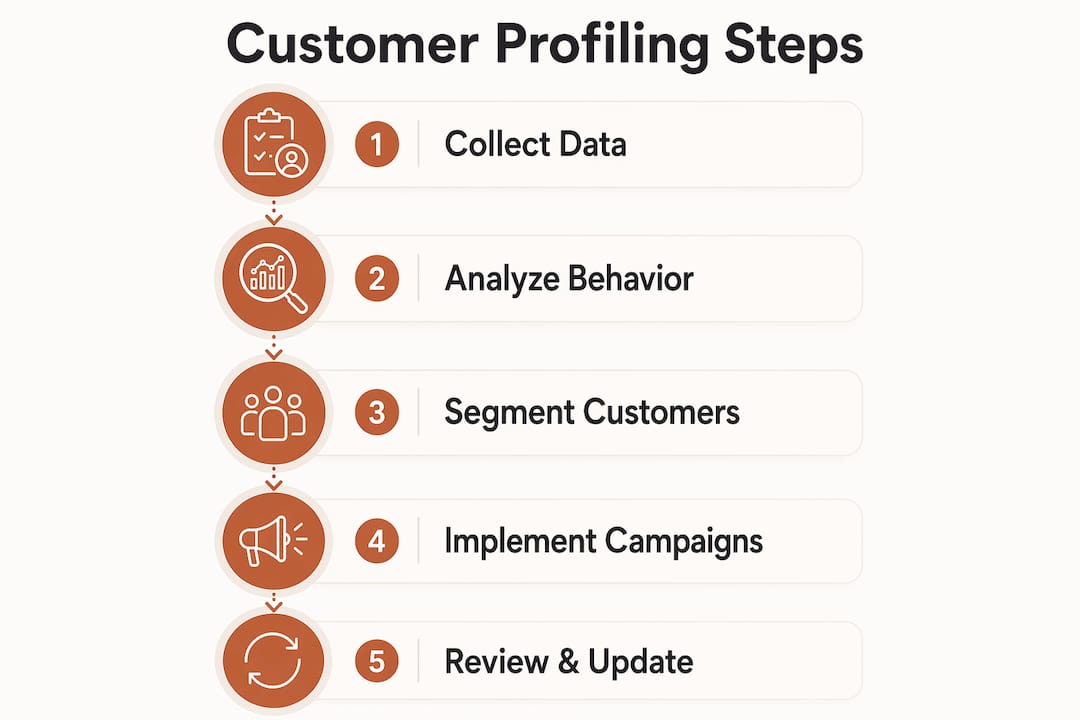
Step by step ecommerce customer profiling is the process of collecting, analyzing, and segmenting customer data to create profiles that sharpen marketing precision and lift sales performance. Known formally as customer persona development or RFM-based segmentation, this practice separates brands that grow from brands that guess. Google Analytics, CRM platforms, and behavioral analytics tools each contribute a different layer of insight. When those layers combine, you stop broadcasting to a crowd and start speaking to individuals. This guide walks you through every phase, from raw data collection to automated segment triggers, so you can build profiles that actually drive revenue.
What data sources and tools does ecommerce customer profiling require?
Accurate ecommerce customer analysis starts with sourcing data from multiple channels, not just your order history. Effective customer profiling requires combining at least five input types over a 30-day window: post-purchase surveys, customer interviews, review mining, customer service audits, and competitor audience research. Each source answers a different question about who your buyer is and what drives their decisions.
The five primary data sources break down like this:
- Post-purchase surveys placed on thank-you pages capture motivation at peak intent. The question “What was going on in your life that made you decide to buy today?” generates qualitative insight that no transaction log can replicate.
- Customer interviews of 20–30 minutes with 8–20 buyers surface recurring themes that quantitative data misses entirely.
- Review mining on your own product pages and competitor listings reveals the exact language customers use to describe their problems.
- Customer service audits expose friction points and objections that never appear in your CRM.
- Competitor audience research shows you who else is competing for your buyer’s attention and why.
On the analytics side, Google Analytics 4 tracks navigational and engagement behavior. CRM platforms like HubSpot or Klaviyo store transactional history and contact attributes. Behavior tracking tools like Hotjar or Microsoft Clarity reveal how users move through your site before they buy.
| Data Source | What It Reveals | Best Tool |
|---|---|---|
| Post-purchase surveys | Purchase motivation and context | Typeform, Google Forms |
| Customer interviews | Emotional drivers and objections | UserCall, Zoom |
| Review mining | Language patterns and pain points | Manual scraping, Reviewflowz |
| CRM transaction data | Purchase history and frequency | HubSpot, Klaviyo |
| Behavioral analytics | On-site navigation and intent signals | Google Analytics 4, Hotjar |

Pro Tip: Combine at least three qualitative and two quantitative sources before building any segment. Profiles built on a single source type produce campaigns that feel generic because they are.
How do you execute step by step customer segmentation with RFM?
The RFM framework scores every customer on three dimensions: Recency (how recently they bought), Frequency (how often they buy), and Monetary value (how much they spend). A 5x5x5 RFM model produces 125 possible scoring combinations. In practice, practitioners collapse these into 8–12 actionable segments focused on lifecycle transitions rather than static labels. That compression is what makes the model usable at scale.
Here is the step-by-step execution sequence:
- Define lifecycle stage boundaries. Set quantitative thresholds before you score anyone. For example, “Active” means a purchase within 90 days; “At Risk” means 91–180 days; “Lapsed” means 181+ days.
- Score Recency, Frequency, and Monetary value using quintiles. Divide your customer base into five equal groups for each dimension. A score of 5 on Recency means the customer bought most recently; a score of 1 means they are the oldest.
- Collapse scores into named segments. Champions (R5, F5, M5), Loyal Customers (R4–5, F3–5), At-Risk Customers (R2–3, F3–5), and Lapsed Buyers (R1–2, F1–2) are the segments that matter most for campaign targeting.
- Layer behavioral and category affinity data. A customer who scores high on RFM but only buys from one product category needs different messaging than one who buys across categories. Behavioral segmentation adds this dimension. You can explore behavior segmentation techniques to see how this layer changes retention outcomes.
- Automate segment transitions with real-time triggers. Automated RFM recalculation in real time is 25% more effective than weekly batch processing. That efficiency gap translates directly into email revenue lifts above 40%.
- Apply segment-exit suppressions. When a customer moves from “At Risk” to “Active,” suppress them from win-back campaigns immediately. Failing to do this increases unsubscribes by 15–25% and erodes list quality over time.
| Segmentation Model | Primary Input | Best Use Case |
|---|---|---|
| RFM | Transaction history | Lifecycle marketing, retention |
| Behavioral | On-site events | Cart recovery, product recommendations |
| Demographic | Age, location, device | Channel targeting, creative personalization |
| Psychographic | Surveys, interviews | Messaging tone, value proposition |
Pro Tip: Start with just three RFM segments: Active, At Risk, and Lapsed. Add complexity only after you have proven campaign results for each group. More segments without more resources creates paralysis, not precision.
What are the best practices for interpreting customer behavior?
Understanding customer behavior means going beyond what customers tell you. True customer understanding requires triangulating four levels: what they say, what they think and feel, what they do, and why they do it. Most ecommerce teams only capture the first and third levels. That gap is where profiling fails.
Behavioral economics research shows that experts decode customer behavior by blending psychology with observed task walkthroughs, not opinion surveys alone. Context matters as much as the action itself. A customer abandoning a cart on mobile at 11 PM is in a different decision state than one abandoning on desktop at 2 PM. Device, time, and session depth all change what intervention is appropriate.
Track three categories of on-site behavior to build a complete picture:
- Navigational behavior: Which pages customers visit, in what order, and where they exit. This reveals intent and confusion points.
- Transactional behavior: Add-to-cart rates, checkout abandonment steps, and average order value by session type.
- Engagement behavior: Email open rates by segment, SMS click-through rates, and time-on-page for product descriptions.
“Mapping customer journeys as sequences of behavioral events rather than single metrics enables precise interventions like segmented cart recovery, increasing revenue potential significantly.” — CartBoss, 2026
Segmented cart recovery outperforms generic recovery by 52%. That gap exists because generic recovery treats every abandoner as identical. Behavioral profiling tells you which abandoners are price-sensitive, which are distracted, and which are comparison shopping. Each group needs a different message.
What profiling pitfalls should ecommerce professionals avoid?
82% of ecommerce brands fail to achieve meaningful results from segmentation because they skip critical steps, not because their strategy is wrong. The most common failure points are predictable and preventable.
- Skipping data quality management. Duplicate records, mismatched email addresses, and missing order attributes corrupt every segment built on top of them. Audit your data before you score a single customer.
- Creating too many segments. Thirty segments with no dedicated campaign for each is worse than five segments with tight, tested messaging. Segment count should match your team’s execution capacity.
- Failing to update lifecycle stages in real time. A customer who repurchased yesterday should not receive a win-back email today. Static segment updates, whether weekly or monthly, guarantee irrelevant communication.
- Ignoring post-purchase survey data. Post-purchase surveys are the most overlooked data source in ecommerce. They answer the “why” that transaction data never can.
- Treating profiling as a one-time project. Customer behavior shifts with seasons, promotions, and life events. Profiles that are not refreshed become fiction within 90 days.
Pro Tip: Schedule a monthly segment audit. Pull your top three segments, check their campaign performance, and verify that the customers inside each segment still match the profile criteria. Thirty minutes of hygiene prevents months of wasted spend.
How do you turn customer profiles into marketing campaigns that grow revenue?
Customer profiles produce revenue only when they connect directly to campaign logic. The translation from insight to execution follows a clear sequence.
- Build lifecycle-specific email and SMS workflows. Champions receive early access and loyalty rewards. At-Risk customers receive win-back sequences with a time-limited offer. Lapsed buyers receive reactivation campaigns that acknowledge the gap. Each workflow uses the segment’s behavioral data to set send timing and message tone.
- Personalize product recommendations by category affinity. A customer who consistently buys skincare over supplements should see skincare recommendations in every touchpoint, not your best-selling product overall. Affinsy’s market basket analysis identifies which products appear together in real purchase sequences, so your recommendations reflect actual buying patterns rather than assumptions.
- Deploy predictive churn models for retention focus. Predictive churn models achieve 78% accuracy, and retention campaigns built on those predictions yield 3.2x ROI. Focusing retention spend on customers the model flags as high-risk is more efficient than blanket loyalty programs.
- Use the Amazon customer journey framework to map how customers move from awareness to repeat purchase. Searchoneers’ breakdown of the Amazon customer journey shows how event-sequence mapping translates directly into campaign trigger logic.
- Build feedback loops into every campaign. After each send, measure segment-level open rates, conversion rates, and unsubscribe rates separately. Use those results to refine segment boundaries and message criteria. Profiling is not a setup task. It is an ongoing practice.
Pro Tip: Connect your segmentation workflows to your SMS platform as well as email. Customers who do not open email often respond to SMS, and behavioral data tells you which channel each segment prefers.
Key takeaways
Systematic ecommerce customer profiling built on RFM scoring, behavioral data, and real-time automation consistently outperforms static persona-based approaches in both revenue lift and retention ROI.
| Point | Details |
|---|---|
| Multi-source data is non-negotiable | Combine surveys, interviews, review mining, CRM data, and behavioral analytics before building any segment. |
| RFM collapses complexity | Reduce 125 scoring combinations to 8–12 actionable segments focused on lifecycle transitions. |
| Real-time automation drives results | Automated RFM recalculation outperforms weekly batch processing by 25%, producing 40%+ email revenue lifts. |
| Segment-exit suppressions protect list health | Failing to suppress transitioned customers increases unsubscribes by 15–25% and degrades campaign performance. |
| Profiles require continuous refinement | Customer behavior shifts within 90 days; monthly segment audits prevent profiling from becoming outdated fiction. |
Why static personas are costing you more than you think
I have reviewed profiling workflows for dozens of ecommerce brands over the years, and the pattern is almost always the same. The team builds a set of personas in a workshop, exports them to a slide deck, and then runs campaigns against those personas for the next two years without updating them. The personas feel real because they have names and stock photos. They are not real. They are a snapshot of who your customer was, not who they are now.
The shift that actually moves revenue is from static personas to dynamic, behavior-driven profiles that update automatically as customers act. A customer who bought once eighteen months ago and a customer who bought three times last quarter should not share a segment just because they match the same demographic profile. Behavior is the signal. Demographics are the label.
The other mistake I see constantly is over-relying on surveys. Surveys tell you what customers are willing to say out loud. Behavioral observation tells you what they actually do when no one is watching. The gap between those two things is where your best campaign insights live. Run the surveys. Do the interviews. Then watch session recordings and compare. You will find contradictions that change your entire messaging strategy.
The future of this practice is full integration across channels, with segment transitions triggering coordinated responses in email, SMS, paid retargeting, and on-site personalization simultaneously. Brands that build that infrastructure now will have a compounding advantage over those still running batch-processed weekly segments. Start with two or three segments, automate the transitions, and prove the model before you scale it.
— Mateusz
How Affinsy supports your customer profiling workflow
Building accurate customer profiles requires clean transaction data and a tool that can surface patterns you cannot see manually.
Affinsy analyzes your historical order data to deliver RFM customer segmentation and market basket analysis without requiring data science skills. You export your order data from Shopify, WooCommerce, BigCommerce, or any platform that produces transactional records, then feed it into Affinsy via CSV upload or API. The platform identifies which customers are at risk, which products cluster together in real purchase sequences, and which segments deserve your retention budget. Affinsy’s free tier covers up to 20,000 line items with no credit card required, so you can validate the approach before committing to a paid plan.
FAQ
What is ecommerce customer profiling?
Ecommerce customer profiling is the process of collecting and analyzing behavioral, transactional, and psychographic data to create detailed representations of customer segments. These profiles inform targeting, messaging, and product strategy across marketing channels.
How many RFM segments should i start with?
Start with three to five segments: Active, At Risk, Lapsed, and optionally Champions and New Customers. RFM frameworks can produce up to 125 combinations, but 8–12 actionable groups are the practical ceiling for most marketing teams.
Why do most ecommerce segmentation efforts fail?
Most segmentation efforts fail because teams skip data quality management and workflow automation, not because their strategy is flawed. Gartner research confirms that addressing data quality systematically is the primary differentiator between successful and failed segmentation programs.
How often should i update customer profiles?
Update segment boundaries and profile criteria at least monthly. Customer behavior shifts with promotions, seasons, and life events, and profiles older than 90 days often no longer reflect actual buying patterns.
What is the single most overlooked data source in customer profiling?
Post-purchase surveys placed on thank-you pages are the most overlooked source. They capture purchase motivation at peak intent and answer the “why” behind transactions that CRM data and behavioral analytics cannot explain on their own.
Recommended
- Customer Segmentation: Complete Guide for E-Commerce - Affinsy Blog | Affinsy
- Ecommerce Customer Groups Examples: 2026 Segmentation Guide - Affinsy Blog | Affinsy
- RFM Model Ecommerce: Practical Segmentation Guide - Affinsy Blog | Affinsy
- 7-Step Ecommerce Growth Checklist for Smarter Sales - Affinsy Blog | Affinsy